Calls for Bola Ahmed Tinubu’s administration to implement palliatives or restore fuel subsidies to lessen the effect of skyrocketing gas prices brought on by rising global crude oil prices are divided among experts and civil society organizations.
The 24-day battle between Iran, the United States, and Israel has disrupted global energy markets and driven crude prices above $100 per barrel, well beyond Nigeria’s 2026 budget benchmark of $64 per barrel. This has resulted in a surge in oil costs.
Nigeria’s oil earnings have increased recently due to the boom, but the country’s economic situation has also gotten worse.
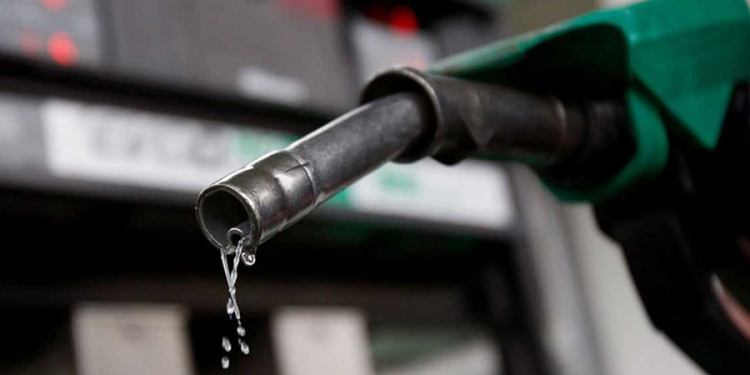
As of Monday, March 23, 2026, the price of gasoline has increased by approximately N492, or 56 percent, from N875 to N1,367 per liter prior to February 28.
Millions of Nigerians, especially those making the N70,000 minimum salary, have seen their purchasing power further diminished by the surge in food and transportation costs.
Some stakeholders have urged the government to implement relief measures to alleviate the cost-of-living problem in the face of mounting hardship.
To stop energy-driven inflation, the Federal Government has been encouraged by the Center for the Promotion of Private Enterprises (CPPE) to implement a coordinated policy framework.
Muda Yusuf, the CEO of CPPE, said in a statement that Nigeria’s disinflation trend, which was 15.06 percent in February, could be reversed due to the Middle East conflict.
In a similar vein, Joe Ajaero, president of the Nigeria Labour Congress, stated that the government should act without first waiting for labor unrest.
The crisis has increased the budget threshold and brought in enormous sums of money for the government.
“A portion of these funds should be used by the government to mitigate the impact on citizens,” he stated.
In an effort to mitigate the spike in fuel prices, the Oyo State government recently authorized N10,000 salary allowances for its civil officials.
The experts that talked, however, are still at odds about what the Nigerian government should do.
Wumi, a professor emeritus, offers alternatives to the fuel subsidy return.
Calls for the reinstatement of fuel subsidies were rejected by Wumi Iledare, an emeritus professor of petroleum economics, who said they were unwise and unsustainable from an economic standpoint.
“Some stakeholders’ position, which calls for a return to fuel subsidies to offset the current surge in petrol prices, seems misguided and hard to defend.
He stated, “Consumer fuel subsidies tend to create significant welfare losses and market inefficiencies.”
He claims that previous subsidy programs have taken funds away from vital industries like infrastructure, power, healthcare, and education.
He cautioned that a return to subsidies would be foolish, saying that “evidence over the past two to three decades suggests that subsidy regimes often crowd out critical public investments.”
Rather, Iledare suggested smart utilization of oil windfalls, better governance in the energy industry, and focused social measures to boost economic resilience.
In order to reduce costs, he also recommended legislative solutions including the elimination of import taxes or the Value Added Tax on petroleum products, as well as crude oil discounts for regional refineries like the Dangote Refinery.
Rafsanjani: Tinubu’s government lacks pro-people policies
However, Auwal Rafsanjani, Executive Director of Transparency International Nigeria and the Civil Society Legislative Advocacy Centre (CISLAC), urged immediate pro-people measures to alleviate the suffering.
He stated, “Nigerian leaders must first and foremost have a package for relief to mitigate the suffering of Nigerians in all ramifications.”
Rafsanjani denounced what he called the lack of “pro-poor” and “sympathetic” measures, cautioning that if immediate action was not taken, the situation would get worse.
“The money from the removal of subsidies has not translated into mitigating Nigerian suffering,” he stated, adding that governance may be overshadowed by political goals ahead of elections.
He emphasized the necessity for inclusive policies that put the wellbeing of common Nigerians first, characterizing the issue as a gap between leaders and citizens.
He declared, “Our political leaders and governance system are not pro-poor and are not interested in putting systems in place to mitigate the suffering of Nigerians.”