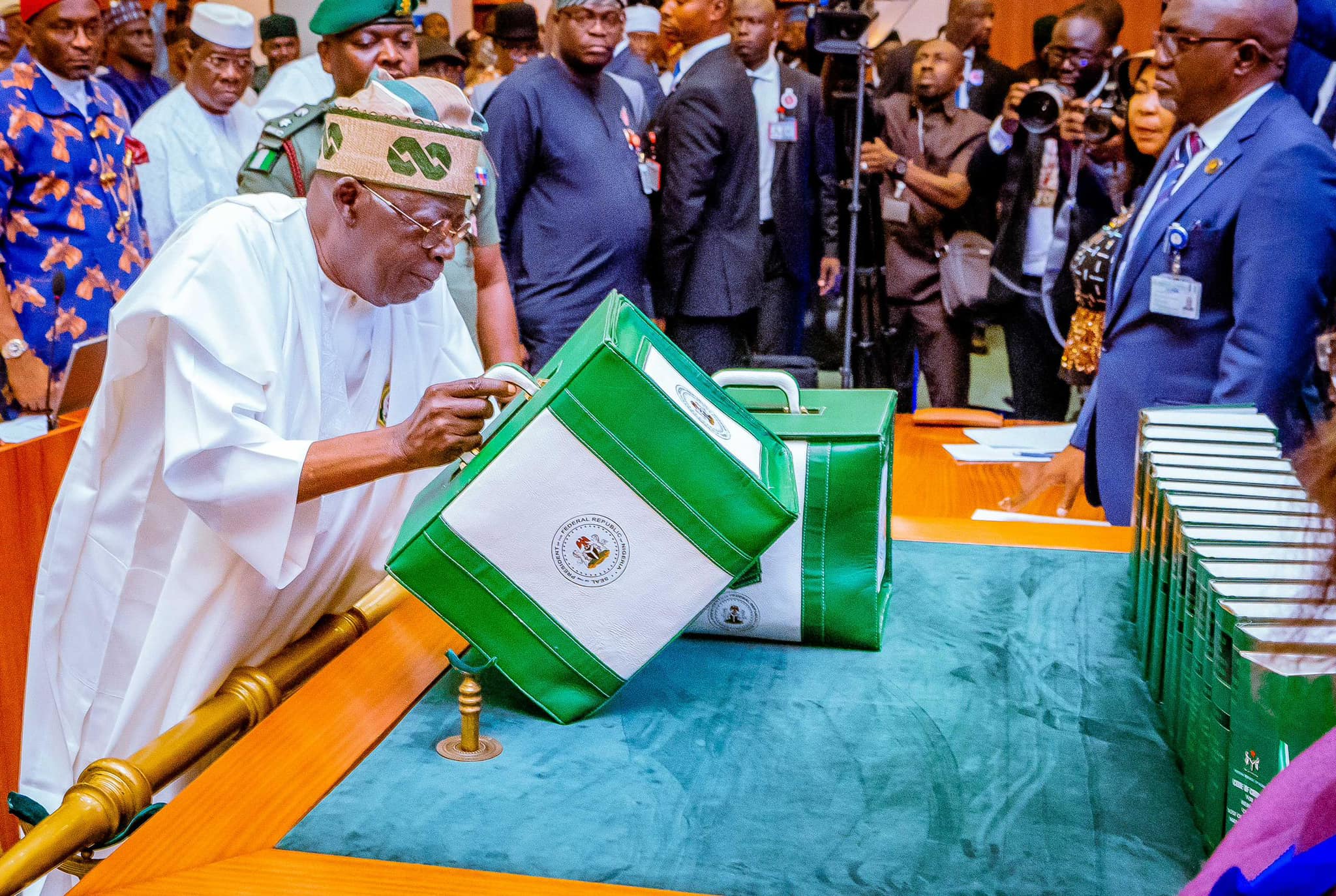
Threatening to cut the estimated N58.472 trillion 2026 budget, the Senate Appropriation Bill over what it called low oil performance benchmarks, inflated revenue estimates, and ongoing capital budget implementation difficulties.
Legislators publicly questioned the veracity of the main presumptions supporting the record budget plan during a heated interactive session between the Senate Committee on Appropriations and the federal government’s economic staff.
A take-off grant of N1.5 trillion was proposed by the National Assembly in a related budget defense development earlier for the Federal Ministry of Art, Culture, Tourism, and the Creative Economy (FMACTCE) in order to reposition the sector as a major force behind economic diversification and lessen Nigeria’s reliance on oil revenue.
The plan was presented to the Joint Committee on Culture, Art, and Creative Economy during the ministry’s 2025 budget defense. Lawmakers throughout the session voiced their strong belief that, with the right structure and funding, the industry can produce enormous amounts of income, jobs, and foreign exchange.
According to Hannatu Musa Musawa, Minister of Art, Culture, Tourism, and the Creative Economy, the industry could provide over 2.5 million employment and contribute $100 billion to Nigeria’s GDP by 2030.
Senator Solomon Adeola (Ogun West), the chairman of the Senate Committee on Appropriations, questioned the validity of several fundamental tenets of the federal government’s 2026 budget proposal, stating that the budget paper came from the executive branch and needed to include practical and achievable forecasts.
Adeola cited instances of 18% performance in one fiscal year and 36.5% in another, percentages well below expectations, to raise alarm over what he saw as a persistent discrepancy between planned and realized oil income.
“How can we account for this degree of poor performance?” Adeola inquired.
“Do we cut this N58.472 trillion budget or do we go ahead and make changes?” he continued. You are assuring Nigerians that you will achieve these goals if we do not lower it.
He cautioned that the legislature would not approve estimates that would increase fiscal pressures because Nigeria’s debt stock is over N152 trillion and debt servicing expenses take up a sizeable amount of revenue.
Strategic asset sales, according to Adeola, could aid in reducing the debt portfolio and future borrowing expenses. He emphasized that the National Assembly needed to know if the revenue estimates were solely for the federal government or for the federation as a whole.
Mr. Wale Edun, the Minister of Finance and Coordinating Minister of the Economy, came under fire first. He defended the benchmark oil production of 1.84 million barrels per day as a “stretch target” intended to boost output.
“It is a stretch target to ensure that authorities do not accept lower output,” Edun stated.
“But we are within safe limits as long as we do not spend what we do not have,” he continued.
He insisted that the 2026 budget had prioritized security spending and revealed that emergency funds had been made available for important military acquisitions, including those abroad.
“We all agree that security should be prioritized,” Edun said. Funding for emergencies has been provided. At least twice this year, including yesterday, significant foreign payments for security equipment have been made.
Edun added that the high cost of debt for developing nations on global markets was more of a factor in Nigeria’s debt problem than the debt-to-GDP ratio.
He claims that excessive interest rates and the sustainability of debt are still the primary issues at the G24 technical group conference that Nigeria is now chairing.
He claimed that with growth of roughly 4%, stronger foreign reserves, increased exchange rate stability, and a reduction in inflationary pressures, the economy was beginning to recover.
The minister went on to say that improved progress was shown by restored investor confidence, including a reported $20 billion investment by Shell.
Dr. Zacch Adedeji, the chairman of the Nigeria Revenue Service (NRS), seemed to partially agree with lawmakers when he warned that erroneous revenue projections invariably compromise budget performance.
“Budget efficiency lies in what you can do, not how big the budget is,” Adedeji stated. We will cause ourselves troubles if we plan with 100 naira when we only have 10 naira. Realistic assumptions must be the starting point.
High production costs have a major impact on net revenue to the federation, Adedeji explained, adding that under the Petroleum Industry Act framework, taxes and royalties now account for a larger portion of government revenue from oil than gross crude sales.
He revealed that estimates showed that, under the current arrangements, almost 47% of all oil company output was converted into government money. He urged lawmakers to examine cost structures and implement fiscal restraint.
Concerns about inadequate capital releases in prior budgets, especially the 2024 and 2025 appropriations, which members claimed showed little execution, were also brought up by the Senate.
In response, Dr. Doris Nkiruka Uzoka-Anite, Minister of State for Finance, gave the committee her word that any unfinished capital projects from the 2024 and 2025 budgets will be finished by March 31, 2026.
Ministries, Departments, and Agencies (MDAs) have been instructed to submit their cash plans in order to facilitate disbursement for 2025 projects, according to Uzoka-Anite, who also revealed that payments for 2024 capital projects were starting right away.
“The system for managing finances is back up and running. Although MDAs need to finish their paperwork needs, we are prepared to begin,” she stated.
Later, the meeting turned into a nearly two-hour private meeting with Shamsedeen Babatunde Ogunjimi, the Federation’s accountant general, and Senator Atiku Bagudu, the minister of budget and economic planning.
In the spirit of fiscal realism and sustainable economic management, the Senate indicated at the end of the deliberations that the National Assembly would be forced to reduce the N58.472 trillion budget unless the executive changed its assumptions and offered more solid income guarantees.
Senator Mohammed Onawo, the chairman of the National Assembly Joint Committee on Culture, Art, and Creative Economy, stated that the legislature was ready to discuss with Tinubu, under the direction of the National Assembly, the necessity of providing a sizeable seed capital that would allow the ministry to function autonomously and become self-sustaining.
Onawo tasked the ministry with figuring exactly how much money it needs to operate without constantly relying on government grants.
“How much take-off grant would you need to become independent if the federal government decided to remove you from the national budget?” he asked.
It is impossible to begin with nothing. We will talk to Mr. President and the Senate leadership about whatever we decide here.
After discussions, the committee suggested a N1.5 trillion take-off funding package, claiming that the tourist and creative industries have vast unrealized potential that may revolutionize the nation’s economic structure.
Lawmakers said that the ministry might become one of the government’s biggest revenue-generating organizations with a sufficient capital infusion, clear policies, and institutional improvements.