

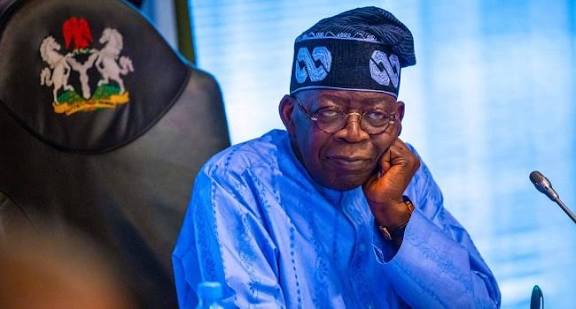
The Presidential and National Assembly campaigns will signal the start of campaigns for the 2027 general elections in Nigeria. The ruling All Progressive Congress (APC) will campaign for the re-election of President Bola Ahmed Tinubu for a second term in office.
The 1999 Constitution of Nigeria (as amended) permits an incumbent serving a four year term to contest for a second term. The constitution allows a maximum of eight years for the President in total.
Tinubu is one of 19 candidates who will run for the presidency in 2027. Among them are Alhaji Atiku Abubakar of the African Democratic Congress (ADC), Peter Obi of the Nigeria Democratic Congress (NDC), Seyi Makinde of the Allied Peoples Movement (APM) and Governor of Oyo State, Donald Duke of Peoples Redemption Party (PRP).
Political analysts generally see the upcoming presidential election as a referendum on Tinubu’s government, but I think it is going to be a referendum on the opposition as well. For those of you who may not be familiar with the term “referendum”, it is simply a direct vote by the electorate on a proposal, law or political issue.
The presidential polls of January 16, 2027 are predicted to result in two outcomes. On May 29, 2027, eligible voters in Nigeria will either vote Tinubu back into office for another four-year term or elect one of the remaining 18 presidential candidates to assume the mantle of leadership from him. That is if Nigerians are allowed to cast their votes in a free and fair atmosphere.
The election is seen as a referendum on Tinubu’s government because “ceteris paribus” (all other things being equal), the peoples opinion about the government will determine the fate of the President. If they consider that the government has done a good job then they will surely vote for him to continue. If they think differently they will elect a new President.
Nigerians will, no doubt, look at Tinubu’s achievements in office and weigh them against the promises he made while campaigning for the presidency in deciding his fate.
Tinubu’s 2023 campaign was based on the slogan of “Renewed Hope Agenda,” a strategic policy blueprint for 2023-2027.
The policy as designed by the President and his party was meant to reform Nigeria’s economy, improve security and enhance living standard through eight core pillars. Priority areas are economic reforms, national security, food security, natural resource development, infrastructure expansion, human capital development, innovation (including digital economy growth), industrialization and good governance.
The Independent National Electoral Commission (INEC) declared Tinubu the winner of the 2023 presidential election despite all odds, including serious concerns about his health, the Muhammadu Buhari administration’s poor security and economic scorecard, campaign gaffes and the controversy surrounding his same-faith (Muslim-Muslim) ticket, amidst the dust raised by his main opponents over the glitches that marred the upload of the results of the election to the INEC Result Viewing Portal (IREV). The rest is history.
Today, President Tinubu is of the opinion that his government has done very well, unlike critics like the Catholic Bishops Conference of Nigeria who during a recent meeting with him expressed serious concerns about the worsening economic hardship, rising insecurity and democratic challenges. His appointees and other members of APC are never left out of the opportunity in the media to harp on the achievements of the present administration in various sectors especially the economy, infrastructure, education and security.
Some of the often trumpeted achievements of the present government include removal of fuel subsidy, unification of exchange rate, fiscal policies tightness and establishment of new tax architecture. Others include the attraction of billions of fresh foreign investments, increase in the stock market, security/ military upgrades and continuous construction of Lagos-Calabar Coastal Road and Sokoto Badagry Highway.
The government is also credited for the establishment of the National Education Loan Fund (NELFUND) and creation of regional development commissions. NELFUND was established to provide zero-interest loans for higher education, and the regional commissions were set up to fast-track local infrastructure and economic growth.
For all the trumpeted achievements, the general feeling outside the government circle and ruling party is that the Tinubu government failed in its primary duties of providing security and welfare for the citizens. Since the government came to power poverty and hardship have increased dramatically in the country.
Millions of Nigerians are struggling with high food inflation and deep hunger. For the first time in the history of Nigeria, a hunger protest hit different parts of the country few weeks after the one year anniversary of the present administration. International partners, such as the World Bank, say the “painful economic reforms” are bold and needed to ensure economic stability and national growth, but they have also taken a heavy toll on everyday citizens, with an estimated 139 million of them living in poverty.
Transportation and food prices skyrocketed after President Tinubu announced the removal of fuel subsidy on the day of his inauguration, May 29, 2023. Though the federal government insist that the removal of subsidy has increased the revenue of the states and local governments, the standard of living of Nigerians continue to worsen.
Likewise, the liberalization of the foreign exchange market weakened the Naira and made imported goods much more expensive. The high cost drastically reduced the purchasing power of Nigerians, who are heavily dependent on imports.
The currency devaluation has created a difficult economic environment (foreign exchange shortages, high operating costs) resulting in scalebacks or exits by many well-known multi-national corporations and foreign investments. For example, Procter and Gamble (P&G) and GlaxoSmithKline Consumer Nigeria (GSK) closed manufacturing operations in Nigeria in December 2023. GSK also shut down its commercial operations and moved to a third party distribution model for its consumer brands and medicine.
The cost of drugs went through the roof with the departure of these companies and many others. People with chronic diseases like diabetes, cancer and arthritis were hit hardest. Number of jobs were lost due to the flight of companies from Nigeria, thereby worsening the already terribly bad unemployment situation in the country. The government seems to have deliberately allowed the average Nigerian on the street to feel the reforms without providing a buffer, particularly for the vulnerable.
Even as President Tinubu has assured Nigerians that the pains of the reforms are temporary, more than three years after he came to power, Nigerians have not seen any serious indication that their pains will abate soon.Insecurity remains a serious and complex national challenge, with persistent kidnappings, banditry and violent attacks. There is continued violence, especially in the countryside. Attacks are driving farmers off their farms, raising concerns of a further rise in food insecurity.
The fear of being kidnaped now makes Nigerians to avoid traveling on highways, thus hampering the movement of goods and services. Violent attacks have emptied many rural communities, particularly in northern Nigeria. Those who fled from these communities are now living in Internally Displaced Persons (IDPs) camps. The International Organization on Migration (IOM) estimates that there are more than 104 IDP camps in Nigeria.
The urban dwellers are not spared either. They are faced with rising cost of energy, healthcare, education, electricity, rents, transportation, food, cooking gas and other basic necessities of life. Insecurity is also endemic in many urban centers in Nigeria.
While the government may take pride in its success in attaining macroeconomic stability, for many families, the feeling is that little has been done to ease the heavy financial load on households and low-income earners. President Tinubu has faced public criticism for not meeting Nigeria’s economic expectations, even as the government defends its aggressive reforms as vital for long-term economic growth.
Less than five months to the general election, the public sentiments seem to be heavily tilted against the Tinubu administration. Many analysts have said his government failed in its main duty of ensuring security and welfare of the citizens.
Read Also: NUPRC: Tinubu’s Deep Offshore Order Could Boost Oil Output to 1m bpd
However, the opposition should not think that the election will be all about the incumbent and that the way is clear for them. Political analysts have been widely saying that the opposition parties themselves are not living up to public expectations ahead of the 2027 general elections. But civil society organizations in Nigeria say the opposition is not strong or organized enough to pose an effective challenge to the ruling party.
Most of the opposition parties are either divided or riddled with eternal leadership battles and factional wrangling. Too many have not been able to establish a clear and single line of leadership. If they cannot manage their own affairs, how can they manage the affairs of a large heterogeneous country like Nigeria?
Naturally, the ruling party cannot be entirely cleared of responsibility for the crises in the opposition parties’ ranks. Recently, the Igbo Leaders of Thought, a prominent assembly of Southeastern Nigerian intellectual, traditional rulers and stakeholders, expressed concern over the role played by state institutions including INEC and the courts in the crises in the opposition parties.
The opposition parties are also not absolved of the crises in their ranks. Many of them, in their conduct of affairs, disregard party constitution. They have not been able to rein in the moles in their ranks who work, overtly or covertly, for the ruling party. These moles are the people who are often used to sow discord between opposition parties.
The push for a broad alliance of opposition figures for a unified national movement, such as the failed ADC coalition, is often trumped by individual ambitions and competing personal interests. For one time in this Fourth Republic the opposition came together and threw out the ruling party. That was in 2015. Muhammadu Buhari of the APC, which was a merger of some of the existing opposition parties, defeated the incumbent President, Dr. Goodluck Ebele Jonathan of the PDP. PDP has not recovered from that defeat till date.
The Labor Party (LP) was a Third Force in 2023 but it was a ‘flash in the pan.’ Since then, the LP’s success has been eroded by a prolonged intra-party crisis that factionalized the party and kept party leaders in and out of courts including the Supreme Court, Nigeria’s apex court.
I conclude by arguing that the 2027 election is not a one man referendum on Tinubu. I think it’s a referendum on the opposition as well. I don’t want to affect the outcome of the election. That is for Nigerians to determine. I can only appeal to the Nigerian authorities to give the electorate a free and fair atmosphere to choose our next President with their votes.

