

The International Press Centre (IPC) and Nigeria Union of Journalists (NUJ) have urged journalists, editors and media organisations to strengthen fact-checking, professional standards and accountability reporting ahead of the 2027 general elections.
The centre said the media must move beyond event-driven political coverage to issue-based reporting that places citizens’ concerns at the centre of electoral discourse.
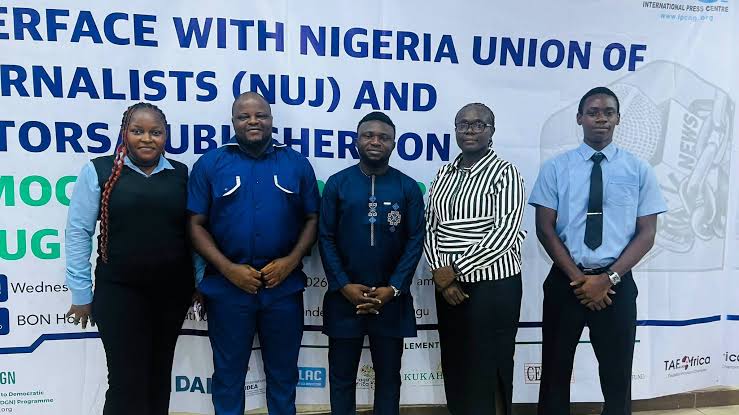
The call was made at an interface with the Nigeria Union of Journalists (NUJ), editors and publishers on Professional and Democratic Accountability Journalism ahead of the 2027 general elections, organised by the IPC in Abuja.
The engagement, held under Component 4 (Support to Media) of the European Union Support to Democratic Governance in Nigeria (EU-SDGN III) Programme, featured resource persons, including Dr. Sarah Gambo of the University of Abuja and Mr. Ahmad Aluko, a researcher and information disorder analyst, who trained participants on media obligations, professional commitment and the integration of fact-checking into democratic and accountability reporting.
In his welcome remarks, IPC Executive Director, Dr. Lanre Arogundade, said the approach to electoral reporting must change as the country prepares for another general election, stressing the need for credible, balanced, inclusive and public-interest journalism.
He challenged journalists to scrutinise political promises, monitor the performance of elected officials, amplify citizens’ voices and provide voters with credible information to make informed decisions.
According to him, electoral reporting should give adequate attention to critical issues such as the economy, education, healthcare, security, employment and infrastructure, while ensuring that women, young people and persons with disabilities are not excluded from democratic discourse.
He warned that sensationalism, unverified claims, inflammatory rhetoric and the unchecked spread of misinformation and disinformation could undermine public confidence, deepen divisions and weaken democratic institutions.
The IPC Executive Director also urged media organisations to strengthen their verification capacity and resist the pressure to prioritise speed over accuracy, particularly when reporting politically sensitive issues.
He maintained that fact-checking and verification must become integral to responsible electoral journalism rather than optional additions to news reporting.
READ ALSO:
- Experts Task INEC On Handling Of Voters’ Data
- Akume Camp Shuns Alia’s 2027 Campaign Flag-off
- 2027: We Can’t Afford Election Marred By Strikes, Protests – Yayale Ahmed
Arogundade further stressed the need to protect the safety and professional independence of journalists, noting that media practitioners must be able to perform their legitimate duties without intimidation, harassment or unlawful interference.
In her goodwill message, Chairman of the NUJ FCT Council, Comrade Grace Ike, said democracy could not thrive where citizens were misinformed, just as accountability would remain elusive if journalists merely reported events without interrogating political promises, policies and performance.
Ike urged journalists to shift attention from political rallies, defections and press statements to issues affecting the daily lives of Nigerians, including insecurity, unemployment, education, healthcare and the rising cost of living.
She challenged reporters to examine whether candidates were offering practical solutions to the country’s challenges or merely making political promises without clear implementation plans.
Describing the citizen as the central figure in accountability journalism, she called on media practitioners to resist being used as instruments of propaganda and ensure balanced, fair and courageous reporting.
She also identified misinformation, disinformation, hate speech, online manipulation, declining public trust and threats to journalists’ safety as major challenges confronting the media ahead of the 2027 elections.
The NUJ chairman reaffirmed the council’s commitment to promoting ethical journalism, strengthening members’ professional capacity, defending press freedom and ensuring the safety and dignity of journalists.
She further urged journalists to give greater visibility to women, young people, persons with disabilities and ordinary citizens whose concerns are often overlooked in political reporting.
The interface also provided an opportunity for participants to examine the evolving electoral information environment and the need for stronger professional commitment and accountability in discharging their responsibilities.
The IPC expressed appreciation to the NUJ FCT Council, led by Ike, and the resource persons for their contributions to the engagement. It also acknowledged the European Union for funding support under the EU-SDGN III Programme.

