

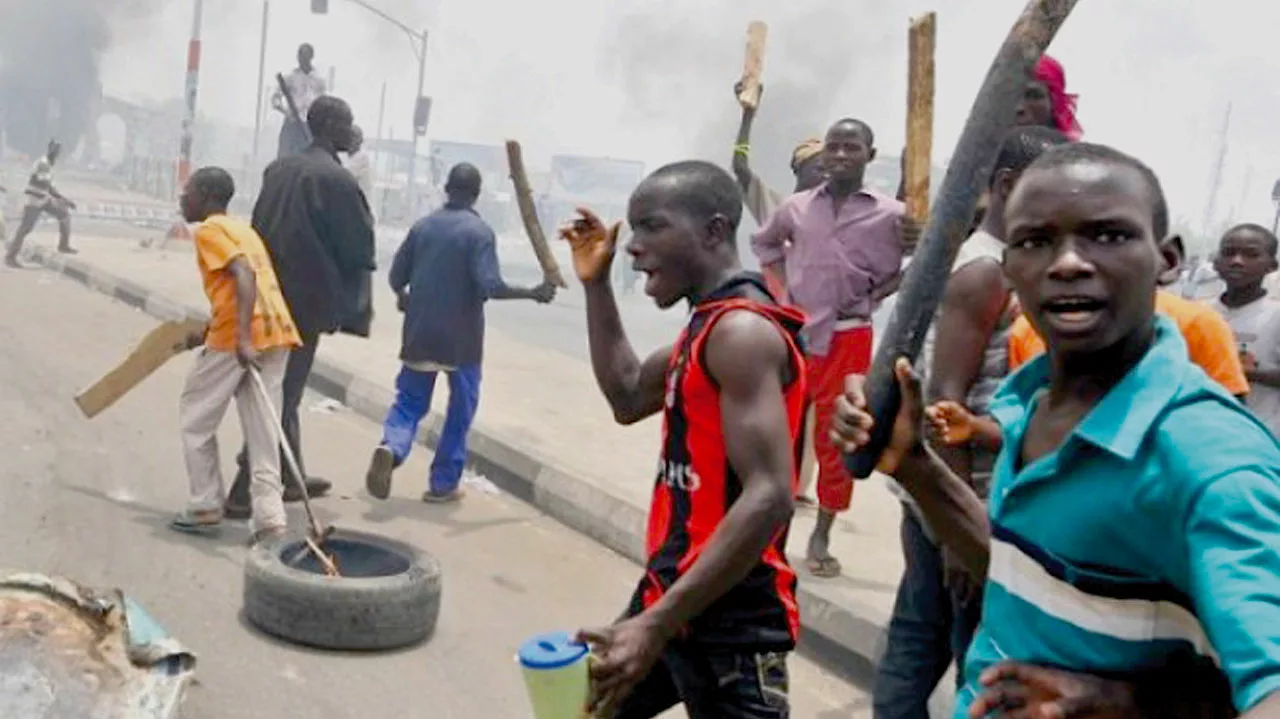
Kano, Delta, Rivers, Edo, Ondo and Kebbi have emerged as the leading flashpoints of pre-election violence ahead of the January 16 general election, according to a new report by the Kimpact Development Initiative (KDI).
The report, released on Wednesday in Abuja, said the six states recorded the most significant incidents out of 124 violent incidents documented across 35 states and the Federal Capital Territory (FCT) between July 1 and November 23, 2026, resulting in 22 deaths.
Delta recorded the highest fatalities with 5 deaths from 10 incidents, followed by Kano with 3 fatalities from 11 incidents, while Rivers recorded one fatality from 10 incidents.
Edo, Ondo and Kebbi were also listed among the states with significant incidents, underscoring what KDI described as a nationwide spread of violence rather than isolated hotspots.
The incidents were documented through KDI’s Nigeria Election Violence Education and Reporting (NEVER) Project.
KDI, a youth-focused, nonprofit, nonpartisan, non-governmental organisation, said the pre-election environment was increasingly characterised by intimidation, physical assaults, kidnappings, shootings, destruction of campaign infrastructure and other forms of politically motivated violence.
The report showed a sharp escalation in violence as the election draws closer — from just three incidents in July to 48 in October, and another 40 within the first half of November.
KDI warned that the trend could worsen in the six leading states and beyond if political parties, security agencies and other stakeholders fail to take urgent measures.
READ ALSO:
- Election Violence: No Political Ambition Worth A Nigerian’s Life, IGP Disu Warns Politicians
- 2027: I’m Done With Rivers, FCT, Give Me Imo, Kwara To Deliver, Wike Tells Tinubu
- 2027: APC Chieftain Tasks Govs, Ministers On Tinubu’s Re-Election
It blamed growing political intolerance and inflammatory rhetoric among political actors and their supporters for fuelling the violence, stressing that the problem cut across political parties and should not be blamed on any single group.
It urged candidates, spokespersons and campaign organisations to focus on issues, policies and programmes rather than language capable of inciting hostility.
Giving a breakdown of the incidents nationwide, KDI said physical assaults accounted for 46.8 per cent, property destruction 28.8 per cent, shootings 10.2 per cent, intimidation and harassment 9 per cent, while kidnappings accounted for 4 per cent.
It said political supporters, civil servants, journalists and ordinary citizens were increasingly exposed to intimidation for exercising their democratic rights.
The organisation called on political parties and candidates, particularly in the six leading states, to publicly commit to peaceful campaigns and restrain their supporters from violence.
It also urged security agencies to strengthen preventive deployments in the flashpoint states, respond promptly to early warning signs and enforce electoral laws without bias.
KDI called on the Independent National Electoral Commission (INEC) and other electoral stakeholders to intensify voter education and conflict-mitigation efforts, especially in Kano, Delta, Rivers, Edo, Ondo and Kebbi.
It further urged civil society organisations, religious institutions, traditional rulers and the media to promote tolerance and responsible political engagement, while asking citizens to reject violence and report threats through appropriate channels.
The organisation said Nigerians must be able to participate in the electoral process without fear of intimidation, coercion or reprisals, warning that the outcome of elections should reflect citizens’ choices rather than threats or force.

