

Nigeria’s ambition to quadruple its daily production of crude oil to three million barrels by 2030 is encountering increasing challenges, and industry participants are cautioning that the goal would become unachievable in the absence of prompt government action.
Operators are adamantly demanding quicker port clearance and prompt import duty waivers on vital oil and gas equipment in order to reduce bottlenecks that are impeding project execution and driving up prices.
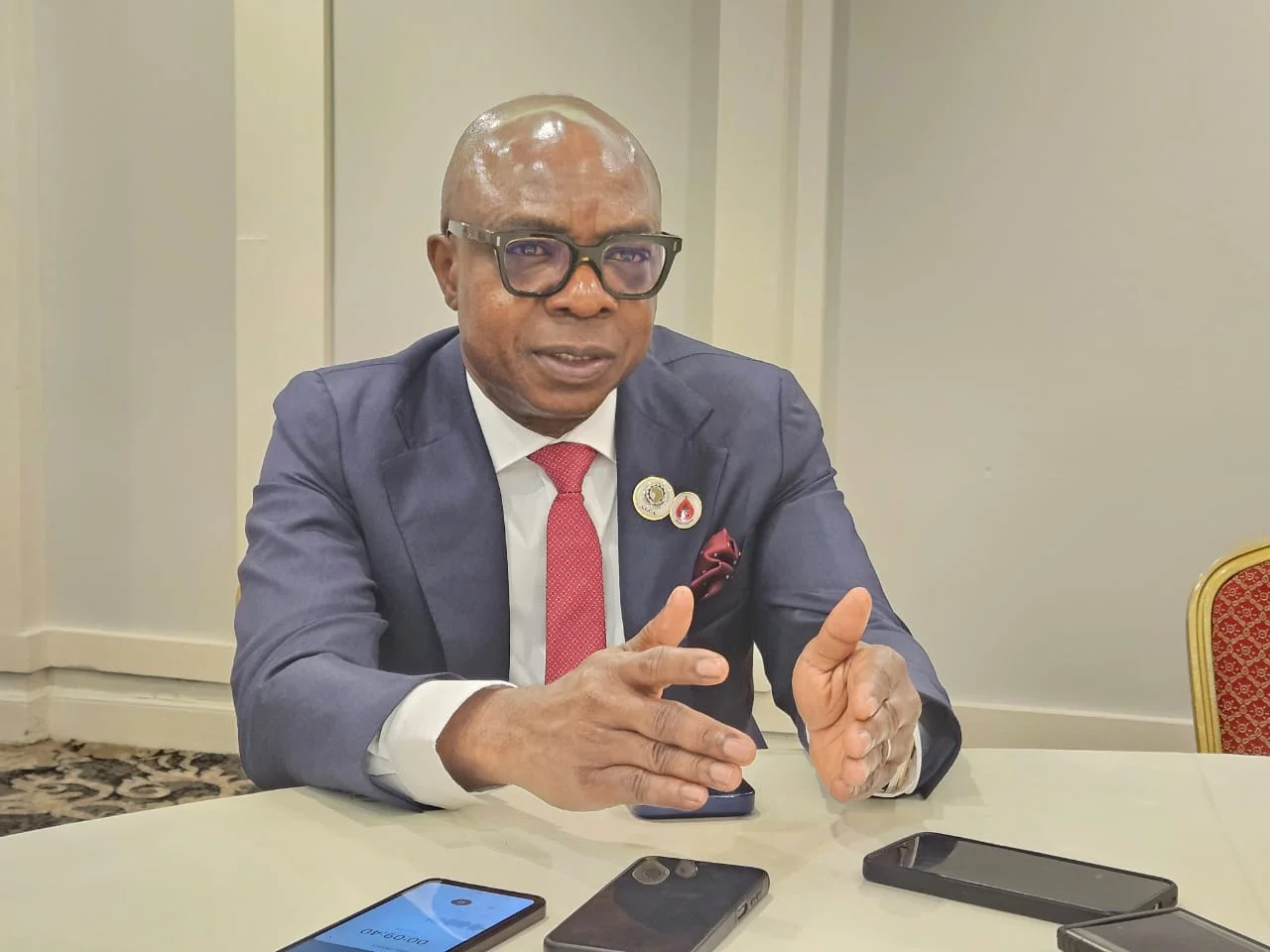
On the fringes of the Offshore Technology Conference earlier in May in Houston, Wole Ogunsanya, Chairman of the Petroleum Technology Association of Nigeria (PETAN), amplified the demand.
He claims that the industry is in an emergency phase that necessitates quick, focused policy intervention.
He emphasized that increasing production from the current 1.5 million barrels per day would necessitate a significant investment in machinery and infrastructure, especially in the gas sector. He also mentioned that tax incentives would enable new funding, expedite the deployment of assets, and bolster Nigeria’s production capacity.
In this interview, Ogunsanya argued that although the pharmaceutical and agricultural industries have benefited from these waivers, the oil and gas sector—the hen that lays the golden eggs—must not be left behind.
In addition, he stated that in order to ensure its energy future in the face of evolving global economic and geopolitical realities, Africa must immediately bolster regional cooperation and local capacity building.
Ogunsanya, the CEO of Geoplex Drillteq Limited, emphasized the difficulties Nigerian and African attendees faced at this year’s conference, especially in obtaining US visas, which he claimed had a major impact on participation and exhibition activities.
Additionally, he gave lengthy speeches on Africa’s aspirations for energy security, the significance of regional collaboration, the expansion of Nigeria’s domestic oil and gas capacity, and the growing involvement of PETAN member businesses in significant upstream projects.
OTC 2026 overview and anticipated future developments
OTC 2026 was a historic year. The number of our members and other Nigerian businesses who could have attended this year’s conference to exhibit, highlight Nigeria’s capabilities, and interact with technology owners, equipment manufacturers, and investors was significantly impacted by the difficulties associated with traveling to the United States, as we all know.
This year, the difficulties in obtaining U.S. visas severely hindered us. The exhibition halls were really less packed this year than they were in prior years, not only for Nigeria. Some areas were even covered off, and the gaps between booths were larger. Attendance was, in my opinion, hardly half of what we had last year.
This was not a Nigerian-specific problem. It had an impact on individuals from numerous nations. Unfortunately, this scenario in the US had a significant influence on OTC, which continues to be the world’s leading oil and gas conference.
We are happy that PETAN and the Nigerian delegation managed to keep the event lively and participatory, nonetheless. In my opinion, during the past three days, the Nigerian area has seen an increase in traffic. We also thank Nigerians living in the United States for coming out in big numbers to support us and make sure the event went well in spite of the difficulties we had.
The motif
At PETAN, we spend a lot of time strategically examining the industry’s future and attempting to predict trends over the next five to 10 years. Thus, “Africa’s Energy Transformation: Scaling Investment, Technology, and Local Capacity for Sustainable Growth” was chosen as the 2026 OTC theme after much consideration.
In terms of economy, energy sourcing, needs, and distribution, the world is actually changing quickly and getting more regional.
For example, the United States purposefully made significant investments in shale gas production and exploration in the years after the wars in Iraq and the Middle East. America opened up chances and technologies to harness shale gas resources after realizing it required energy security.
Similarly, nations like Canada and Brazil are concentrating on safeguarding their energy futures. China is making significant investments in renewable technology, batteries, and electric vehicles, while Europe is actively exploring renewable energy for sustainability.
The implications for Africa are rather obvious. Energy security is something else we need to get ready for. Africa must realize that the natural resources it currently has will be a major source of its future energy security.
Africa has a wealth of oil and gas resources, even though we may not yet be at the forefront of electric vehicle technology. Petrochemicals are still necessary for renewable technologies, therefore oil and gas will continue to be important for decades to come. For instance, the interiors of electric cars are composed of petrochemical materials. Therefore, it is impossible to fully isolate oil and gas from renewables.
The main takeaway is that closer cooperation among Africans is necessary. To ensure the continent’s energy security, African nations must network more effectively. With approximately 128 billion barrels of oil under African soil and massive gas reserves dispersed among nations like Nigeria, Algeria, Libya, Mozambique, and Senegal, Africa holds more than 10% of the world’s oil and gas reserves.
How to efficiently use these resources is the problem.
Energy poverty is still one of the biggest issues facing Africa. People who have access to energy can keep medications, process agricultural products, preserve food, and overall lead better lives. Life expectancy is directly correlated with per capita energy use. Africa continues to struggle with low energy consumption and lower lifespans, whereas countries with higher energy consumption typically have greater life expectancies.
Africa cannot be left behind for this reason. Working together and exchanging expertise is one approach to prevent that, which is why PETAN supported the creation of the African Local Content Roundtable and related projects.
We are also happy that the African Energy Bank will be established in July 2026. But more important than funding is the question of who will carry out the work. Africa cannot keep contracting out all facets of energy development to foreign workers. With a population of more than a billion, we need to provide employment opportunities for Africans.
PETAN continues to support local content development because of this. The Nigerian Oil and Gas Industry Content Development Act of 2010 and other local content initiatives in Nigeria have greatly enhanced indigenous capabilities.
Nigeria’s current capacity to provide oil and gas services is arguably five times larger than the combined capacity of several other African nations. Therefore, we have an obligation to assist other African countries.
For almost 70 years, multinational corporations have operated in Nigeria, and Nigerian engineers have gained a great deal of knowledge from them. This experience led to the emergence of companies like Renaissance and numerous PETAN member enterprises.
Through cooperation, Africa can now reproduce what took Nigeria 70 years to do far more quickly. African nations can use Nigerian expertise to convey knowledge in ten to fifteen years, rather than waiting decades.
involvement of Native American businesses in oil and gas projects
Although it has been challenging for Nigeria to issue new Final Investment Decisions (FIDs) throughout the years, we have seen several significant projects move forward in the past two years.
A Business Strategy Committee was created by PETAN expressly to keep an eye on these prospects and evaluate PETAN members’ involvement in significant initiatives.
All indigenous businesses are urged to actively submit bids for open contracts. Even while the committee is currently gathering detailed data, I can state with certainty that our members are already leading a number of important initiatives.
One of our members, for example, is working on the offshore infrastructure design for the Bonga project. Many PETAN members are involved in the Ubeta project, and some of the gas wells’ drilling rigs are owned by PETAN member businesses.
This indicates that Nigerian businesses now have the capacity needed to compete internationally. We are able to provide services that are on par with those of multinational companies, frequently at a cheaper cost.
In fact, due to lower local operating expenses, several of our members charge less for services in Nigeria than they would in nations like Angola. Working in Nigeria also gives us the opportunity to hire more Nigerians and maintain greater economic value.
Members of PETAN are also involved in initiatives involving ExxonMobil, Chevron, and other companies. Our businesses are actively vying for contracts in deepwater, swamp, and onshore operations, winning them on the basis of technical proficiency and merit.
It’s obvious what we want. We want indigenous enterprises to secure at least 25 to 30 percent of the overall value of large industry projects, as PETAN makes up a significant share of Nigeria’s local oil and gas capacity.
Crucially, we don’t want favors. Our members are competing in accordance with industry norms, showcasing their technical prowess, and using established tendering procedures.
Waiver of import duties is necessary
That is an extremely significant matter. Every government recognizes certain areas that need extra care. In certain instances, governments even announce emergency measures in areas deemed vital to the country’s progress.
Nigeria’s government recognizes the wider economic advantages of import tariff waivers and incentives, which are already beneficial to industries like agriculture and medicine.
For vital oil and gas equipment, the same strategy should be used. A few of our members have requested that the government waive import taxes on specialized equipment that is required for operations.
It’s a simple argument. Increased oil and gas activity creates jobs, investments, and more national revenue, so even though the government may lose some short-term revenue from duties, the long-term economic benefits are substantial.
I am aware that there are continuous conversations in government circles about how to make doing business easier for the industry, especially with regard to equipment clearance and customs procedures. These are crucial changes that have the potential to drastically lower project costs and increase the operational effectiveness of domestic businesses.
Mrs. Olu Verheijen, the President’s Special Advisor on Energy for Oil and Gas, has been keeping an eye on the industry, and a number of projects are under progress, particularly in the gas sector. Considering the industry’s urgency, import duty exemptions are possible.
Approximately 1.5 million barrels are produced daily in Nigeria. Production is around 1.4 million barrels per day if condensates are eliminated. In the meanwhile, the government’s goal is to achieve three million barrels per day by 2030; by the following year, two million barrels per day are anticipated.
This is an emergency that needs to be handled. Only a small portion of the equipment’s potential manufacturing value is represented by the equipment we are importing.
For example, if I buy $1 million worth of equipment and I have to pay 20% import duty, it comes to $200,000. Instead, I may purchase more equipment from the Original Equipment Manufacturer (OEM) with that same sum. I may inform the OEM that I have $1 million, request three pieces of equipment, and then pay the remaining amount at a later time.
This duty reduction would aid in increasing the nation’s equipment capacity.
In order to add value to production, we will work with the Office of the Special Adviser and the necessary government authorities to investigate the possibility of securing duty exemption for legitimate oil and gas equipment being imported.
A mechanism that permits such imports to receive concessions should be in place if an operator certifies that certain equipment is required for projects like Bonga North or other initiatives and NNPC Limited acknowledges that the equipment would assist further oil or gas production.
For instance, if a business claims that the equipment will contribute to the production of an extra 100 million standard cubic feet of gas, the government should be able to assist that endeavor.
To prevent needless delivery delays, there should be a unique clearance procedure at the ports in addition to duty remission.
But according to PETAN members’ experiences, there aren’t as many delays as there once were. In many instances, equipment clearance has been finished in a matter of one or two weeks.
From PETAN’s perspective, I think the Nigeria Customs Service is aware of the significance of these projects and has been largely helpful.
Tax relief is still, in my opinion, the most important problem. This should be handled by the government in the same manner that it supports other critical industries where the importation of assets and equipment is urgent and important to the nation.

