

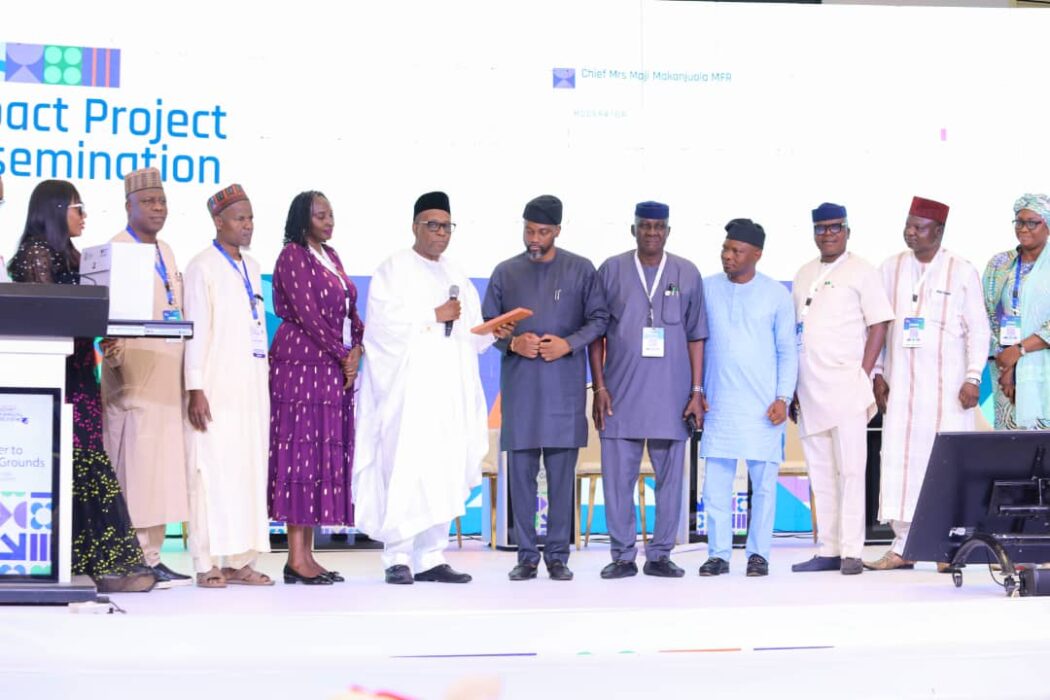
The federal government has said that Nigeria has upgraded more than 2,500 primary healthcare centres (PHCs) and improved child immunisation coverage through a $650 million World Bank-supported health intervention.
The Immunisation Plus and Malaria Progress by Accelerating Coverage and Transforming Services (IMPACT) Project also contributed to reducing malaria prevalence from 22 per cent in 2021 to 15 per cent in 2025, while the proportion of fully immunised children aged 12 to 23 months increased from 31 per cent to 39.7 per cent.
The Executive Director of the National Primary Health Care Development Agency (NPHCDA), Dr Muyi Aina, disclosed this at the IMPACT End-of-Project Dissemination and Transition Forum in Abuja.
Aina said the project had fully immunised 16.6 million children, exceeding its target of 9.3 million, while contributing to a reduction in under-five mortality from 102 to 90 deaths per 1,000 live births.
He said the achievements reflected the impact of investments in primary healthcare infrastructure, vaccine procurement, cold-chain equipment and malaria prevention interventions.
According to him, more than 2,500 primary healthcare facilities across 30 states and the Federal Capital Territory were upgraded to Level 2 functionality to improve access to essential health services.
He added that the project financed 200 million vaccine doses between 2023 and 2025 and provided 3,144 solar direct-drive refrigerators to strengthen vaccine storage and distribution.
Aina further disclosed that the intervention supported the construction of a modern vaccine storage hub in Lagos to serve states in the South-West and South-South regions.
On malaria prevention, he said 4.68 million long-lasting insecticidal nets were distributed across the participating states, while 5.8 million pregnant women received at least three doses of intermittent preventive treatment for malaria.
He added that insecticide-treated net usage among children increased from 41 per cent to 44.9 per cent, while usage among pregnant women rose from 50 per cent to 54 per cent.
The NPHCDA chief executive, however, warned that sustaining the achievements would require deliberate ownership by state and local governments as the project closes on December 31, 2026.
“The IMPACT Project closes on the 31st December 2026. But a health centre does not,” he said.
He urged state governments to take ownership of the facilities, equipment, solar panels, boreholes, tablets and tricycle ambulances provided under the intervention and make provisions for their maintenance in annual budgets.
Aina said the NPHCDA would integrate the project’s gains into the Basic Health Care Provision Fund, the HOPE-PHC programme and its primary healthcare revitalisation plan.
Also speaking, the Coordinating Minister of Health and Social Welfare, Prof. Muhammad Pate, described the IMPACT Project as an important milestone in Nigeria’s 22-year health sector reform journey.
READ ALSO:
- SunTrust Bank Boosts Staff Welfare, Raises Salaries By Up To 75%, Promotes 25% Of Workforce
- Wike’s Olayinka Aide Recalls Child’s Near-Death Experience Over Fake Baby Food
- N4bn Pension Debt: Nasarawa Retirees Move To Seize Bank Assets Over Unpaid Entitlements
Pate said the country’s health reforms had evolved from investments in infrastructure and equipment to a results-based financing approach aimed at ensuring that resources translated into improved health outcomes.
He explained that the National Health Act, signed into law in 2014, established the Basic Health Care Provision Fund and provided a framework for strengthening primary healthcare delivery.
According to him, the IMPACT Project was conceived as a bridge between earlier investment-based financing and the implementation of the Basic Health Care Provision Fund, while the subsequent HOPE programme would build on the progress recorded.
He said the priority now was to sustain the achievements through stronger collaboration among federal, state and local governments and development partners.
“The challenge for us is then how to sustain it, because reform is a continuous process. Every system has to continually adapt and change,” Pate said.
The World Bank Country Director, Mr Matthew Verghis, said the project demonstrated how sustained investments in primary healthcare could improve service delivery and health outcomes.
He disclosed that more than $20 million was transferred directly to primary healthcare facilities to address operational needs, while approximately $170 million was invested in routine vaccine procurement over four years.
Verghis added that more than 15,000 health workers were directly engaged to address staffing gaps and had subsequently been absorbed by state governments.
He said the project also equipped more than 6,000 primary healthcare facilities with laptops and trained medical records officers to upload routine service delivery data through the District Health Information Software 2 platform.
According to him, the next phase of Nigeria’s health sector reforms would focus on transferring the project’s achievements into stronger national systems through the Nigeria Health Sector Renewal Investment Initiative, the Sector-Wide Approach and the HOPE programme.
He stressed that the success of the transition would depend on government ownership, sustainable financing, maintenance of health facilities and accountability for results.
The National Coordinator of the National Malaria Elimination Programme, Dr Nnenna Ogbulafor, said malaria prevalence had declined from 27 per cent at the beginning of the intervention to 15.2 per cent by the project’s closeout period.
She said the project also supported the development of the National Malaria Strategic Plan 2026–2030, larval source management in six states and the production of next-generation insecticide-treated nets.
Ogbulafor added that interventions were introduced to improve access to affordable malaria diagnostics and medicines, strengthen surveillance and improve the quality of antimalarial commodities.

