

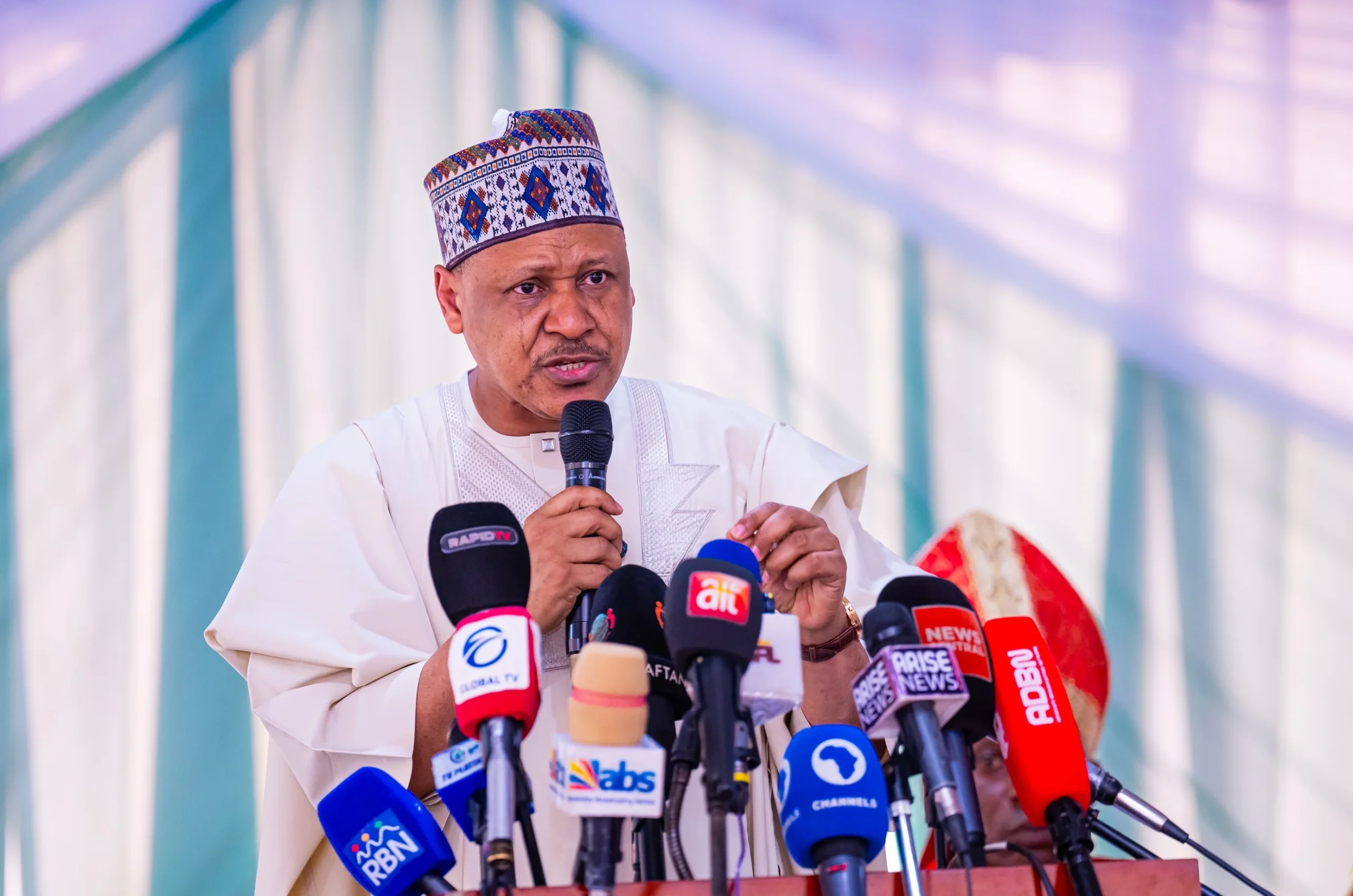
Nigeria’s Minister of Information and National Orientation, Mohammed Idris, has reaffirmed the Nigerian Government’s commitment to sustaining economic recovery and improving citizens’ living conditions, while defending the economic reforms introduced by President Bola Ahmed Tinubu’s administration amid concerns over rising petrol prices and the cost of living.
Idris made this known in Abuja during an interactive media engagement with senior editors and broadcast anchors, where the minister addressed concerns over petrol prices, the cost of living, labour relations, food security, local government autonomy, infrastructure development, national security and press freedom.
Speaking on the Nigerian National Petroleum Company Limited’s (NNPC Ltd.) 30-day petrol discount initiative, the Information Minister explained that the measure was designed to provide temporary relief to Nigerians amid rising international energy costs and should not be interpreted as a return to fuel subsidy.
According to Idris, the initiative allows the national oil company to forgo part of its profit to cushion the impact of high petrol prices on consumers.
“The NNPC has looked at it and said, ‘Okay, we are making this much profit. Why can’t we forgo some of the profit that we are making, so that Nigerians will have some form of cushioning?’” Idris explained.
The minister maintained that the intervention was intended to offer relief to households without reversing the government’s fuel subsidy removal policy.
Acknowledging that many Nigerians continued to face economic difficulties, Idris stressed that the success of the administration’s reform agenda would ultimately depend on its impact on the living conditions of ordinary citizens.
While pointing to improvements in some macroeconomic indicators, including declining inflation, stronger external reserves and increased non-oil export earnings, the minister recognised the need to ensure that the benefits of economic recovery were more widely felt.
“Our task now is to ensure that this clear macroeconomic recovery is felt even more widely in the lives and households of Nigerians: on the dinner table, in shops and markets, at the petrol station, and in pockets and wallets. I am pleased to say that work is already under way,” Idris emphasised.
Addressing labour relations and the rising cost of living, the Information Minister expressed optimism that the Nigerian Government and organised labour would resolve outstanding issues through dialogue.
Idris also recalled President Tinubu’s position that minimum wage arrangements could be reviewed every three years instead of every five years, a move the minister noted could provide greater flexibility in responding to changing economic realities.
Read Also: Diddy’s Health Becomes Concern After Reported Hospital Visit In New Jersey Prison
On local government financial autonomy, the Information Minister reaffirmed the administration’s commitment to the policy, noting that consultations with relevant stakeholders were ongoing to address implementation challenges and ensure the system operated effectively.
Turning to food security, Idris disclosed that the government was supporting domestic agricultural production and strengthening strategic food reserves to improve food availability and affordability.
The minister urged traders to desist from hoarding food items and creating artificial scarcity, arguing that such practices could worsen the hardship experienced by consumers.
“The government can create these enablers for Nigerians to have succour, but it is ultimately up to Nigerians to also support what the government is doing,” Idris stressed.
He called for collective responsibility among government agencies, farmers, traders and other stakeholders to ensure that efforts to boost food production translated into lower prices and improved access to essential commodities.
Defending ongoing federal road projects, the minister dismissed suggestions that the projects were being executed for electoral purposes, insisting that their objective was to improve connectivity and stimulate economic activities.
“Nobody is fixing roads just because there is an election. We are fixing roads so that Nigerians can have access to these roads, so that they can connect cities and create these economic corridors for businesses to thrive,” Idris maintained.
Improved road infrastructure, the minister explained, would facilitate the movement of agricultural produce, strengthen trade and connect communities to markets and other economic opportunities.
The Information Minister also highlighted the expansion of the military’s operational structure from eight to 12 divisions, alongside improved support for security personnel, as part of efforts to strengthen the country’s security architecture.
Acknowledging that significant security challenges remained, Idris reiterated the Nigerian Government’s determination to protect lives and property.
“Let me assure Nigerians that the Federal Government will neither relent nor retreat in its determination to secure every part of our country. The security of Nigerians is not negotiable. We will continue to protect vulnerable communities and work towards a country in which every citizen can live, travel, farm, trade and work in safety,” he assured.
Addressing concerns about press freedom and reports of arrests involving citizens expressing political opinions, Idris disclosed that he was unaware of any directive by President Tinubu authorising the repression of the media.
The minister promised to seek clarification on specific incidents raised by participants during the engagement.
While reaffirming the importance of a free press in a democratic society, the Information Minister urged media organisations to uphold professional standards, verify information before publication and avoid misleading or sensational headlines.
Idris stressed that the exercise of press freedom must be matched by a commitment to accuracy, fairness and responsible journalism.
“Press freedom is not just one thing that is just hanging in the air. It is also having something attached to it, and that is the responsibility of those who are exercising it,” the minister reiterated.
Idris commended the participating media organisations for their contributions to the discussion and expressed willingness to sustain the interactive sessions, potentially on a fortnightly basis.
“Regular engagements with media professionals would provide an opportunity for the government to explain its policies, address public concerns and clarify emerging national issues,” he added.
Continued dialogue between the government and the media is expected to strengthen communication with Nigerians and enhance public understanding of government policies, programmes and initiatives.

