

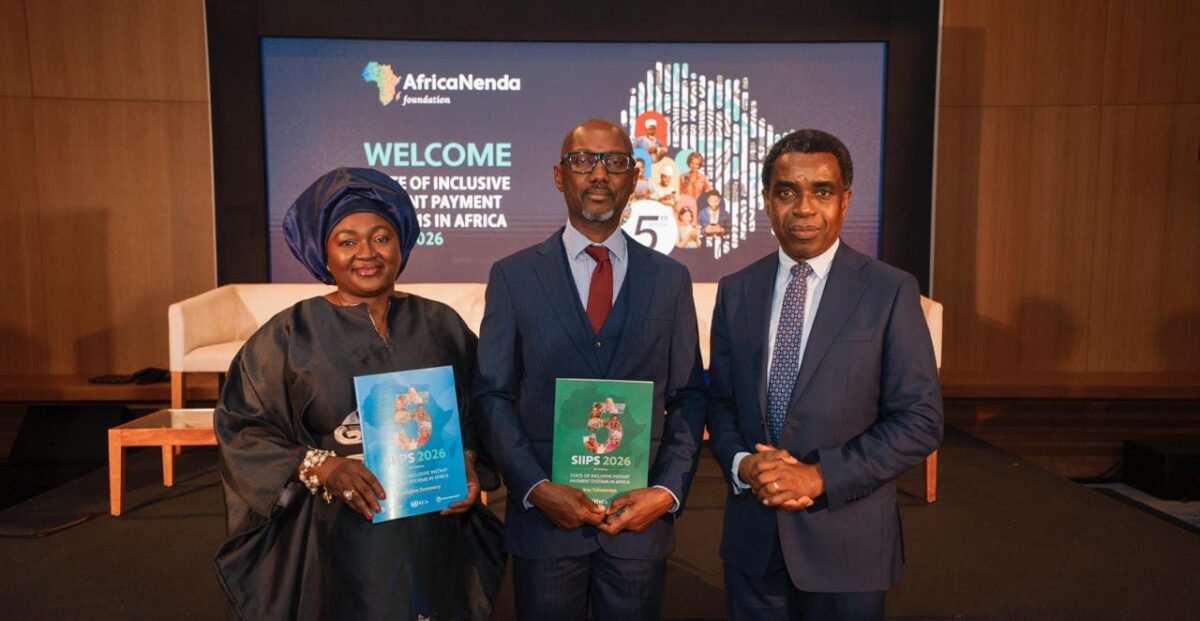
Africa recorded 71.4 billion instant payment transactions valued at $1.8 trillion in 2025, nearly three times the volume recorded in 2021, as the adoption of digital payment systems continues to expand across the continent.
This is according to the 2026 State of Inclusive Instant Payment Systems in Africa (SIIPS) report, published on Thursday by the AfricaNenda Foundation in partnership with the United Nations Economic Commission for Africa (UNECA) and the World Bank Group.
The report, however, noted that despite the growing access to instant payment infrastructure, cash remains widely used across the continent, with 55 per cent of surveyed digital payment users still relying on cash for about half of their transactions.
It further revealed that although 89 per cent of African adults live in countries with access to instant payment systems, challenges relating to transaction failures, delays, fraud and inadequate complaint resolution continue to undermine users’ confidence in digital payments.
According to the report, more than half of the 1,403 digital payment users surveyed across 15 African markets had experienced payment-related problems, including delays and transfers to wrong recipients.
However, one in three users who encountered such challenges never reported them, largely because they did not know how to seek redress.
Speaking on the findings, Deputy Chief Executive Officer of AfricaNenda Foundation and lead author of the report, Sabine F. Mensah, said the continent had made significant progress in expanding instant payment infrastructure, but building public trust remained the next major challenge.
She said the organisation’s first report, published five years ago, identified 29 instant payment systems across Africa, compared with 39 currently operational.
Mensah noted that the focus had shifted from expanding access to ensuring that users have sufficient confidence in digital payment platforms to rely less on cash.
She said trust in instant payment systems depends on successful and immediate transactions, preventive safeguards such as recipient name verification and real-time payment confirmation messages.
According to her, effective complaint resolution and timely refunds when transactions go wrong are equally important in sustaining users’ confidence.
The report identified 39 operational instant payment systems across Africa, comprising 35 domestic systems in 29 countries and four regional systems.
It stated that 43 African countries now have access to instant payment capabilities through domestic or regional platforms, while 17 other countries have ongoing projects to establish such systems.
READ ALSO:
- KWASUTH Records 36,000 Patients Contact, 300 Women Delivery Monthly – CMD
- 37 Miners’ Death: Senate Urges Tinubu To Implement Probe Report, Pay Compensation
- Bodija Explosion Victims Demand Direct Payment Of Outstanding N20bn Fund
Four domestic systems were introduced in the past year in Liberia, Burundi, Guinea and Mauritania, while a new regional platform now serves the eight member countries of the West African Economic and Monetary Union (WAEMU).
On transaction growth, the report disclosed that instant payment volumes had increased by an average of 28 per cent annually since 2021, while the average transaction value declined from $45 to $26.
It attributed the decline to increasing use of instant payment platforms for smaller, everyday purchases, noting that mobile money systems account for 73 per cent of all transaction volumes.
The report also identified transaction speed, clear confirmation messages and recipient verification as the three major factors influencing users’ confidence in digital payment systems.
It warned that poor complaint resolution could discourage digital payment adoption, revealing that 43 per cent of users who lost money reduced their use of digital payment services.
Conversely, users who received refunds after losing money were more likely to continue using digital payment platforms.
On emerging technology, the report noted that payment service providers were adopting artificial intelligence (AI)-based fraud prevention measures faster than instant payment system operators.
However, it said users largely perceived AI as a potential risk, particularly because of emerging threats such as deepfakes.
The report further established a link between instant payment infrastructure and financial inclusion, noting that active account usage was approximately seven percentage points higher in countries where instant payment systems operate.
It added that more inclusive instant payment systems could create opportunities for expanding access to financial services, including credit, through digital transaction records that provide insights into users’ cash flows.
Meanwhile, Chief Executive Officer of AfricaNenda Foundation, Dr Robert Ochola, said Africa had made remarkable progress in developing inclusive instant payment infrastructure, largely driven by the expertise of local software engineers and designers.
He said the next phase of development must focus on making the systems affordable, secure and financially sustainable.
Ochola stressed that strengthening the reliability and safety of digital payment infrastructure would be critical to deepening adoption and ensuring that more Africans benefit from the continent’s growing digital financial ecosystem.

