

The Minister of State for Health and Social Welfare, Dr Iziaq Salako, has urged federal and state governments to increase the implementation of the National Council on Health’s resolutions from 75 per cent to at least 90 per cent.
He said the target was necessary to bridge the accountability gap in the health sector and ensure that policy commitments translated into measurable improvements in healthcare delivery.
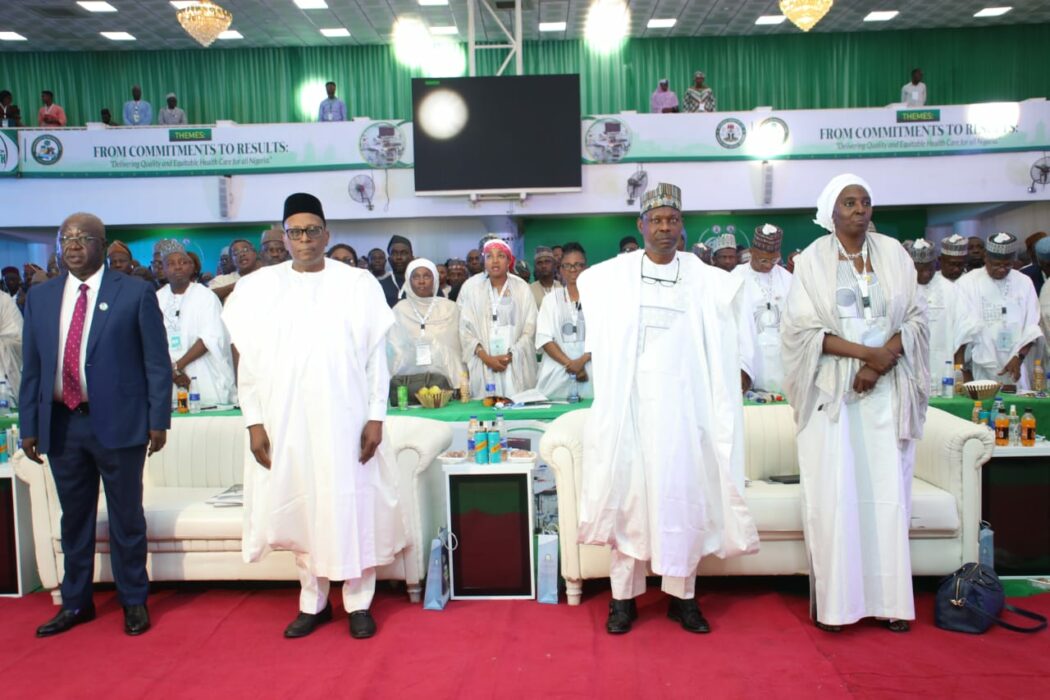
Salako made the call on Thursday at the 67th National Council on Health (NCH), held in Lafia, Nasarawa State, with the theme, “From Commitment to Results: Delivering Quality and Equitable Healthcare for All Nigerians.”
He said the council must ensure that every memorandum considered has clear responsibilities, timelines and measurable outcomes, rather than ending with policy declarations.
According to him, members should ask four key questions when considering each memorandum: how it aligns with the government’s health transformation agenda, who is responsible for implementation, the timeline for action, and how progress will be measured.
Salako said the resolutions must move beyond Lafia to states, local governments and communities, where Nigerians should experience tangible improvements in healthcare services.
He noted that progress had been recorded under the health sector reform agenda, including the revitalisation of thousands of primary healthcare centres, the recruitment and training of frontline health workers, the expansion of health insurance, improved infrastructure, digital health initiatives, and increased local pharmaceutical manufacturing.
The minister also said efforts to reduce preventable maternal, newborn and child deaths were yielding results, with increased facility deliveries, expanded emergency obstetric response and declining facility-reported maternal and neonatal deaths.
However, he stressed the need to sustain the gains by ensuring reliable electricity, essential medicines, functional equipment, adequate staffing and accountable financing at healthcare facilities.
On maternal and child health, Salako urged states to expand Basic Emergency Obstetric and Newborn Care (BEmONC) facilities and extend the Maternal Mortality Reduction Innovation Initiative (MAMII) to all 774 local government areas, starting in 2027.
He also called for increased domestic health financing, urging governments to accelerate progress towards the 15 per cent Abuja Declaration target and ensure timely release and full implementation of approved health budgets.
The minister further urged states with less than 50 per cent coverage of four antenatal care visits, or rising numbers of zero-dose children, to develop costed recovery plans and incorporate them into their 2027 operational plans.
The Coordinating Minister of Health and Social Welfare, Prof. Muhammad Ali Pate, said Nigeria has achieved 41 health sector commitments under the ongoing reforms, with 12 of the 13 national health indicators improving over the last three years.
Pate, however, warned that sustaining the gains would depend on increased domestic health financing, the timely release of budgetary allocations, and the effective implementation of policies by federal and state governments.
According to him, the initiative, launched by President Bola Tinubu in December 2023 alongside the 36 state governors, was designed to strengthen coordination through a sector-wide approach based on one plan, one budget, one report and one conversation.
READ ALSO:
- Northern States Top National Health Ranking
- NCH: Health Leaders Urged To Translate Resolutions Into Results
- 3 Health Workers Die Of Tuberculosis In Nasarawa As Drug-Resistant Cases Rise
Giving an account of progress, Pate said skilled birth deliveries in facilities supported by the Basic Health Care Provision Fund increased from 4.8 million in 2023 to almost eight million by mid-2026, while fourth antenatal care visits rose from six million to 8.7 million.
He added that more than 100,000 women and newborns had been reached through the emergency transport system. At the same time, the proportion of BHCPF-supported facilities in MAMII areas with at least two midwives or community health workers increased from 12 per cent to almost 91 per cent.
The minister said health insurance coverage had also increased from 16 million to nearly 24 million Nigerians. At the same time, the Free Emergency Obstetric Care Programme had covered more than 80,000 caesarean sections in two years.
He further disclosed that more than 50,000 Nigerians had received free emergency care in 507 designated facilities, while dialysis costs had been reduced by up to 80 per cent for more than 5,000 patients.
On health workforce development, Pate said nearly 20,000 skilled birth attendants had been recruited across 22 states, about 5,000 community health workers had been engaged in 10 states, and almost 80,000 frontline health workers had been retrained.
He also disclosed that state health budgets had increased from N1.97 trillion in 2023 to more than N3.3 trillion in 2026, commending governors and commissioners of health for the increase.
However, he urged state governments to ensure that the increased allocations were released and translated into services, particularly as Nigeria approaches 2027, an election and transition year.
Pate said the need for stronger domestic financing had become more urgent following the decline in development assistance for health in 2025, warning that Nigeria could face a significant funding gap if external support, particularly from the United States, reduces without corresponding increases in domestic investment.
He said the agreement with the US government offered Nigeria an opportunity to transition from dependence on external assistance over the next four to five years. Still, he stressed that the transition would only be successful if federal and state governments increased their financial commitments.
Nasarawa State Governor, Abdullahi Sule, urged the Federal Government and state governments to prioritise practical resolutions, clear implementation timelines and accountability mechanisms to improve healthcare delivery across the country.
Sule, who, with his deputy, Dr Emmanuel Akabe, represented, said the success of the Council should not be measured by the number of policies formulated or resolutions adopted. Still, by the tangible improvements they bring to Nigerians’ lives.
According to him, governments must bridge the gap between policy formulation and implementation, between budgetary allocations and actual service delivery, and between commitments and measurable outcomes.
He said healthcare was not merely about constructing hospitals, procuring medical equipment or providing medicines, but about preserving lives, protecting human dignity and enabling citizens to live healthy and productive lives.
The governor stressed that strengthening primary healthcare must remain the foundation of efforts to achieve universal health coverage, describing PHCs as the first point of contact for most Nigerians and a critical platform for preventive care, immunisation, maternal and child health services, disease surveillance and early diagnosis.
He also called for increased investment in the training, welfare, professional development and appropriate deployment of health workers, including doctors, nurses, midwives, pharmacists, laboratory scientists and community health workers.

