

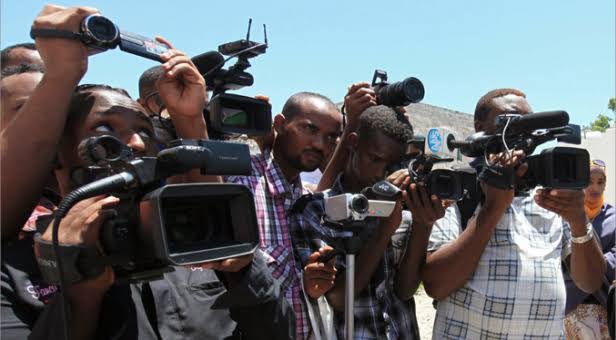
Journalists have been warned against allowing political interests, financial inducements and the race for online popularity to compromise accuracy, as media professionals called for stronger investigative reporting, fact-checking and editorial independence.
The warning was issued at the maiden Journalism and Media Conference 2026, organised by The Journalism Academy in Ilorin, Kwara State, on Thursday.
Speakers said the credibility and future of the industry depended on public trust, professional integrity and accountability.
The conference, with the theme, “The Future of Journalism: Truth vs Trends”, brought together experienced journalists, media professionals, students and other stakeholders to examine the challenges confronting contemporary journalism and the need to reposition the profession for the digital age.
Founder of The Journalism Academy and convener of the conference, Mosunmola Ajibade, said journalists must remain courageous, independent and committed to truth despite increasing threats to their safety, intimidation, unlawful detention and other professional challenges.
Ajibade expressed concern over the influence of financial inducements, particularly brown envelopes, and political interests on media practice, insisting that journalism must not be compromised for personal, political or financial benefits.
“Journalism must remain relevant, courageous, independent, and committed to truth. It must never be silenced or compromised for personal, political, or financial interests,” she said.
She questioned whether journalism education in Nigeria adequately prepared aspiring media practitioners for the realities of contemporary newsrooms, calling for a review of academic approaches to bridge the gap between classroom learning and professional practice.
READ ALSO:
- 2027: IPC, NUJ Task Journalists On Fact-checking, Citizen-centred Electoral Reporting
- ‘Drag Me Instead’ — Yul Edochie Reacts To Decline In Online Criticism
- My Father Appeared In Dream, Warned Me Not To Yield To Board — Jimmy Odukoya
According to her, the Journalism Academy was established on 2 March 2026 to promote practical, inclusive and relevant media education in line with Sustainable Development Goal 4 on quality education.
In his keynote address, broadcast journalist and media entrepreneur Joseph Chidiebere Emeribe challenged journalists to stop allowing social media popularity and the pressure to attract online engagement to dictate editorial decisions.
Speaking on “The Future of Journalism: Truth vs Trends”, Emeribe argued that journalists did not need to choose between reaching audiences through trending issues and maintaining professional standards.
“My central argument today is simple: the future of journalism does not require us to choose between truth and trends. It requires us to understand how to use trends without compromising the truth,” he said.
He warned that competition for online attention had encouraged sensational headlines, unverified allegations and the amplification of rumours, stressing that journalists must use trending issues to reach audiences without surrendering their professional judgement.
Emeribe identified the pressure to break news, commercial interests, fragmented information sources and the desire for recognition as factors contributing to misinformation.
On artificial intelligence, he acknowledged its benefits in transcription, translation, data analysis and content development, but warned that the technology could not replace human judgement and editorial responsibility.

