

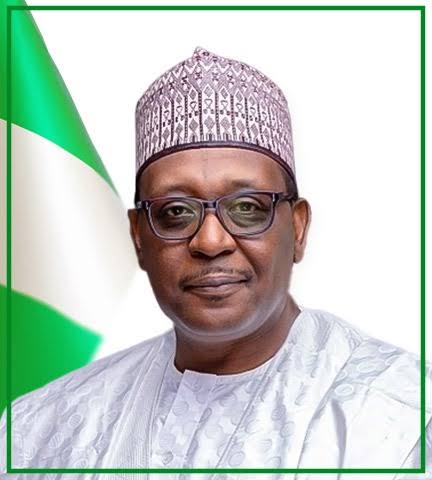
The federal government has warned that Nigeria faces a major health financing gap unless federal and state governments urgently increase domestic funding, following plans by the United States to withdraw its health support within the next four to five years.The Coordinating Minister of Health and Social Welfare gave the warning on Thursday in Lafia, Nasarawa State, at the opening of the 67th National Council on Health.
He said development assistance for health declined sharply in 2025, prompting President Bola Ahmed Tinubu to approve additional resources to protect gains in HIV, tuberculosis, malaria and polio immunisation programmes.
According to the Minister, the Memorandum of Understanding (MoU) signed between the Nigerian and United States governments provides an opportunity for the country to transition from dependence on foreign assistance to sustainable domestic financing.
He, however, warned that the transition would fail without increased funding commitments from federal and state governments.
“If the US exits and we don’t increase our domestic financing, we’ll be left with a very large gap,” he said. “Sovereignty is only possible if we put our money where our mouth is.”
The Minister said the MoU had been discussed with the Nigeria Governors’ Forum and was publicly available, urging all tiers of government to honour their commitments under the agreement.
He disclosed that state health budgets had increased from N1.97 trillion in 2023 to more than N3.3 trillion in 2026, commending governors and commissioners for the improvement.
However, he urged state governments to ensure that allocated funds were actually released and spent, particularly as the country approaches the 2027 election and transition year.
He also expressed concern that households continued to shoulder a significant proportion of healthcare expenditure despite improvements in government allocations.
The 67th National Council on Health, themed, “From Commitments to Results,” is the highest policymaking body in Nigeria’s health sector under the National Health Act 2014.
The Minister said the council was building on reforms agreed at the 64th meeting in Ekiti in 2023 and subsequently strengthened in Maiduguri in 2024 and Calabar in 2025.
He disclosed that the Federal Government reported at last week’s Joint Annual Review in Abuja that 41 health sector commitments signed with the President had been achieved, while 12 of the 13 health indicators had improved over the past three years.
According to him, skilled deliveries at facilities supported by the Basic Health Care Provision Fund (BHCPF) increased from 4.8 million in 2023 to almost eight million by mid-2026, while fourth antenatal care visits rose from six million to 8.7 million.
He added that more than 100,000 women and newborns had been transported to healthcare facilities through the emergency transport system.
The proportion of BHCPF-supported facilities in hard-to-reach areas with at least two midwives or community health workers also increased from 12 per cent to almost 91 per cent.
The Minister further disclosed that nearly 20,000 skilled birth attendants had been recruited across 22 states, while almost 5,000 community health workers had been engaged in 10 states and about 80,000 frontline health workers retrained.
He said health insurance enrolment increased from 16 million to nearly 24 million Nigerians within three years, while the free emergency obstetric care programme had covered more than 80,000 caesarean sections in two years.
More than 50,000 Nigerians had also received free 48-hour emergency care in 507 empanelled facilities, while dialysis costs had been reduced by up to 80 per cent for more than 5,000 patients.
On immunisation, he said the measles and rubella vaccination campaign reached more than 100 million children aged zero to nine years, while over 70 million adolescent girls had received human papillomavirus (HPV) vaccines.
On local production of medical commodities, the Minister said 10 factories and production lines had been commissioned, including six in 2026, to manufacture medicines, rapid diagnostic test kits, mosquito nets and medical oxygen.
He added that local manufacturers had received more than N24 billion in tax waivers under the Presidential Executive Order signed in June 2024.
On the council’s deliberations, he said Permanent Secretaries had considered 70 memoranda over two days, recommending 22 for approval and 33 for noting by the council.
He said the technical session also reviewed the 20 resolutions reached at the 66th council meeting in Calabar, recording an average implementation score of more than 50 per cent, with at least 50 per cent implementation achieved on 15 resolutions.
He commended Niger, Benue, Akwa Ibom, Abia and Kogi States for recording the highest implementation scores.
However, he identified policies on sodium reduction, cosmetic safety, contraceptive prevalence, laboratory management and quality improvement as areas where implementation remained slow.
He urged states to attach clear timelines to council resolutions, establish measurable targets and submit quarterly progress reports through the council’s secretariat.
The Minister said the government’s priorities would include improving the quality of primary healthcare services, strengthening the use of data in decision-making and addressing inequalities in access to healthcare.
He cited the latest household survey, which showed that skilled health workers attended fewer than four in 10 rural births, compared with seven in 10 urban births.
On health security, he commended the Nigeria Centre for Disease Control and Prevention (NCDC), Port Health Services and development partners for containing the recent imported Ebola case.
He urged state governments to adequately fund their Public Health Emergency Operations Centres and sustain surveillance against cholera, Lassa fever, meningitis and measles.
He also called for stronger protection of healthcare workers against harassment and attacks, noting that the technical session had recommended the adoption of a report on harassment of health workers.
The Minister thanked the Nasarawa State Governor, the Deputy Governor, Dr Emmanuel Akabe, and residents of the state for hosting the council for the first time.
He also paid tribute to the Permanent Secretary of the Federal Ministry of Health, Daju Kachollom, MNI, noting that the meeting might be her last as Permanent Secretary.
He urged participants to adopt only resolutions they were prepared to finance, implement and report on, while calling on commissioners of health to take the resolutions back to their respective state councils on health and incorporate them into budgets and annual operational plans.
The 67th National Council on Health is holding in Lafia, with ministers, state commissioners of health, permanent secretaries, heads of agencies, development partners, civil society organisations and other stakeholders in attendance.
READ ALSO:
- Nigeria Faces Health Funding Crisis As US Aid Exit Looms
- Nigerians’ Behaviour Could Frustrate Tinubu’s Reforms, NOA DG Warns
- AGILE Warns Bauchi Supervisors Against Compromising School Projects

