

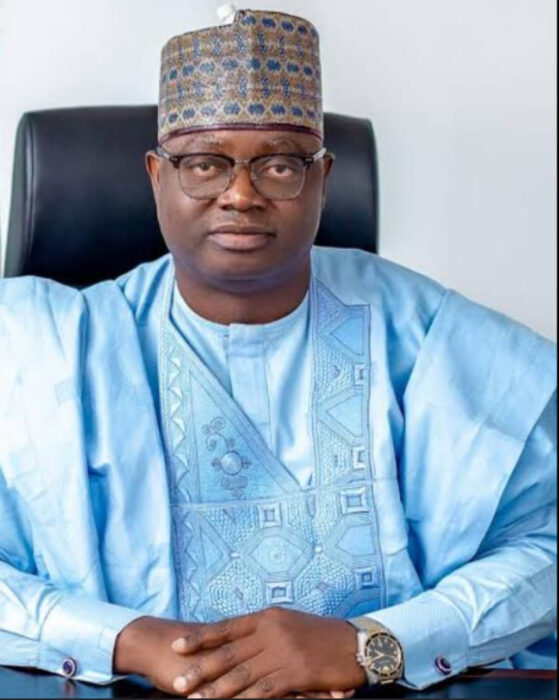
The Director-General of the National Orientation Agency (NOA), Lanre Issa-Onilu, has warned that indiscipline, dishonesty and disregard for public responsibility among Nigerians could undermine the economic and institutional reforms being implemented by President Bola Tinubu’s administration.
Issa-Onilu spoke on Thursday in Abuja at the ongoing Global Alliance World Public Relations Forum, where he described Nigeria’s national ethics policy as the foundation for sustainable development.
He argued that the country could not achieve meaningful progress without deliberately addressing its values and behavioural challenges.
The NOA director-general noted that the Tinubu administration had, within three years, embarked on far-reaching reforms covering the economy, infrastructure, business conduct, education, health and strategic communication, but warned that poor national character could frustrate the gains.
He said, “This administration, in just three years, has embarked on far-reaching reforms covering economy, infrastructure, business conduct, education, health, and citizen-facing strategic communication. These reforms have been yielding positive outcomes that we all can see.
“However, the question remains: can we sustain these reforms when our national character is unsupportive of development?”
Issa-Onilu said the government had not paid sufficient attention to character reform despite its importance to the success of other policy initiatives.
He explained that dishonesty among public officials, tax evasion by citizens and disregard for regulations could frustrate even the best-designed government policies.
“We can introduce the best tax system, but it will fail if officials are dishonest. Citizens deliberately evade their obligations. We can construct excellent roads, but they will not last if contractors compromise standards and road users disregard regulations,” he said.
Using public facilities as an example, he lamented the destruction and poor maintenance of infrastructure provided with taxpayers’ money.
“Consider a public facility built with taxpayers’ money. Within months, fittings disappear, the surroundings become filthy, and nobody accepts responsibility. Government may replace the damaged facility, but unless behaviour changes, the problem will return,” he said.
He maintained that policies did not implement themselves, stressing that the values of those responsible for executing them ultimately determined their effectiveness.
“That is why character reform is fundamental to national development. Policies do not implement themselves. People implement them, and their values influence the results,” he stated.
READ ALSO:
- 2027: Major Promises Tinubu Has Made To Nigerians
- 2027: Party Chieftain Begs Tinubu, Yari To Unite APC In Kano
- AGILE Warns Bauchi Supervisors Against Compromising School Projects
Reflecting on Nigeria’s 66 years of independence, the NOA boss said the country needed to examine the national values it had deliberately built and those it intended to pass on to future generations.
“We cannot continue to do the same things and expect different results. We must deliberately build a national character that supports our development aspirations,” he said.
Also speaking, Nobel Laureate, Prof. Wole Soyinka, said the World Public Relations Forum offered an opportunity to reaffirm the strategic importance of public relations in shaping perceptions, building trust, strengthening institutions and fostering meaningful relationships across society.
Soyinka, who received the 1986 Nobel Prize in Literature, said the profession had an even greater responsibility at a time of technological disruption and growing demands for transparency and accountability.
He commended the Global Alliance for Public Relations and Communication Management, the African Public Relations Association (APRA), the Nigerian Institute of Public Relations (NIPR) and other partners for bringing the international conversation to Africa.
He expressed hope that discussions at the forum would strengthen professional collaboration and advance the relevance of public relations globally.
Similarly, the Chairman of United Nigeria Airlines, Prof. Obiora Okonkwo, warned that irresponsible communication and the spread of misinformation could threaten national security, undermine democracy and endanger human lives.
Okonkwo cited the 1994 Rwandan genocide, Nigeria’s 2023 general elections and misinformation during public health emergencies as examples of the consequences of irresponsible communication.
He recalled that a radio station in Rwanda, Radio Télévision Libre des Mille Collines, became a vehicle for ethnic hatred and incitement before and during the genocide, which claimed about 800,000 lives.
According to him, the broadcasts helped turn neighbours against one another, while the International Criminal Tribunal for Rwanda subsequently established the criminal responsibility of media figures for their role in inciting the genocide.
“The lesson is clear: communication is not always an innocent exercise. In the hands of responsible actors, the microphone can become as destructive as a very dangerous weapon,” he said.
Turning to Nigeria, the airline chairman said the 2023 general elections demonstrated how social media, despite its usefulness for political mobilisation, could also facilitate the spread of fabricated election results, unverified claims and divisive ethnic and political narratives.
He said the European Union Election Observation Mission documented the prevalence of misleading political communication during the elections.

