

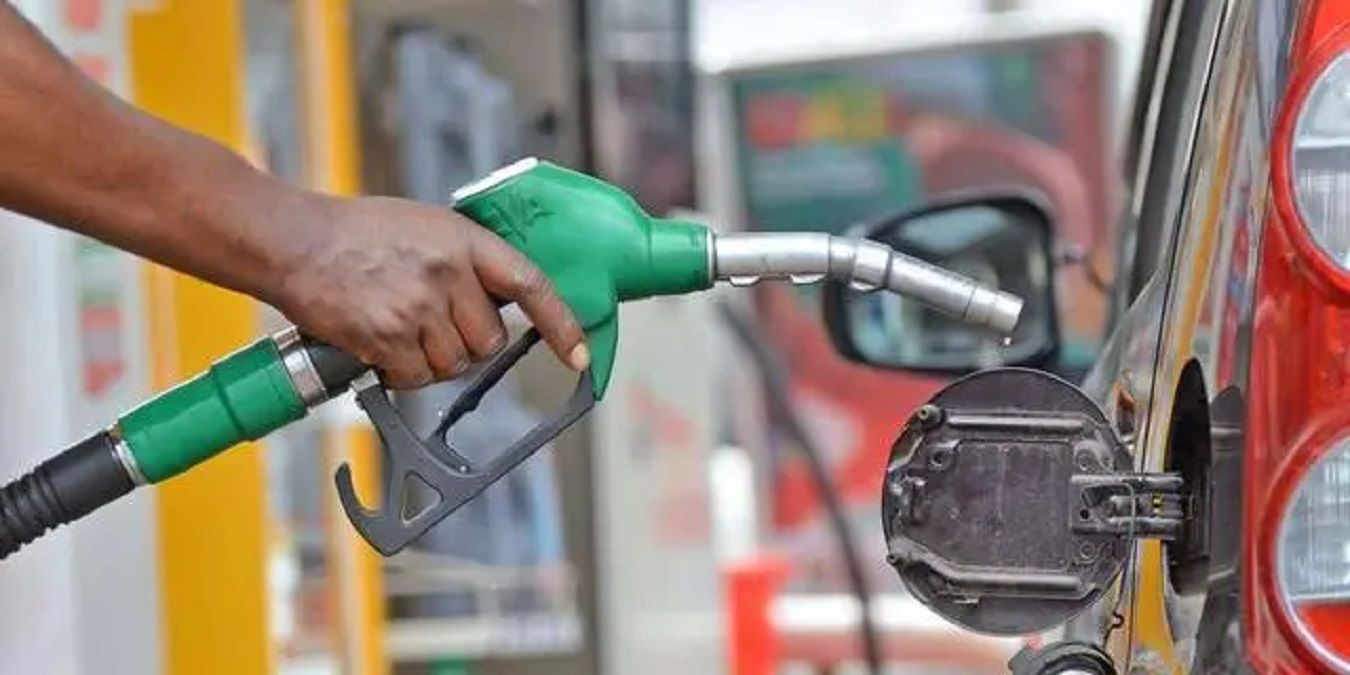
Following Dangote Refinery’s announcement on Friday of yet another gantry price increase—the fourth since March 2026 and since the escalation of the Iran-US-Israel war—Nigerians would have to deal with another round of premium motor spirit (petrol) price increases statewide.
In a circular to marketers, the 650,000-barrel-per-day refinery announced that it had raised the price of its pump from N1,175 to N1,245 per liter.
A notice published on Friday contained Dangote’s most recent increase in fuel prices.
The refinery stated in the notice that “the gantry price increased from N1,175 per liter to N1,245 per liter,” and that the new price will go into effect on Saturday, March 21, 2026.
The refinery attributed the increase to the Middle East’s geopolitical scenario. As of Saturday morning, Brent and West Texas Intermediate crude blends had risen to $112 and $98 per barrel, respectively.
Chinedu Ukadike, a spokeswoman for the Natural Oil and Gas Suppliers Association of Nigeria and the Independent Petroleum Marketers Association of Nigeria, verified the most recent price increase.
According to reports, Dangote Refinery has raised the price of gasoline four times in March: from N774 to N875, then to N995, N1,175, and finally to N1,245 a liter.
This implies that in order to comply with the most recent modification, marketers and retailers who depend on Dangote gasoline would need to raise their retail pump.
Recall that Dangote Refinery contributed 61 percent, or 39.6 million liters per day, of the nation’s 64.9 ml/d domestic petrol supply for February 2026, according to industry data released by the Nigerian Midstream and Downstream Petroleum Regulatory Authority on March 10.
It is implied that starting on Saturday, most Nigerians would have to pay extra for fuel.
This implies that the price of gasoline would increase by almost N70, from N1,261 to N1,330 per liter sold on Friday night in Abuja to N1,331 to N1,400.
In separate interviews on Friday, Professor Emeritus of Petroleum Economics Wumi Iledare and Professor of Accounting and Finance at Lead City University Godwin Oyedokun responded to Dangote Refinery’s most recent price increase, characterizing it as a direct result of the worldwide shock brought on by the Iran-US-Israel war.
Professor Iledare: The increase in Dangote fuel prices is a reflection of global oil reality rather than a failure of local policy.
Prof. Iledare has defended Dangote Refinery’s recent petrol price increase to N1,245 a liter, arguing that it was a direct result of global crude oil dynamics rather than flaws in domestic policy.
In response to the event, Iledare stated that the change was essentially unavoidable given the recent spike in Brent crude prices, which surpassed $110 per barrel amid growing tensions in the Middle East.
“Global crude oil prices have a direct impact on fuel prices. In a deregulated economy, what we are witnessing now is not out of the ordinary,” he stated.
He emphasized that domestic fuel prices still reflect the reality of the global market, even with Nigeria’s enhanced domestic refining capability and the crude-for-naira scheme.
Global market factors continue to have an impact on domestic gasoline prices. “It is impossible to separate Nigeria from the global oil market,” he said.
Iledare went on to explain that refiners are forced to set their product prices according to important economic factors.
The opportunity cost of crude oil, whether it is sourced domestically or abroad, must be considered by commercial refiners. They also need to take future market risks, finance commitments, and foreign exchange exposure into account, he stated.
He asserts that although local refining has advantages, it does not offer protection from worldwide shocks.
“Local refining lowers the risks associated with import logistics, but it does not protect Nigeria from fluctuations in the world oil price.” Nigerians need to comprehend that basic fact, he continued.
The professor stressed that, in contrast to the subsidy era, the nation is currently functioning under a more market-driven price framework.
“Petrol prices are now less dictated by politics and more driven by the market. Long-term viability requires this shift, even though it may be uncomfortable, he said.
He called on Nigerians to adopt more economical consumption habits in order to adjust to the shifting energy scenario.
In the upcoming years, he said, “energy efficiency, transport pooling, and gradual fuel substitution, especially towards gas, will become increasingly important.”
Iledare emphasized that citizens should concentrate on more comprehensive sector reforms and asked for increased accountability and uniformity in governmental policy.
“Rather than just lowering pump prices, Nigerians should demand policy consistency, transparency, and healthy competition in the downstream sector,” he stated.
He insisted that the benefits will only become apparent in the proper policy climate, characterizing the current transition as both difficult and encouraging.
According to him, “if government policies remain predictable, refining competition deepens, and social protection measures are properly targeted, the short-term pain can yield long-term gains.”
However, he cautioned that any gains could be undermined by uncertainty in the path of policy.
“Policy uncertainty is the true threat, not just high prices.” He warned that consumers need stability and investors need clarity.
Iledare emphasized the wider picture and stated that Nigeria needs to take advantage of the chance to expand its energy industry beyond refining.
“Building a resilient and diverse energy economy that can withstand global shocks is the real opportunity, not just local refining,” he continued.
Prof. Oyedokun: Global oil shock caused Dangote fuel prices to rise.
According to Prof. Oyedokun, the Dangote Refinery’s most recent petrol price increase to roughly N1,245 per liter is mostly a result of interruptions in the world oil market.
Oyedokun blamed the event on rising crude oil prices, pointing out that as tensions between Iran, the US, and Israel have increased, Brent Crude has risen to $110 per barrel.
“Rather than being a strictly domestic pricing choice, the most recent increase in petrol prices to almost N1,245 per liter underscores a larger global issue.
“Rising crude oil prices, especially Brent crude, which has increased significantly due to geopolitical tensions in key oil-producing regions, are the main cause of the surge,” he stated.
The professor cautioned that the consequences are already being felt throughout the economy when discussing the ramifications for Nigeria.
“The consequences are dire and immediate for Nigeria. The nation is nonetheless susceptible to changes in global oil prices despite its ability to refine its own oil,” he said.
He clarified that the economy is still vulnerable to external shocks due to structural concerns.
Global energy shocks are rapidly translated into domestic inflation due to dollar-denominated crude pricing, exchange rate pressures, and a deregulated downstream sector.
He continued, “This directly raises operating expenses for businesses and worsens living costs for households.”
Regarding the policy reaction, Oyedokun recommended more focused interventions rather than a return to general gasoline subsidies.
“The government’s response ought to be focused and practical. Authorities should think about short-term relief measures targeted at vital industries like transportation and agriculture rather than reinstating a broad gasoline subsidy, he said.
In order to lessen the damage, he also suggested monetary and fiscal changes.
“The pressure will be lessened by lowering taxes and levies on petroleum products, stabilizing the foreign exchange market, and making sure crude-for-naira agreements are implemented effectively,” he said.
He emphasized the necessity for structural changes in the energy sector going forward.
“Increasing crude oil production, boosting domestic refining competition, and investing in alternative energy and mass transit systems are essential steps in the medium to long term,” he stated.
Additionally, Oyedokun urged Nigerians to modify their expectations to reflect the actual situation.
“Global market forces now play a major role, and the days of artificially cheap petroleum are over.
“Nigerians need to take a practical and positive approach by calling for price transparency and modifying their spending habits.
“In the end, Nigeria’s true energy security lies in reducing structural dependence on global oil price volatility, not just in refining capacity,” he stated.

