

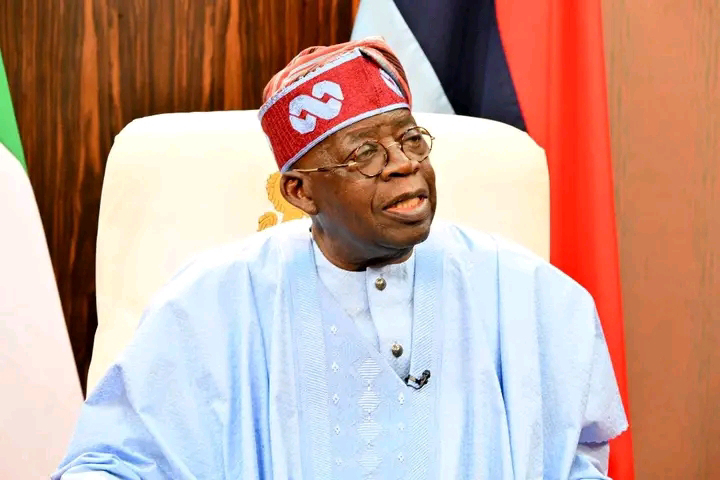
It’s easy, perhaps too easy, to devote every column to listing what’s going wrong in this country. God knows there is enough material.” The insecurity, the infrastructure deficit, the cost of living that still bites hard on ordinary families, none of that has disappeared. But part of honest political commentary—the kind you want to read—is being able to call it straight when a government does something right. Last Thursday, the Tinubu administration got something right at the Presidential Villa.
President Bola Tinubu on Thursday launched five World Bank-backed programmes worth $3.05 billion, aimed at reducing poverty, developing human capital and building community resilience. By any fair measure, the programmes NG-CARES Additional Financing, the SOLID programme for internally displaced persons and their host communities and three HOPE initiatives covering governance, primary healthcare and basic education represent the single largest coordinated social investment package this administration has put on the table since taking office, and deserves serious attention and not the dismissive cynicism that has become the default posture of too many commentators when this government does anything.
Let me be clear, that’s not what I’m saying. I’m not saying we’re finished. “I’m not saying that $3.05 billion is automatically $3.05 billion to the people who need it.” Nigeria has a long and painful history of well-funded programmes that look transformational on paper and then dissolve somewhere between Abuja and the ward level. We know that tale. We looked at it. But I will not use the sins of past administrations as an excuse to refuse to acknowledge a genuine effort when I see one, and what was unveiled on Thursday looks, at minimum, like a genuine effort.
Now think about the architecture of what is being proposed. The NG-CARES Additional Financing of US$500 million builds on a parent program that the Ministry of Budget and Economic Planning says already reached 17.6 million direct beneficiaries between 2021 and 2025, covering poor and vulnerable people, smallholder farmers, nano and micro enterprises and communities hit by the COVID-19 shock. That’s not a negligible foundation to build on. The new financing extends that reach to the households still attempting to recover from the economic dislocations of the past several years.
The $300 million SOLID programme is specifically tailored to address the crisis of internally displaced persons, a population that numbers in the millions across the northeast and northwest, and that has too often been treated as a footnote in national development policy when it deserves to be a headline. SOLID does not restrict itself to emergency food parcels, but has a long-term development approach: restoring livelihoods, rebuilding local infrastructure and fostering social cohesion between displaced communities and the towns hosting them. That’s the right instinct and it’s well overdue.
But it is the $1.5 billion HOPE programme that I want to spend most time on. This is the most consequential piece of this package and the one with the longest term significance. The HOPE-EDU alone is backed by $552 million in funding and is expected to reach 30 million formal and non-formal school children by 2029 across 65,000 public schools in all the 36 states and the FCT. HOPE-PHC is spearheading reforms in primary healthcare delivery and Health Minister Professor Muhammad Ali Pate announced figures at the launch that, if true, are real progress: more than 3,000 Primary Healthcare Centres revitalised, visits to those centres rising from less than 10 million per quarter to 45.5 million per quarter, and more than 78,000 frontline health workers trained. Those are government numbers. They will need to be independently verified before anybody can claim victory. But the direction of travel is positive.
And this is why it matters so much, an argument I’ve made many times on this page. The crisis in Nigeria is a human capital crisis, pure and simple. We have land, we have oil, we have a young population, an economic engine if properly educated and kept healthy. We have repeatedly failed to invest in the person, the child in a broken school in Gusau, the mother delivering in a clinic without running water in Yobe, the young man in Abeokuta with skills and ambition but no access to credit or training. Every serious country that has broken the cycle of poverty in the last fifty years – South Korea, Malaysia, Rwanda, more recently – did so by making massive, sustained investments in education and health. Not one did it by speeches alone. You make the human being, generation by generation, or you keep recycling poverty under different names. Fundamentally, this package is a bet on building the human being.
Read Also: Ekiti Poll: PDP Candidate Withdraws Tribunal Petition, Cites National Interest
This is why it is worth noting the ward-centric approach that Tinubu described in his address. The goal, we are told, is to align federal, state and local government delivery around a single accountability framework that reaches every ward. In theory, that’s just what Nigeria needs. The breakdown of accountability at the last mile was not a lack of money at the federal level, it was the failure of so many past social programs. If HOPE-GOV can truly improve service delivery and transparency at the ward level, it would be one of the oldest and most intractable problems in Nigerian public administration.
Of course, whether it does or not will define the legacy of this programme.
I also want to acknowledge the role of the World Bank here, not because the World Bank is above criticism, it is not, but because the institution’s willingness to commit $3.05 billion to Nigeria at this moment is itself a signal. This is not the kind of investment that multilateral institutions make in countries deemed ungovernable, or fiscally reckless. It is no small thing that the Bank’s Country Director Matthew Burges stood on that podium and lauded the commitment of this administration. It gives you some idea of how the economic reform programme is now being viewed internationally, even as ordinary Nigerians are still feeling the pinch at home.
That gap between the macroeconomic recovery story and the experience of most Nigerians is the biggest challenge this government has. “Real GDP growth of 11.2 per cent, foreign reserves of above $50 billion,” President Tinubu said. These are big numbers. But the question that concerns the woman selling tomatoes in Kano market or the civil servant in Enugu struggling to make a salary that has not kept pace with inflation go further is; when does this recovery come to me? In essence these programmes are an attempt to answer that question. Cash transfers are already being delivered to 15 million vulnerable households, health centres are being revitalised, schools are being attended to after years of neglect. They are the transmission mechanisms from macro-economic policy to human reality.
Governors and the National Assembly have a critical role to play. Senate President Godswill Akpabio was right when he said appropriations must produce measurable outcomes and oversight must strengthen implementation not just scrutinise it. That’s the mandate. But if state governments view these funds as another opportunity for diversion, if local government structures remain captured by governors rather than servicing communities, if the accountability mechanisms at the ward level are window-dressing, then this $3.05 billion will join the long library of Nigerian programmes that looked good at the launch and faded by the second year. It’s not going to happen.
What I will say for the moment is this: The vision articulated on Thursday is the right vision. Reducing poverty through complementary investments in health, education, livelihoods and support to displaced persons is a coherent, integrated strategy, not a programme made up of disconnected expenditure lines. $3.05 billion is real money.
The World Bank is not lending its name and its capital to governments that are not showing credibility of reform. It will be the execution that will determine whether this is a real turning point or just another entry in the long list of Nigerian programmes that started well and delivered poorly. But Nigerians should know it. They have to see it. They should require each implementing agency to submit quarterly reports, hold each participating governor responsible for the expenditure of funds in his state and refuse to accept the usual vague reassurances when the time for reckoning arrives.

