

At nine years old, a child should be learning, playing and developing healthy habits. However, concerns are growing that some Nigerian children are encountering alcohol at an age when they are particularly vulnerable to its influence.
A survey by the National Agency for Food and Drug Administration and Control (NAFDAC), cited by civil society organisations, reportedly found that about 50 per cent of Nigerian children as young as nine years were exposed to or engaged in alcohol consumption.
For the organisations, the problem goes beyond underage consumption. They argue that the increasing portrayal of alcohol as a normal part of social activities, combined with aggressive marketing and easy product availability, could make drinking appear acceptable to younger audiences.
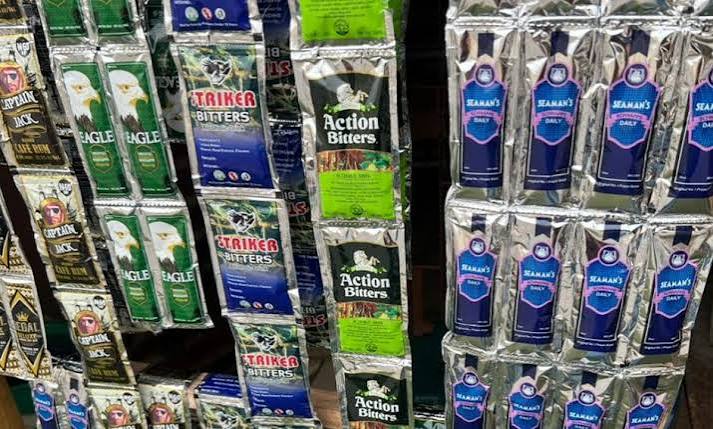
Cheap sachet drinks and miniature alcohol bottles have also become a major concern because of their affordability, small packaging and ease of concealment. Civil society groups say these products have contributed to the accessibility of alcohol among children and young people, despite regulatory efforts to restrict their sale.
The concerns have renewed calls for the National Assembly to pass the National Alcohol Control Bill, 2026, which advocates believe could strengthen the country’s response to alcohol-related harm and provide greater protection for vulnerable populations.
The advocacy group, under the auspices of the Nigeria Civil Society Convening on Alcohol Policy Advocacy Action, identified the increasing exposure of children and young people to alcohol industry marketing as a major challenge.
They stated this in a communiqué issued at the end of a one-day advocacy meeting organised by the Renevlyn Development Initiative (RDI) and Motivator’s Crib Africa (MCA) in Abuja.
The organisations identified digital advertising, lifestyle branding and the promotion of alcohol consumption as part of social activities as strategies that could influence young people’s perceptions of drinking.
They also raised concerns about marketing campaigns linked to social milestones, identity groups and cultural practices, arguing that such activities could gradually normalise alcohol consumption.
The groups warned that children were particularly vulnerable to marketing strategies that associate alcoholic products with popularity, entertainment and social acceptance.
They further alleged that some manufacturers and distributors continued to produce and circulate sachet and miniature alcohol products despite existing restrictions.
For the organisations, restricting children’s access to alcohol requires more than regulations on product sales. It also demands stronger controls on how alcoholic beverages are promoted, packaged and marketed, particularly in spaces accessible to young people.
Beyond underage drinking: The health burden
The concerns over children’s exposure come against the background of the wider health and socio-economic consequences associated with alcohol consumption.
Citing the World Health Organisation’s Global Status Report on Alcohol and Health, the communiqué attributed 42,120 liver cirrhosis deaths, 15,365 road accident deaths and 4,687 cancer-related deaths in Nigeria to alcohol.
The organisations warned that the consequences extend beyond preventable deaths to include increased public health expenditure, reduced human capital, workplace productivity losses and rising cases of violence.
They also called for stronger enforcement of drink-driving regulations, adequate sobriety testing and improved monitoring at motor parks to prevent alcohol-related road crashes, injuries and fatalities.
The groups argued that alcohol-related harm places additional pressure on the health sector while affecting families, communities and the country’s economic development.
READ ALSO:
- State Police Bill Set for Transmission to Tinubu by National Assembly
- Tinubu Calls on Nigerian Youths to Reject Division and Embrace Unity
- Minister Says Work on Women’s Representation Bill Is Almost Complete
Although the Federal Ministry of Health and Social Welfare and agencies such as NAFDAC have introduced measures to address alcohol-related harm, the organisations argued that the absence of an overarching national legislation remains a major gap.
They identified weak coordination among government agencies as one of the obstacles to effective enforcement of existing alcohol regulations.
Nigeria already has an alcohol policy framework, including the Nigeria Alcohol Policy and its Multisectoral Implementation Plan for 2026–2030. However, the groups maintained that stronger legislative backing was necessary to translate policy commitments into enforceable provisions.
They therefore urged lawmakers to pass the National Alcohol Control Bill, 2026, to establish binding statutory provisions supported by appropriate penalties and enforcement mechanisms.
The organisations specifically urged the 10th National Assembly to prioritise the bill within its remaining lifespan, warning that the electioneering season should not delay legislative action on the public health concerns associated with alcohol consumption.
Concerns over industry influence
Another issue raised by the groups was the alleged influence of alcohol industry operators on public health policies.
They accused some industry players of undermining public health interventions through political interference, resistance to regulation, corporate social responsibility activities and aggressive marketing, particularly on digital platforms.
The organisations insisted that decisions on alcohol policy should be guided by independent scientific evidence and the interests of Nigerians rather than commercial considerations.
They consequently called on the National Assembly to protect alcohol policy development and implementation from undue commercial influence.
They also acknowledged that civil society organisations had yet to establish a sufficiently coordinated front to challenge what they described as deceptive marketing practices and attempts to frustrate government decisions on alcohol regulation.
The groups therefore called for stronger collaboration among advocacy organisations, sustained public awareness campaigns and greater civil society participation in policy development, public hearings and implementation.
They further urged the Federal Government to provide adequate resources for nationwide enforcement of restrictions on sachet and miniature alcohol products.
The communiqué maintained that 74 per cent of Nigerians live free from alcohol consumption, arguing that the country’s prevailing pattern should be protected against marketing strategies designed to normalise drinking.
For the advocacy groups, the growing exposure of children and young people to alcohol raises questions about the effectiveness of existing safeguards and the country’s preparedness to address changing marketing practices.
They believe that passing the National Alcohol Control Bill would provide a stronger framework for protecting children, women and other vulnerable populations from alcohol-related harm.
However, legislation alone may not resolve the problem without adequate funding, effective enforcement, coordination among government agencies and sustained public education.
The organisations are therefore urging lawmakers to act while the 10th National Assembly remains in office, insisting that protecting children from alcohol-related risks requires a coordinated national response.
For them, the objective is not simply to regulate an industry but to ensure that children can grow up in an environment where alcohol marketing, product accessibility and weak enforcement do not expose them to avoidable health risks.

