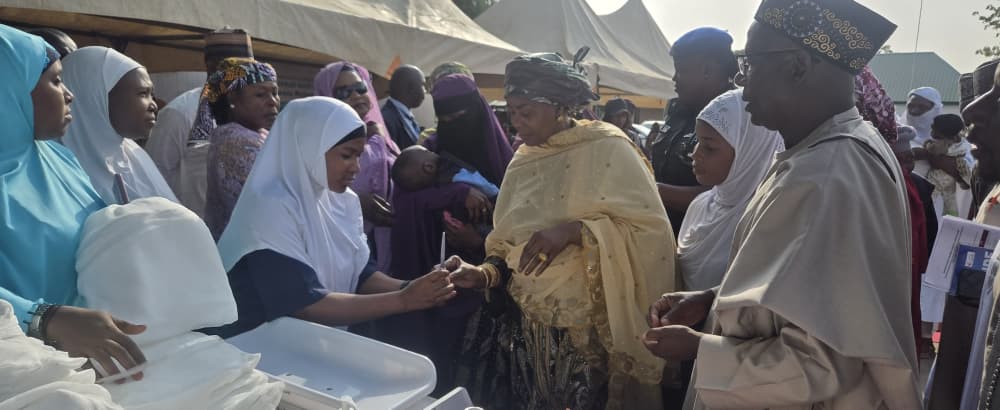
The Bauchi State Government and the United Nations Children’s Fund (UNICEF) have launched the second round of the 2026 Bi-Annual Maternal, Newborn and Child Health Week (MNCHW), targeting improved access to essential healthcare services for pregnant women, mothers and children under five.
The exercise, flagged off on Monday at the Urban Maternity Hospital, Bauchi, is aimed at expanding access to life-saving maternal, newborn and child health interventions, particularly among vulnerable populations and underserved communities.
Speaking at the ceremony, the Bauchi State First Lady, Hajiya Aisha Bala Mohammed, urged parents, caregivers and community members to take advantage of the services provided during the campaign to prevent avoidable illnesses and deaths among women and children.
She described the initiative as a critical intervention for protecting the health and well-being of mothers, newborns and children, particularly those living in hard-to-reach communities.
The First Lady said preventable maternal and childhood illnesses and deaths remained major public health concerns, emphasising the need for improved access to quality healthcare, routine immunisation, adequate nutrition, antenatal care, skilled birth attendance and proper hygiene practices.
According to her, the campaign provides an opportunity to bring essential healthcare services closer to women and children while promoting preventive healthcare at the community level.
She listed the services available during the exercise to include routine immunisation, Vitamin A supplementation, nutritional assessment, deworming, health education and Multiple Micronutrient Supplementation (MMS).
She also urged pregnant women to attend antenatal clinics regularly, ensure skilled assistance during childbirth and seek prompt medical attention whenever necessary.
Reaffirming her commitment to women’s health, child protection and family welfare, Aisha Mohammed pledged to sustain her humanitarian and advocacy engagements towards empowering women and improving access to essential healthcare services.
She also promised continued support for the Bauchi State Government under Governor Bala Abdulkadir Mohammed in its efforts to strengthen the healthcare system and improve health outcomes.
The First Lady called for collective action involving government agencies, development partners, traditional and religious institutions, parents and community stakeholders to ensure that no mother or child was excluded from life-saving healthcare interventions.
In her remarks, the Chief of Bauchi UNICEF Field Office, Dr Nuzhat Rafique, commended the state government for its sustained commitment to improving the health and nutrition of women and children through the timely implementation of the programme in line with the national schedule.
Represented by UNICEF Health Specialist, Dr David Audu, Rafique described the Maternal, Newborn and Child Health Week as one of the most effective platforms for delivering integrated, life-saving interventions to vulnerable populations.
READ ALSO:
- UNICEF, NPC, ALGON Sign Pact To Boost Digital Birth Registration In Kaduna
- Zamfara Women Launch Marafa Campaign Group
- 2 Men Arrested Over Killing Of 70-Year-Old Uncle In Bauchi
She said children aged six to 59 months would benefit from essential services, including Vitamin A supplementation, deworming, nutrition screening and referral services where necessary.
Pregnant women, she added, would also receive Multiple Micronutrient Supplementation and other critical maternal health interventions.
Rafique disclosed that UNICEF had provided more than 1.5 million doses of Vitamin A supplements, alongside additional implementation support, to strengthen service delivery and improve coverage across the state.
She explained that Vitamin A was essential for healthy growth and a strong immune system, warning that its deficiency could cause preventable childhood blindness and increase the risk of severe infections and death from common childhood illnesses such as diarrhoea and measles.
According to her, evidence shows that periodic high-dose Vitamin A supplementation can reduce child mortality by between 12 and 24 per cent, making it a cost-effective intervention for improving child survival.
She assured the state government of UNICEF’s continued support and collaboration with development partners to ensure the successful implementation of the campaign.
The UNICEF representative urged mothers, fathers, caregivers, community and religious leaders, as well as the media, to intensify mobilisation efforts and encourage every eligible child and pregnant woman to access the services.
She expressed confidence that collective participation would ensure that no child was left behind and that families across the state benefited from the interventions.
Representatives of development partners also delivered goodwill messages, pledging continued support and collaboration with the state government to improve healthcare delivery, particularly for women and children.