

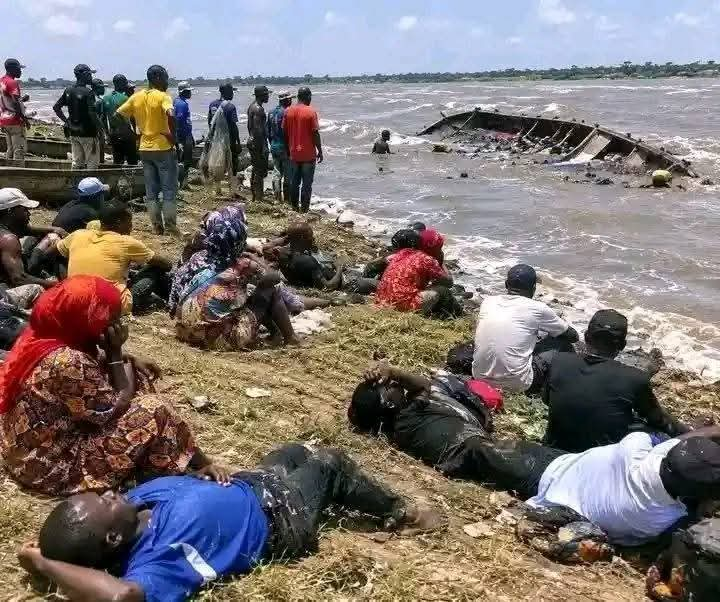
Beyond the rising death toll from the boat mishap in Southern Ijaw Local Government Area of Bayelsa State, affected families are struggling with emotional trauma, mounting medical expenses and uncertainty over how to give their deceased relatives befitting burials.
For many of the families, the tragedy has opened another difficult chapter, with survivors nursing serious injuries, relatives battling psychological distress and others struggling to come to terms with the loss of several members of their households.

A relative of one of the victims, Loveday Godspower Brikimi, said the tragedy had left families devastated, with some losing as many as eight members in the accident.
Brikimi, whose 17-year-old stepbrother died in the incident, said the impact on his family had been particularly painful because the deceased was an important source of support to their household.
He explained that his late younger brother was raised by his mother after his biological mother died and had taken responsibility for assisting her with domestic activities.
According to him, his brother and mother travelled from Ayama community to Ukubie for a burial ceremony, where they intended to engage in small-scale business activities, including POS transactions and selling drinks, to support the family.
He said he last saw the deceased on the night before the journey, adding that the family did not know when he left because he was still sleeping when the travellers departed early in the morning.
Recounting how he identified his brother’s remains, Brikimi said many of the recovered bodies had become difficult to recognise because of the condition in which they were found.
He said he identified his brother through the shirt he was wearing, which he had previously given him.
“It was a very painful sight. Some of the bodies were unrecognisable. Their faces had changed, and some were badly disfigured.
“Even though I knew my younger brother very well, if he were someone I only knew casually, I might not have been able to recognise him. What helped me was the shirt he was wearing. It was my shirt, which I had given to him,” he said.
Brikimi said the loss had left his father devastated, while he was struggling to support other members of the family despite undergoing surgery less than two months before the incident.
He added that his mother, who survived the accident, sustained serious injuries after parts of the boat reportedly fell on her.
According to him, she suffered deep injuries around her lower abdomen and required further medical examinations, including an X-ray, to determine the extent of the injuries and possible internal complications.
He said the family was already facing financial pressure as it struggled to meet her medical needs while coping with the death of his younger brother.
“I have barely had time to look after myself. I recently underwent surgery, but since this incident happened, I have been moving around trying to attend to my family.
“My mother is seriously injured, and we are trying to raise money for further medical examinations and treatment. It is only by God’s grace that she survived,” he said.

Brikimi said the psychological impact of the incident had also extended beyond families who lost relatives, with some people reportedly experiencing emotional breakdowns and other health complications after learning about the tragedy.
He described the situation as one of the most devastating incidents he had witnessed, noting that some families were struggling with guilt and blame over the circumstances that led their relatives to embark on the journey.
He gave an instance of a family whose father was reportedly blaming the elder sister of a deceased boy for accompanying him to the burial ceremony.
READ ALSO:
- Bayelsa Boat Tragedy: Mienye Mourns Victims, Calls for Stronger Marine Safety
- Bayelsa Boat Tragedy: Tinubu Orders Low-Key Ibadan Rally
- Bayelsa Boat Mishap: Tinubu Approves N250m For Victims’ Families, Directs NDDC To Procure Boats
According to him, such reactions reflect the level of emotional distress among relatives who are still trying to understand how the incident happened.
Brikimi also expressed concern over the condition of recovered bodies, alleging that available mortuary facilities were inadequate to accommodate the victims.
He said during a visit to a mortuary at Adayama, he saw bodies placed on top of one another because of a shortage of space.
He further alleged that the Federal Medical Centre mortuary in Yenagoa was filled to capacity, raising concerns about the ability of available facilities to preserve the bodies properly.
The situation, he said, had created additional uncertainty for families hoping to identify and give their loved ones individual burials.
While acknowledging the difficulties associated with preserving a large number of bodies, Brikimi appealed to the government to ensure that any mass burial arrangement was conducted with dignity and respect for the deceased.
He said families deserved the opportunity to mourn their relatives properly, adding that the loss of several members of the same household made the prospect of a mass burial particularly painful.
“If individual burials are no longer possible, the government should ensure that the mass burial is conducted in a dignified and befitting manner.
“It should not look as though the victims are being buried without respect for their lives. There should be proper arrangements that recognise the value of those who died and help reduce the emotional trauma of their families,” he said.
The bereaved relative also called for sustained government support beyond rescue and recovery operations, urging authorities to identify affected households and assess their medical, financial and emotional needs.
He said the governor should personally reach out to as many families as possible, adding that visits and expressions of sympathy from government officials could provide some comfort to grieving relatives.
He, however, stressed that financial assistance was equally important, particularly for families whose relatives survived with serious injuries but lacked the resources to pay for treatment.
According to him, the government should use the names and telephone numbers reportedly collected from affected persons during the rescue operations to establish contact with the families and follow up on their needs.
“Money cannot replace the lives that have been lost, but financial assistance is very necessary at this time. Some survivors sustained serious injuries, and their families are struggling to pay their medical bills.
“The government should identify these families, find out what they need and provide assistance. It should not stop at rescue operations,” he said.
The boat mishap occurred on November 20, when a passenger boat conveying travellers from Ayama community to Ukubie for a burial ceremony capsized around the Oweikorogha and Otuan waterways in Southern Ijaw Local Government Area.
The incident has since claimed at least 29 lives, according to the latest figures announced by Governor Douye Diri, while more than 51 survivors have been accounted for. The governor said the final casualty figure was yet to be established because recovery efforts were continuing.
The tragedy has renewed concerns about passenger safety on Bayelsa waterways, where many riverine communities depend on boats for transportation and access to neighbouring settlements.
It has also raised questions about the enforcement of safety regulations, the availability of life jackets, passenger records and the responsibility of boat operators to ensure that vessels are fit for travel.

