

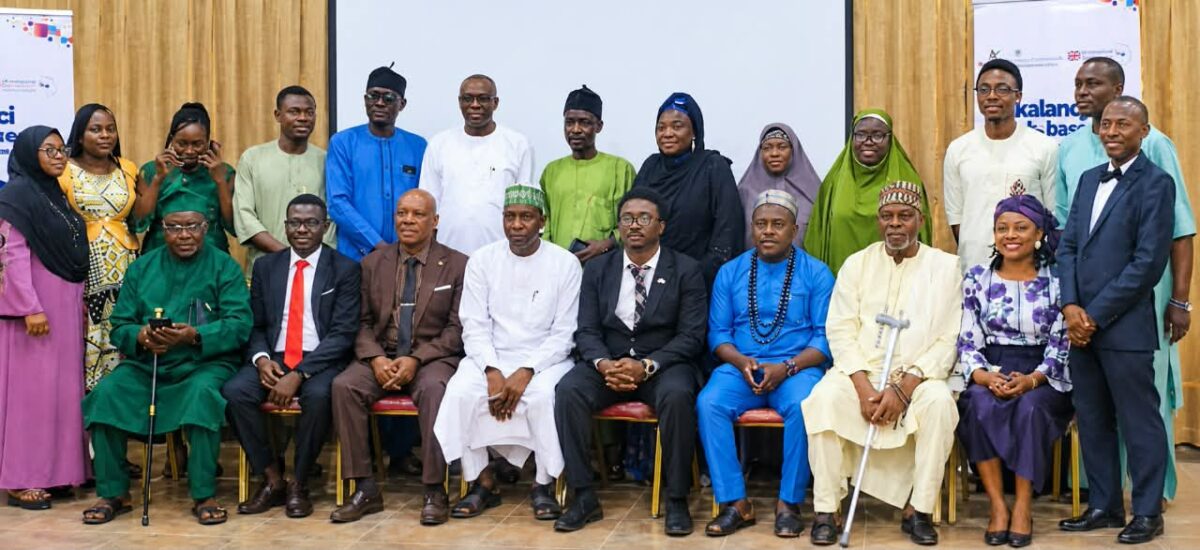
Religious leaders in Benue State are being trained to identify and counter misinformation, disinformation and foreign information manipulation as part of efforts to strengthen community resilience and prevent information-related conflicts.
The training, organised by Alkalanci in partnership with the British High Commission, brought together 20 religious leaders for a workshop in Makurdi, the state capital, on Wednesday.
Speaking on the objectives of the initiative, the Programme Manager of Alkalanci, Victoria Bamas, said the project was designed to equip religious leaders with the knowledge and skills to recognise disinformation and share the knowledge with members of their congregations.
She explained that the programme adopted a train-the-trainer approach, enabling participants to apply the skills in their daily interactions and educate others within their spheres of influence.
According to her, the participants are expected to acquire basic fact-checking and information verification skills, alongside a deeper understanding of misinformation and Foreign Information Manipulation and Interference (FIMI).
Bamas identified financial incentives associated with online content monetisation, advertising and increased audience reach as major factors driving the spread of disinformation.
She observed that some individuals who might not ordinarily spread false information had become involved because of the financial rewards associated with generating online traffic and engagement.
She said the initiative seeks to make community members more resistant to false narratives by teaching them how to identify questionable information rather than merely appealing to those spreading fake news to stop.
“The idea is to equip people so that when information gets to them, they are able to identify it and not act on it,” she explained.
Also speaking, the Cyber and Hybrid Threats Project Lead at the British High Commission, Abuja, Oriola Odutoye, said the initiative was part of the United Kingdom’s growing security and defence cooperation with Nigeria, particularly in tackling emerging hybrid threats.
Odutoye said both countries were strengthening collaboration in cybersecurity and related areas, including efforts to counter foreign information manipulation and interference.
She disclosed that similar engagements had been conducted in Plateau, Kano and Adamawa states, while Gombe and Bauchi states were also scheduled to benefit from the exercise.
According to her, the broader objective is to equip religious leaders across Northern Nigeria with a common understanding of foreign information manipulation, its effects on communities and the role faith leaders can play in mitigating the threats.
In his goodwill message, the Acting Chairman of the Christian Association of Nigeria (CAN) in Benue State, Rev. Jonathan Ugbede, described misinformation and disinformation as serious challenges capable of triggering fear, tension and crises in society.
He urged religious leaders to verify information before sharing it, stressing that source credibility and authenticity were essential to responsible communication.
Ugbede observed that people frequently circulate unverified claims attributed to unidentified sources, thereby creating unnecessary panic.
He also reminded clerics that their followers attach considerable importance to their pronouncements and urged them to exercise caution when communicating.
Similarly, a representative of Jama’atu Nasril Islam (JNI) in Benue State, Malam Baba Ahmed, commended the initiative, describing its approach as timely and relevant to a state that had experienced significant security and displacement challenges.
Ahmed, who attended as a participant and representative of the state JNI Chairman, Alhaji Garba Baba, called for greater tolerance and mutual understanding among religious communities.
He maintained that peaceful coexistence and interfaith cooperation remained essential to the unity of Benue State, pledging the organisation’s continued commitment to promoting religious harmony.
Contributing, a traditional ruler from Apa Local Government Area, His Royal Highness Solomon Audu, said community leaders sometimes received reports that turned out to be false after proper investigation.
Audu urged traditional and community leaders to work closely to ensure that information brought before them was thoroughly verified before decisions or actions were taken.
Earlier, the Editor of Alkalanci, Alhassan Bala, presented an overview of the organisation’s maiden project in Benue State, highlighting its major activities and impact.
READ ALSO:
- Nigeria Secures UNESCO Centre To Combat Fake News
- COAS Tasks Army Training Institutions On Combat Readiness, Operational Effectiveness
- Benue Begins Move To End Lingering Gwer, Guma Land Dispute

