

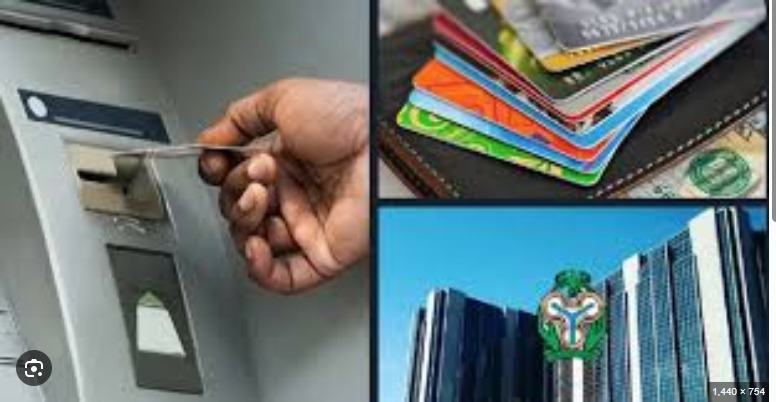
Economists and people who use banks have raised big problems with the Central Bank of Nigeria’s plan to raise the fee for issuing Automated Teller Machine cards from N1000 to N1500.
This comes after the central bank released a 42-page draft of the Guide to Charges by Banks and Other Financial Institutions on April 21, 2026.
It was said that part of the proposed charges would be a 50% increase for issuing ATM cards, getting rid of maintenance on Naira debit and credit cards, and a $10 fee per year for maintaining cards that are mostly in foreign currency.
The CBN listed other bank fees and asked banks and the public to give their feedback by May 8, 2026.
Nigerians have reacted to the apex bank’s policy statement, especially the N1500 charge for issuing ATM cards.
Some Nigerians said that the fee for getting an ATM card would make things even harder for bank customers, while others praised CBN for wanting to get rid of the maintenance fee on Naira debit and credit cards.
In an interview, Dr. Uju Ogunbunka, President of the Bank Customers’ Association of Nigeria and a financial analyst, said that the deadline for feedback from the public and other interested parties was too short.
He said the move was unrealistic and too quick.
Ogunbunka said that the timeline seems “too sudden” and doesn’t give stakeholders enough time to look over and respond to the draft, which was just released.
“We don’t agree with the proposed take-off date or the take-off date.” He said, “It seems a little too sudden and too close.”
He said that it would be hard to get useful feedback and finish the document in such a short amount of time, especially given the current state of the country.
“I think it’s Herculean, especially with what’s going on in our own world,” he said.
He says that the association’s main concern right now is the short deadline, which makes it hard for stakeholders, especially operators, to fully read the document.
“Our first reaction is that the deadline is too short for people to respond.”
Ogunbunka said, “Nigerians would have had more time to study, especially operators.”
Oyedokun says that the CBN’s plan to raise ATM fees will make things harder for Nigerians and threaten inclusion.
Godwin Oyedokun, a professor of Accounting and Finance at Lead City University, was also worried about the CBN’s fees for issuing and replacing money.
He said that the policy could make things harder for consumers and make it harder for people to get access to financial services.
Oyedokun said that the move “has once again brought to light the ongoing conflict between lowering regulatory costs and protecting consumers.”
“Many Nigerians are already dealing with inflation, stagnant wages, and rising living costs. Any increase in banking fees is sure to draw attention,” he said in an interview on Monday.
He said that the increase may be reasonable from the point of view of regulators and banks.
He said, “The cost of making cards, chip technology, cybersecurity safeguards, logistics, and service infrastructure has gone up a lot in the last few years.” He also said that “banks work in an environment where operating costs are rising, including power costs, technology investments, and compliance obligations.”
Oyedokun said, “In that sense, a change in charges could be seen as an effort to reflect current economic conditions and keep services going.”
He did say, though, that the truth is different for most Nigerians.
He said, “Consumers often don’t see banking fees as separate costs, but as a whole burden.”
He went on to say, “Transfer fees, SMS alert deductions, electronic transaction charges, and other service-related costs already make it seem like customers are always paying just to get to their own money.”
With this in mind, he said that “a 50 percent increase in ATM card issuance fees is likely to be seen as another strain on already stretched households.”
Oyedokun said, “For low-income earners, students, pensioners, artisans, and small business owners, N500 is not a small amount.” He talked about how it would affect these groups in Nigeria. It can pay for food, transportation, or basic household needs.
He warned that “if the cost of accessing banking tools keeps going up, some customers may put off replacing expired or damaged cards, use formal channels less, or go back to cash-based transactions.”
He also said that “such outcomes would run counter to the national goal of expanding digital payments.”
The professor said that the draft might have some good points, saying that “reports suggest that the same framework may remove certain recurring charges, such as monthly card maintenance fees on naira cards.”
He went on to say, “If done right, some customers might save more over time than they lose from the one-time increase.”
Still, he stressed that “public reaction shows that consumers judge policies not only by numbers but also by trust and lived experience.”
Oyedokun said that any rise in prices must be accompanied by better service.
He said, “Nigerians are more likely to accept fair fees when banking services are quick, clear, and reliable.”
He said that the system still has problems: “Failed transactions, delayed reversals, ATM cash shortages, poor complaint resolution, and unexplained deductions continue to erode confidence.”
So, the CBN needs to make sure that any new fees come with stronger protections for consumers.
“Banks should have to make their fees clear, get rid of hidden charges, raise the standards of service, and make it easier to settle disputes.
“Regulatory reform should not mean only higher fees,” Oyedokun said.
“Banking should always be easy to get to, cheap, and reliable.
He said, “Financial inclusion is not just about opening accounts; it’s also about making sure that people can use financial services without feeling taken advantage of.”

