

The Minister of Finance and Coordinating Minister of the Economy, Taiwo Oyedele, has urged Nigerians to understand the difference between declining inflation and falling prices, explaining that a reduction in the inflation rate does not mean that the prices of goods and services have dropped.

Oyedele said Nigeria’s inflation rate declined to 14.06 per cent in October 2026, the lowest level recorded in six years, describing the development as a reflection of the economic reforms introduced by President Bola Tinubu’s administration.
He, however, acknowledged that many Nigerians had questioned the figures because the prices of essential commodities, including bread and milk, remained high despite the reported decline in inflation.
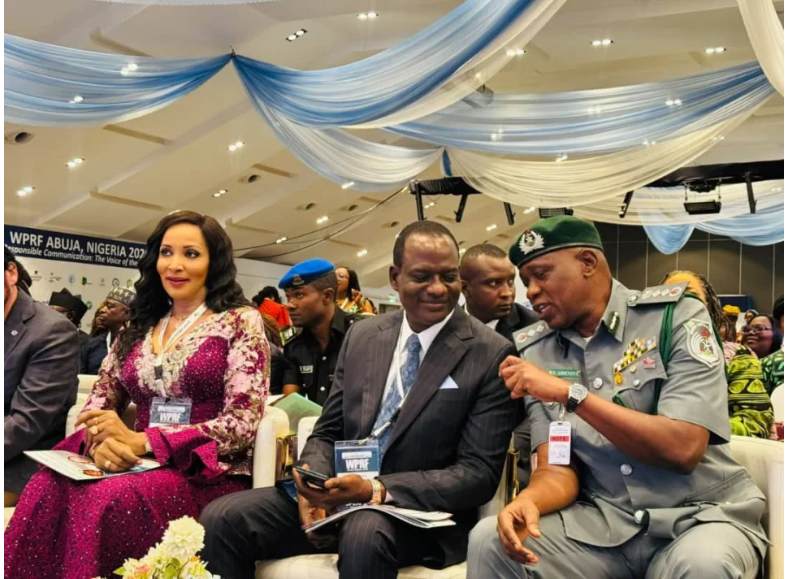
Speaking at the Global Alliance World Public Relations Forum in Abuja on Tuesday, the minister said the concerns were understandable, noting that the government needed to do more to explain economic indicators and their implications to citizens.
“Falling inflation does not mean falling prices. It means prices are rising more slowly than before,” he said.
Oyedele explained that when families continued to spend heavily on market purchases despite declining inflation figures, they could conclude that the official statistics were inaccurate.
He warned that such perceptions could influence market behaviour, as traders and producers might increase prices in anticipation of further inflation.
“When people stop believing in numbers, they expect prices to rise, and expectations behave like instructions. So traders mark up in advance. Producers protect themselves. The baker and the dairy supplier price in that increase because they fear prices will go up,” he said.
The minister maintained that improving economic indicators should not be presented in a way that dismisses the hardship experienced by households.
“An improving indicator does not mean a struggling family’s experience is untrue, just as a struggling family’s experience does not make an improving indicator false,” he added.
He identified trust as a critical foundation for economic growth, investment and national development, saying public confidence determines how citizens respond to government policies and economic reforms.
According to him, trust encourages citizens to cooperate with the government, attracts investment and gives businesses the confidence to plan for the long term.
Oyedele cautioned that the government could not rely on communication alone to build public confidence without delivering tangible results.
“We cannot communicate our way out of conflict, and we cannot communicate our way out of conduct that destroys confidence,” he said.
He also recalled the controversy surrounding the government’s tax reforms, saying misinformation and distorted narratives had influenced public perception of policies designed to protect small businesses and exempt low-income earners.
The minister blamed the spread of misinformation partly on social media platforms, where sensational and negative content often attracted more attention and financial rewards than factual corrections.
“Outrage pays. Correction does not,” he said.
He further warned that artificial intelligence had increased the threat of misinformation, making it possible to manufacture convincing images, voices and documents within seconds.
Oyedele urged public relations professionals to be involved in policy formulation and decision-making processes rather than being invited only when government institutions face communication crises.
He also challenged media organisations, publishers, broadcasters and social media influencers to verify information before sharing it, correct errors and apply equal standards of evidence to positive and negative reports.
The minister stressed that government officials must also uphold the same standards of accountability expected from critics.
Also speaking, the Comptroller-General of the Nigeria Customs Service, Dr Bashir Adewale Adeniyi, said effective communication was essential to the successful implementation of government policies and institutional reforms.
Adeniyi said public institutions could not achieve their objectives if the people affected by their policies did not understand or trust them.
He noted that the reputation of an institution was not built through its public relations department alone but through the everyday experiences of citizens dealing with its personnel.
The Customs boss shared experiences from the service’s reforms, including the introduction of its indigenous technology platform, B’Odogwu, which replaced the previous clearance system.
READ ALSO:
- 2027: Stop Giving Mandates To Defeated Candidates, Judge Tells Courts
- Fani-Kayode Raises Concerns Over Killings, Mistreatment Of Nigerians In South Africa
- 2027: Stop Installing Candidates Voters Rejected, Retired Justice Tells Courts
He said the service engaged importers, licensed customs agents, terminal operators and its officers before introducing the platform to ensure a smooth transition.
According to him, the service organised engagement sessions, established help desks and introduced the system in phases to address concerns and minimise disruptions.
He said the experience taught the service that reforms were not complete when a new system became operational but when the people expected to use it understood and trusted it.
Adeniyi disclosed that the African Continental Free Trade Area Secretariat recognised the B’Odogwu platform as a model for other African countries in August 2026.
He also highlighted a time-release study conducted at one of the country’s ports, which showed that cargo clearance took about five days, with more than 90 per cent of the period spent waiting without any action.
He said the service decided to publish the findings despite the possibility of criticism because transparency was necessary to identify and address operational challenges.
“You cannot fix a problem you are afraid to name,” he said.
The Customs chief also recalled the seizure of 844 rifles concealed in a consignment intercepted by officers at Onne Port in June 2024 and another 399 rifles discovered during a search of a vessel identified as MV Velika.
He said the incidents reinforced the importance of verifying information and coordinating with relevant security agencies before making public statements, particularly on sensitive national security matters.
Adeniyi further cited the Authorised Economic Operator programme as an example of how communication and the fulfilment of institutional promises could encourage compliance.
He disclosed that the programme had reduced cargo clearance time for participating companies from about 168 hours to 41 hours.
He added that 51 companies had obtained AEO status, while more than 200 others were benefiting from the programme’s incentives.
According to him, the results demonstrated that businesses were more willing to comply with regulations when government institutions communicated clearly and delivered on their promises.
Also speaking, the Minister of Foreign Affairs, Ambassador Bianca Odumegwu-Ojukwu, said responsible communication had become essential to diplomacy amid growing geopolitical tensions, international conflicts and competition for global influence.
She said communication was no longer merely an instrument of diplomacy but one of its foundations, particularly in an era when misinformation and deliberate disinformation could undermine international relations.
According to her, diplomacy requires honesty in communicating national positions, consistency between words and actions, respect for differing perspectives and commitment to dialogue over confrontation.
She said Nigeria remained committed to multilateralism, regional cooperation, peaceful dispute resolution and constructive international partnerships.
Odumegwu-Ojukwu called for stronger regional institutions, including the African Union and the Economic Community of West African States, while advocating reforms to make multilateral institutions more inclusive and representative.
She also urged African countries to take a more active role in shaping global narratives and decisions affecting the continent.
“Africa must not merely feature in global conversations, it must help shape them,” she said.
The minister noted that Nigeria’s foreign policy under President Tinubu was guided by democracy, development, demography and diaspora.
She urged diplomatic missions, journalists, public relations professionals and technology platforms to work together to ensure that accurate information reached citizens promptly, particularly during crises.
She also warned that artificial intelligence presented new challenges to information integrity and accountability, calling for cooperation among governments, media organisations and communication professionals to promote credible information systems.
Odumegwu-Ojukwu maintained that responsible communication must go beyond managing perceptions to delivering tangible outcomes, including peace, cooperation and stronger international partnerships.

