

The Federal Government has reiterated its commitment to strengthening Nigeria’s preparedness against the Ebola Virus Disease (EVD) and other emerging public health threats through improved coordination, surveillance and public communication.
The Minister of Information and National Orientation, Mohammed Idris, gave the commitment at the first meeting of the Communications Sub-Committee of the Presidential Task Force on Ebola Virus Disease Preparedness and Emerging Public Health Threats in Abuja.
Effective communication remains one of the most important tools the country has to prevent disease outbreaks and protect public health, said Idris, and the importance of timely and credible information to counter misinformation.
“Communication is one of the most powerful tools in the management of public health emergencies. “Accurate, timely and science-based information saves lives, while misinformation and rumours can undermine public confidence and hinder effective response,” he said.
The Federal Government is committed to ensuring that all official information relating to Ebola and other infectious diseases are coordinated and based on scientific evidence provided by the Nigeria Centre for Disease Control and Prevention (NCDC), the Minister of Health, Isaac Adewole, has said.
“Our responsibility is to ensure that government speaks with one clear and coordinated voice, guided by the Nigeria Centre for Disease Control and Prevention, the country’s technical authority on disease prevention and control,” Idris said.
He said President Bola Ahmed Tinubu’s decision to establish the Presidential Task Force was a reflection of the administration’s determination to strengthen the country’s capacity to respond swiftly to possible public health emergencies.
“It’s always better to take the pre-emptive action before the crisis happens,” he added.
The minister said the Communications Sub-Committee would immediately begin work on a harmonised national risk communication strategy to ensure that Nigerians receive consistent, transparent and accessible public health information.
The strategy would include standard health messages, frequently asked questions, rapid response mechanisms to counter misinformation, translation of communication materials into major Nigerian languages and sustained engagement with the media, communities and other stakeholders, he said.
“We are not just writing press statements. “We must develop a comprehensive national risk communication strategy which is proactive, transparent and accessible to all Nigerians irrespective of language or location,” Idris said.
He commended the National Orientation Agency (NOA) for launching nationwide public awareness campaigns using health messages approved by the NCDC, noting that the agency is a key partner in promoting grassroots awareness.
The minister also called for greater collaboration between government institutions, the media, digital platforms, traditional and religious leaders, schools, transport unions, market associations, youth and women’s groups and civil society organisations to ensure effective dissemination of accurate health information.
There is currently no confirmed case of Ebola Virus Disease in the country, Idris assured Nigerians, while urging the public to remain calm and observe preventive health measures.
“Nigeria has no confirmed case of Ebola; there is no cause for panic. “Government is well prepared and vigilant and Nigerians should rely only on verified information from official government sources,” he said.
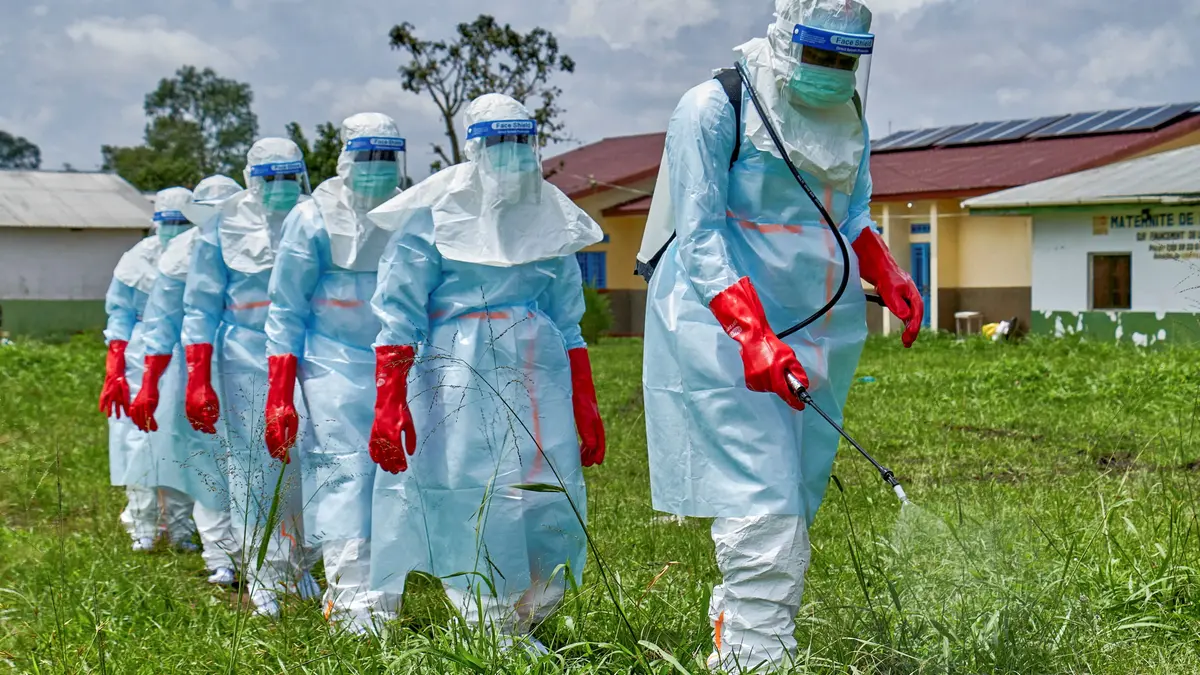
He pointed out that the ongoing Ebola outbreak in the Democratic Republic of the Congo highlights the necessity of maintaining high levels of preparedness, noting that Nigeria has strengthened surveillance at its borders and placed health facilities on alert to prevent possible importation of the virus.
The minister recalled the successful containment of the Ebola outbreak in Nigeria in 2014, saying the achievement demonstrated the value of strong leadership, coordinated response, effective surveillance and sustained public communication in health emergencies.
Idris said he was confident that the Presidential Task Force, in close collaboration with the NCDC and other relevant stakeholders, would further strengthen the country’s preparedness and also boost public confidence in Nigeria’s ability to respond effectively to future disease outbreaks.
The Communications, Diplomacy and International Engagement Sub-Committee of the Presidential Task Force is chaired by the Minister of Information and National Orientation, Mohammed Idris, with the Minister of State for Foreign Affairs, Ambassador Sola Enikanolaiye, as Deputy Chairman.
Dr. Suleiman Haruna, the Director of Press Relations and Protocol at the Federal Ministry of Information and National Orientation, is also a member of the committee.

