

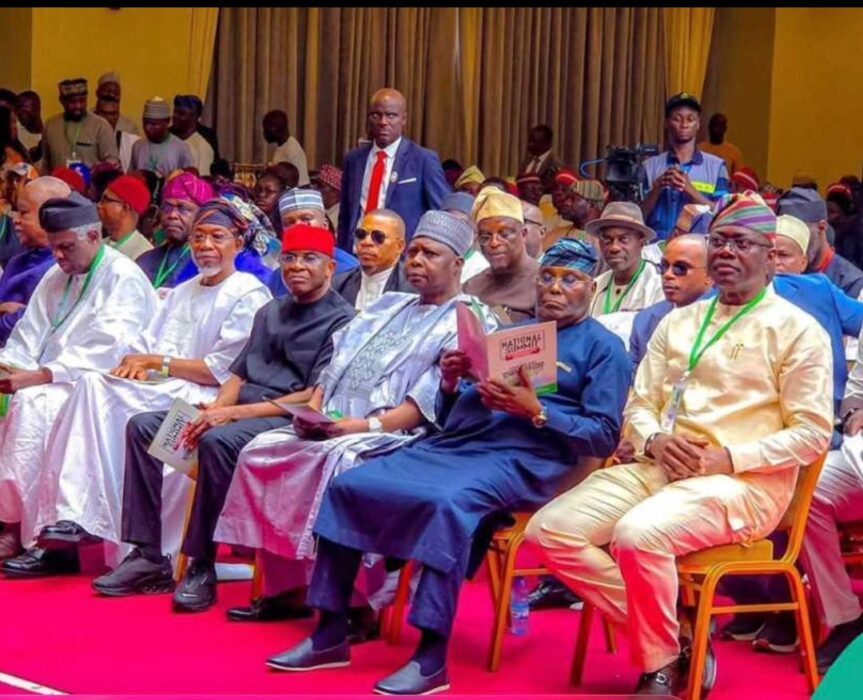
The opposition coalition meeting scheduled for Monday, November 30, 2026, at the NAF Conference Centre in Abuja could be an important political event ahead of Nigeria’s 2027 general elections.
The meeting is the Second Summit of Nigeria’s Opposition Political Parties, organised under the Coalition for Democracy, comprising six opposition parties: ADC, APM, NDC, PDP, PRP and SDP.
Based on the announced agenda and recent political developments, here are seven major things to expect:
1. A formal opposition unity agreement
One of the biggest expectations is the formal adoption of an agreement committing the participating parties to work together ahead of 2027.
The objective is to establish a common platform for cooperation while allowing the parties to retain their individual identities.
READ ALSO:
- Canada: Full List Released As ICAS Announces 4 Nigerian Universities It Will No Longer Accept Certificates From
- INEC Mock Accreditation: Six Things Nigerians Should Know Ahead Of Saturday’s Exercise
- 2027 Election: SDP Unveils Plan To Unite Opposition, Projects Adebayo-Bugaje Ticket
2. Adoption of a framework for opposition unity
The coalition will consider a document titled Framework for Opposition Unity.
It is expected to establish: how the parties will cooperate; how disagreements will be resolved; how joint political decisions will be reached; how the coalition will coordinate its activities.
3. The question of a single presidential candidate
This is likely to attract considerable public attention.
With Atiku Abubakar, Peter Obi, Seyi Makinde, Donald Duke and Adewole Adebayo having presidential ambitions, the question of how to manage competing aspirations will be important. However, there is no confirmed announcement that any of the candidates will withdraw or that a single presidential candidate will emerge on Monday.
4. Presentation of a National Covenant for Democratic Renewal
The coalition will present its proposed National Covenant for Democratic Renewal.
The document is intended to establish shared commitments on democratic governance, political cooperation and the protection of Nigeria’s democratic institutions.
5. Unveiling of a National Reform Programme
Another major issue will be the National Reform Programme.
This is expected to outline the coalition’s proposed approach to addressing Nigeria’s governance challenges.
Nigerians will be interested in whether it addresses: Economic recovery and the cost of living; Security and national stability; Unemployment and poverty; Institutional accountability; Electoral and constitutional reforms.
6. Public commitments from Atiku, Obi, Makinde and other presidential candidates
The five presidential candidates are expected to deliver goodwill remarks.
Their speeches will be important in understanding: Their willingness to cooperate; Their positions on opposition unity; Their expectations from the coalition; and Their commitment to a common democratic agenda.
7. Signing of coalition documents and announcement of next steps
The summit is expected to conclude with the formal signing of the three foundational documents by participating party leaders.
A summit communiqué will also be presented, outlining decisions and the next steps.
The coalition has additionally invited other opposition parties to join its consultations.

