

Despite tensions and mutual suspicion, the media and military play complementary roles in national security and must explore common ground in the interest of the nation. TARKAA DAVID writes on the takeaways from the recent DHQ media workshop.
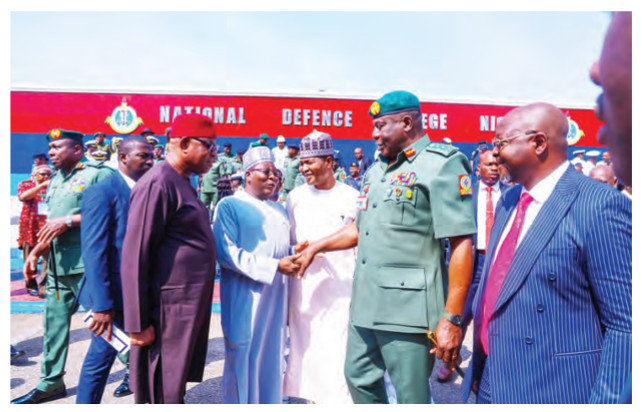
The Defence Headquarters (DHQ) recently held a two-day engagement involving spokespersons of the military and security agencies, media executives and defence correspondents to foster cooperation towards achieving national security objectives.
Over the years, relations between the military and the Nigerian media have been frosty, characterised by mutual suspicion, disagreements and occasional confrontations over publications considered unfavourable to the military and other security agencies.
There have also been reported cases of harassment and attacks on media organisations over their coverage of security-related issues.
Against this backdrop, the Minister of Information and National Orientation, Mallam Mohammed Idris, called for stronger collaboration between security agencies and the media to promote national security, tackle misinformation and build public confidence in security institutions.
Idris, who was represented by the Director-General of Voice of Nigeria (VON), Mallam Jibrin Baba-Ndace, made the call while declaring open the Defence Headquarters Strategic Communication Workshop 2026 in Abuja on Tuesday, November 24.
The workshop, themed “Enhancing Strategic Collaboration Between Spokespersons of Security Agencies and Media Stakeholders for Accurate and Responsible Reportage Towards Improved National Security”, emphasised the importance of effective communication in addressing the country’s security challenges.
The minister said communication was as important as operational capacity, noting that the military and the media had distinct but complementary responsibilities that required mutual respect, professionalism and regular engagement.
He urged security agencies to provide timely and credible information, while journalists should ensure accuracy, provide context and avoid publishing information capable of endangering lives or compromising ongoing operations.
“Professional journalists must report without bias and avoid relying solely on unverified social media content. We must develop the capacity to interrogate information, establish facts and provide the necessary context, particularly when reporting defence and security matters,” he said.
However, Idris cautioned that responsible reporting should not be interpreted as an attempt to shield security institutions from legitimate scrutiny or undermine media independence.
He identified terrorism, banditry, kidnapping, organised crime, cyber threats and the spread of false narratives as growing security challenges requiring effective strategic communication.
According to him, inaccurate reporting could generate fear, deepen public distrust and weaken confidence in security institutions, while silence or delayed communication during major security incidents could create information gaps easily exploited by misinformation and speculation.
He therefore advocated communication anchored on facts, consistency, transparency and respect for the public’s right to information.
The minister also highlighted the importance of improved coordination among security agencies, citing the Federal Government’s October 2026 initiative to develop a comprehensive National Threat Assessment and a rolling five-year strategy for defence and security operations.
He disclosed that operational reports for the first half of 2026 showed that the Armed Forces conducted 14,231 operations across different theatres and rescued 1,016 kidnapped victims.
He urged the media to give balanced attention to both the challenges confronting the country and the efforts and sacrifices of security personnel.
“Media professionals should not focus exclusively on negative developments while overlooking operational successes and the sacrifices made by those working to protect our country. This does not mean abandoning critical journalism, but ensuring balanced reporting that acknowledges both the challenges and the progress being made,” he said.
Idris also recalled that Nigeria and UNESCO launched the International Media and Information Literacy Institute in April 2026 as a UNESCO Category 2 institution to promote research, capacity building and international cooperation in tackling misinformation.
He urged participants to develop practical recommendations for improving relations between security agencies and the media, including effective communication channels, mechanisms for correcting inaccurate reports and a shared understanding of operational realities.
“The military may seek to protect sensitive information, while journalists naturally seek access to information. However, both institutions work for the same country and ultimately serve the same people. They must therefore find common ground and develop a sustainable framework for cooperation,” he said.
Military-media Partnership
The Chief of Defence Staff (CDS), General Olufemi Oluyede, also called for stronger collaboration between the military and the media to promote national security, build public confidence and counter misinformation.
He described the media as a critical line of operation in modern security engagements, noting that contemporary warfare had evolved beyond conventional battlefield operations to include physical, informational and cognitive dimensions.
According to him, the ability to communicate effectively, shape public perceptions and sustain public confidence has become as important as military capabilities in achieving national security objectives.
Oluyede expressed concern over the growing spread of misinformation and manipulated content, particularly through social media, noting that old videos and photographs were sometimes presented as recent incidents, creating unnecessary fear and undermining public confidence.
He also identified artificial intelligence as an emerging challenge, warning that fabricated images, audio recordings and videos could appear authentic to unsuspecting audiences.
He therefore urged media practitioners and military communication professionals to strengthen their capacity to identify and verify artificially generated content before publication or dissemination.
The CDS cautioned against allowing the speed of information dissemination and sensationalism to take precedence over accuracy and responsible journalism. He urged commanders to ensure that information released to the media was factual, credible and timely.
However, he stressed that transparency must be balanced with operational security, warning that indiscriminate disclosure of troop movements, operational locations and other sensitive information could endanger personnel and compromise military operations.
Oluyede reaffirmed his support for transparency, access to information and constructive engagement, while calling for sustained interaction, stronger communication structures and specialised training for military communication professionals.
He commended the Directorate of Defence Information for organising the workshop and expressed confidence that its deliberations would strengthen cooperation between the security community and the media.
Framing Security Narratives
In a lecture titled “Framing Narratives and Messages to Enhance National Security”, Professor Abdullahi Saleh Bashir emphasised that how security issues are communicated could significantly influence public perception, confidence and cooperation with security institutions.
He argued that security should not be measured solely by military hardware, arrests, firepower or the number of operations conducted, but also by the sense of safety and protection experienced by citizens.
Drawing from Abraham Maslow’s hierarchy of needs, Bashir explained that after satisfying basic needs such as food, clothing and shelter, individuals naturally become concerned about their safety and protection.
He said effective communication was therefore essential to national security because citizens needed to understand the efforts being made to protect them, while security institutions also required feedback on how safe or vulnerable people felt in their communities.
Using the example of a burglary in a community, he explained that a single incident could generate different narratives depending on how it was presented.
READ ALSO:
- Media Professionals, CSOs Seek Greater Support For Women In Politics
- Mining Marshals Commander Urges Security Agencies To Share Intelligence
- Millennium City: Uba Sani Moves To Strengthen Security With 300 JTF Personnel
While some might attribute the incident to drug abuse among young people, others could blame poor policing, inadequate funding of security agencies, unemployment or parental negligence. Others might even politicise the incident.
Bashir said although the facts remained the same, different interpretations could influence public judgement and perceptions of security institutions.
He urged journalists and security spokespersons to provide appropriate context when reporting security incidents, warning that poorly framed messages could deepen public anxiety and weaken confidence in security institutions.
The professor also highlighted the importance of human-interest reporting, citing the dangers soldiers faced while travelling to and from operational areas because of improvised explosive devices and ambushes by insurgents.
He explained that some soldiers preferred to remain in their operational areas rather than risk travelling through dangerous routes to reunite with their families.
According to him, the military’s decision to airlift troops by helicopter when proceeding on pass was a significant life-saving intervention that deserved public recognition.
He urged journalists to look beyond routine reports of arrests, casualties and military engagements by exploring the human experiences, policy decisions and operational realities behind security developments.
Bridging The Communication Gap
In his presentation, titled “Enhancing Cooperation Between Spokespersons of Defence and Security Agencies and Defence Correspondents”, retired Brigadier General Sani Kukasheka Usman identified recurring tensions between security spokespersons and defence correspondents.
He attributed the disagreements to delayed responses to media enquiries, competition for exclusive stories, disputes over information attribution, selective access to information, sensational reporting and difficulties verifying developments from operational theatres.
Usman noted that social media and digital news platforms had intensified these challenges by accelerating information dissemination and allowing unverified reports to circulate before official clarification.
He said while journalists faced demanding publication and broadcast deadlines, security agencies often needed to verify information through established command channels.
He identified misinformation and disinformation as major threats to public understanding of security operations, institutional credibility and public confidence.
“Recycled photographs, manipulated videos, fabricated statements, impersonation of official accounts and artificial intelligence-generated content further complicate information verification,” he said.
He urged both parties to strengthen digital literacy and fact-checking practices, including verifying the origin, date, location and authenticity of materials before publication or official response.
Usman also warned that excessive restrictions or prolonged silence by security agencies could create information gaps that misinformation would exploit. He therefore urged military spokespersons to provide timely information while protecting classified details, operational plans and troop movements.
Also speaking, the publisher of PR Nigeria, Alhaji Yushau Shuaib, criticised delays in releasing official information, arguing that excessive military bureaucracy could encourage misinformation.
He noted that while the military was concerned about operational success, the media had a responsibility to provide newsworthy information to the public, stressing the need for a balance between operational considerations and timely communication.
A former Director of Defence Information, retired Brigadier General John Agim, also called for improved relations between military spokespersons and journalists, declaring that the era of talking down on reporters was over.
He cautioned defence correspondents against prioritising speed over accuracy, given the sensitivity of military reporting.
“We used to talk down on journalists, but that era has changed. Defence reporting is not an area where one should be more interested in being the first to report,” he said.
In his presentation, titled “Understanding Military Operations and Their Sensitivity: A Guide for Effective and Responsible Defence Reporting”, TVC Director of News, Babajide Kolade-Otitoju, outlined the need for journalists to understand military operations and avoid publishing sensitive details, particularly information about planned operations.
The President of the Defence Correspondents Association, Mr Odita Sunday, assured the military of the media’s support in advancing national security objectives.
He also called on the military to support media organisations through patronage and stronger institutional engagement.
Sustaining The Partnership
In his closing remarks, the Director of Defence Information, Major General Samaila Uba, called for sustained collaboration between the Armed Forces of Nigeria and the media to strengthen strategic communication, promote national cohesion and counter misinformation and disinformation.
He said the two-day workshop had provided an important platform for examining the evolving information environment, emerging technologies and the role of effective communication in national security.
Uba commended the resource persons and four syndicate groups for their presentations and practical recommendations, noting that their contributions would help improve strategic communication policies and institutional frameworks.
He also said the diversity of participants, drawn from military formations, defence correspondents, online media platforms and other media organisations, demonstrated that national security communication was a shared responsibility.
The Director urged participants to translate the workshop’s recommendations into practical outcomes through sustained dialogue, timely information sharing and professional cooperation.
He challenged journalists to uphold accuracy, balance and responsible reportage, while urging the Armed Forces to maintain transparency, professionalism and timely communication, subject to operational security considerations.
He also appreciated the Commandant, National Defence College of Nigeria, and the institution’s management and staff for providing a conducive environment for the workshop.
Uba expressed confidence that sustained military-media cooperation would help create an information environment that supports national security while upholding democratic values and the public’s right to credible information.
However, the ultimate test of the renewed commitment will be whether it translates into timely access to credible information, greater accountability and a better-informed public.

