

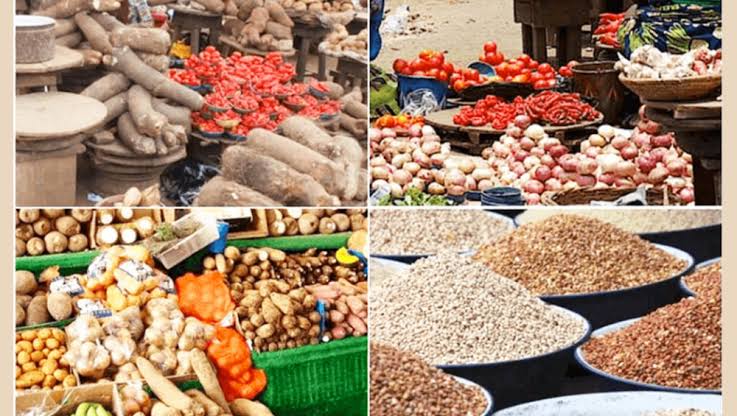
Despite the ongoing harvest season, food prices remain high across Nigeria as insecurity, rising agricultural input costs and expensive transportation continue to undermine farmers’ productivity.
Farmers say many are unable to access their farmlands because of insecurity, while those who manage to cultivate crops are grappling with the rising costs of fertilisers, improved seeds, fuel, machinery and other essential inputs.
Recently, the Food and Agriculture Organisation of the United Nations (FAO) projected that about 33.5 million Nigerians, including children, nursing mothers and pregnant women could face acute food and nutrition insecurity across 26 states and the Federal Capital Territory (FCT) between June and August 2027.
The report blamed persistent conflict and insecurity, declining agricultural production, weakening rural economies, high food inflation and shrinking household purchasing power as the key drivers of food and nutrition crisis.
According to him, many farmers have abandoned their farms or are unable to access them because of security threats, limiting agricultural production despite the seasonal harvest.
“Insecurity did not change. Climate change did not change. Where the farmer can plant something and go back and not get anything,” he said.
The AFAN vice president identified security as the first requirement for improving agricultural production, insisting that farmers must be able to access their farmlands without fear before other interventions could produce meaningful results.
He also attributed the high cost of food to the increasing prices of agricultural inputs, explaining that farmers inevitably factor their production expenses into the prices of their produce.
He said reducing the cost of fertiliser, seeds and other essential inputs would encourage increased production and help bring down commodity prices.
Okafor maintained that farmers are not solely responsible for the persistent increase in food prices, arguing that the government must create an enabling environment for agricultural production through deliberate investment in the sector.
He listed security, transportation, accessible rural roads, irrigation, mechanisation, quality seeds, farmer training and reliable agricultural data as critical areas requiring government attention.
On transportation, he explained that the rising cost of fuel had increased the expenses of operating tractors, moving farm equipment and transporting agricultural produce from rural communities to urban markets.
READ ALSO:
- Korean Kimchi Week Promotes Cultural Exchange Through Food
- Lawyer Accuses FCT High Court Judge Of Bias In Forgery Trial
- Safe Schools Under Threat As Security Gaps Keep Pupils Out
He noted that farmers also incur substantial expenses moving between their homes and farms, particularly where road infrastructure is poor, adding that such costs eventually reflect in the prices of food commodities.
“Farmers are not going to work. Many farmers are not going to their farms. Many of them have not accessed their farms. I know government is trying little now, but they will do more. We need them to do more,” he said.
Okafor called for increased investment in irrigation and modern agricultural technologies to improve productivity and reduce dependence on rainfall.
He said the adoption of smart agriculture, including irrigation systems, would enable farmers to cultivate their land more efficiently and achieve better yields.
He also emphasised the need for continuous training and retraining of farmers, noting that access to improved farming techniques and quality seeds could significantly increase output per hectare.
According to him, farmers using improved inputs and appropriate technologies should be able to achieve higher yields, thereby increasing food supply and improving their earnings without necessarily increasing prices.
He further stressed the importance of establishing a reliable agricultural database to guide government policies, interventions and resource allocation.
He said, “We need to do a lot of work and the government must come out to assist the farmers and give us security.
Farmers want to make money, If production cost reduce, this automatically, things will change.
“Government must come inside and say, farmers must have a way out. The way out is provide security, provide transportation, provide a good road, provide irrigation, provide mechanisation, provide a good seed, quality seed. Then train them and have a good data.
Without having a data, correct data, you cannot do anything.
Many of them have not accessed their farm. I know government is trying but they will do more. We need them to do more.”

