

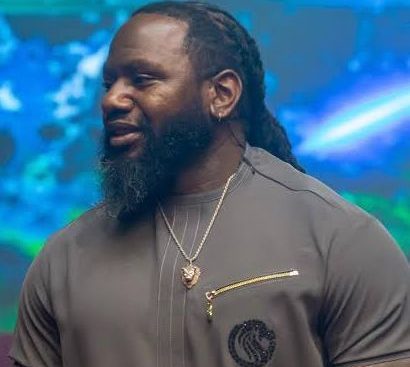
For Jimmy Odukoya, the camera and the pulpit may appear to belong to two different worlds, but both demand confidence, communication and the ability to connect with an audience.
In Nollywood, he steps into characters, bringing stories to life through his performances. In church, he stands before a congregation, delivering sermons and providing spiritual guidance. Between these two spaces is a man navigating the demands of entertainment, ministry, family legacy and public expectations.
Odukoya has established himself as a familiar face in the Nigerian film industry, with his international breakthrough coming through his portrayal of Oba Ade in the 2022 Hollywood historical drama The Woman King, where he starred alongside Viola Davis.
His acting career, which began in 2016, has included several Nollywood productions, while his role in The Woman King introduced him to a wider international audience.
But acting is only one side of his public identity.
Odukoya is also the Senior Pastor of Fountain of Life Church, a position he assumed in 2023 following the death of his father and the founder of the church, Pastor Taiwo Odukoya.
Although his appointment brought renewed attention to his acting career, he had been involved in ministry long before becoming the head of the church.
According to his biography, he was ordained in Oklahoma in 2007 and in Nigeria in 2009. He also served in various leadership roles, including youth ministry, before launching The CAVE in 2019, an initiative aimed at reaching younger audiences.
In a 2023 interview with BBC Pidgin, Odukoya maintained that becoming senior pastor would not mean abandoning acting. He explained that he intended to remain active in both fields, although the church would receive his primary attention.
His position reflects an approach to ministry that does not necessarily require a complete withdrawal from the creative industry.
His acting experience also raises interesting questions about how he communicates with people. The confidence, stage presence and storytelling required of an actor can be useful in public speaking, while the discipline of ministry demands a different kind of responsibility beyond audience engagement.
For Odukoya, however, the two careers appear to be complementary rather than conflicting.
His journey has not been without public scrutiny. His appearance, dreadlocks and continued involvement in acting have attracted conversations about what people expect a pastor to look like and how a religious leader should conduct a career outside the church.
His response to such criticism has often reflected his willingness to challenge conventional expectations of pastoral identity.
More recently, reports surrounding his remarriage and conflicting statements about his position as senior pastor have placed him at the centre of public discussions about leadership, church succession and personal choices.
The developments have also brought renewed attention to the weight of the legacy he inherited from his parents, particularly his father, who founded Fountain of Life Church in 1992.
Beyond the controversies, Odukoya’s story presents an interesting portrait of a public figure attempting to maintain two careers that require different forms of commitment.
One demands creativity, interpretation and performance; the other calls for spiritual leadership, accountability and service.
Whether on a film set or behind a pulpit, his public life continues to attract attention, leaving audiences curious about the man who occupies both spaces.

