

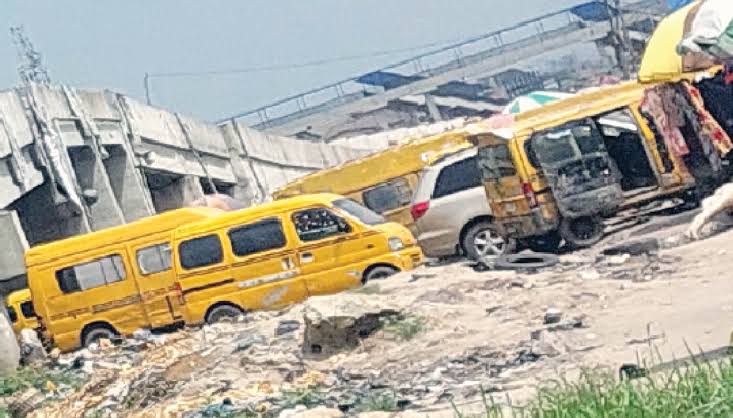
The growing influx of people into Lagos is adding pressure to the state’s sanitation challenges, with an estimated 6,000 people arriving in the city daily and about 3,000 reportedly settling without established addresses.
Residents have previously blamed persistent open defecation on inadequate public toilet facilities and the high cost of using the few available ones.
A commercial driver at Ojodu Berger, David Sule, said the government needed to build more public toilets or encourage private investors to provide the facilities and recover their investments through user charges.
He said, “As early as 4 a.m., these people have already come out to this park. Mind you, some of these boys sleep inside the vehicles. They are human beings; they eat and will eventually look for a place to dispose of their waste.
“When the thing starts, nobody can hold it. It is still dark at that time, so they look for an open place to relieve themselves.
“Even during the day, if you go to the few toilets inside the motor park, they will ask you to pay ₦200. These are part of the reasons people engage in open defecation and open urination.”
The Special Adviser to the Governor on Environment, Engr Olakunle Rotimi-Akodu, said the Lagos State Government was taking sanitation seriously and remained committed to providing safe, accessible, hygienic and gender-responsive facilities for all residents, particularly women and girls.
He described sanitation as more than an infrastructure or environmental issue, saying it was a fundamental component of human dignity, personal security, social inclusion and sustainable development.
Rotimi-Akodu observed that inadequate sanitation disproportionately affected women and girls, exposing them to insecurity, harassment and challenges associated with menstrual hygiene management.
READ ALSO:
- After Hosting AACT, Ladies Open, IBB Golf Club Moves To Upgrade Course
- Dortmund Hold Arsenal, Madrid Go Top As Man City Snatch Napoli Draw
- Oba of Lagos Urges Politicians To Shun Violence, Allow Records To Speak
He explained that the absence of safe, private and hygienic toilets in schools, workplaces, markets, transport terminals and healthcare facilities could undermine women’s confidence, educational attendance, economic productivity and general well-being.
“Genuine gender equality cannot be achieved without addressing the structural inequalities that limit access to adequate sanitation,” he said.
He said Lagos, as a rapidly growing megacity facing increasing population and urbanisation pressures, required sustained investment, effective planning and collective responsibility to bridge existing sanitation gaps.
According to him, the state government, through the Ministry of the Environment and Water Resources, had continued to expand access to public sanitation facilities as part of its broader roadmap towards achieving an Open Defecation-Free (ODF) Lagos.
He disclosed that the state currently had more than 1,769 functional public toilet facilities, alongside the construction of 200 public toilets and 80 bathrooms. The projects were complemented by 100 urinals and 160 handwashing basins across the five divisions of the state.
The special adviser stressed that the government’s sanitation agenda went beyond providing physical infrastructure to ensuring that facilities were properly designed, strategically located, adequately maintained and effectively managed.
He maintained that all public toilet facilities must progressively meet established standards of safety, accessibility, privacy, cleanliness and gender responsiveness.
He added that special consideration must be given to women and girls, children, older persons and people living with disabilities.

