

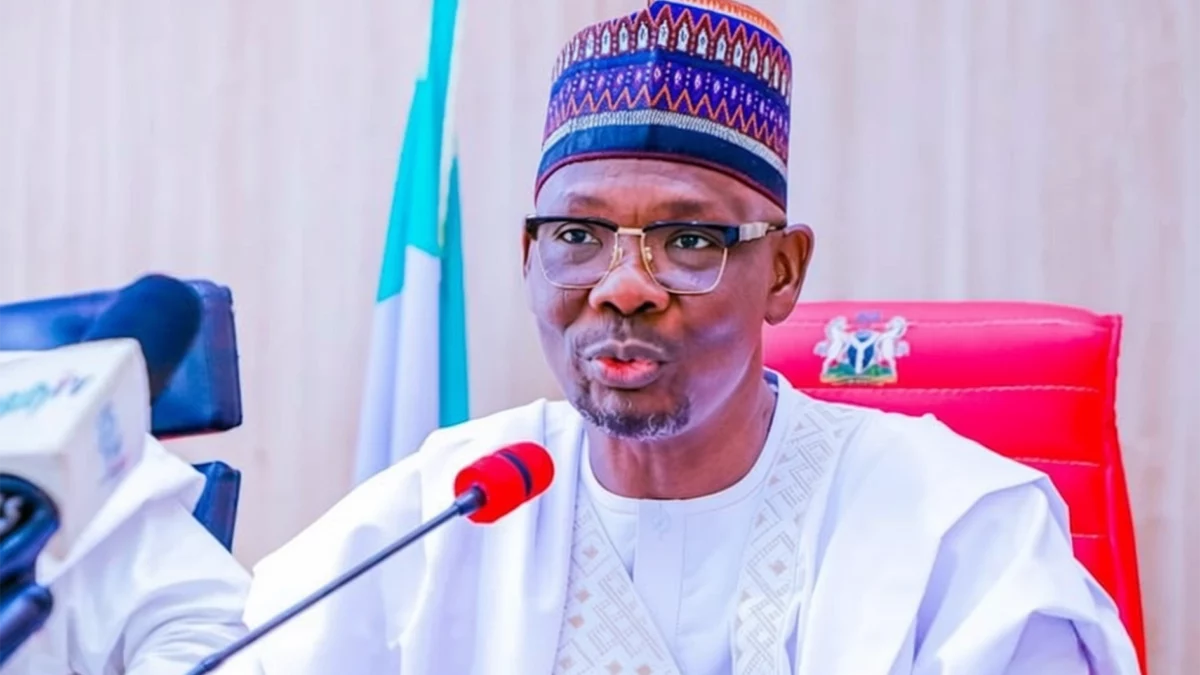
Nasarawa State Governor Abdullahi Sule has said the state has recruited more than 3,000 health personnel as part of efforts to address workforce shortages and expand access to healthcare services across the state.
He disclosed this at the closing ceremony of the 67th National Council on Health in Lafia, Nasarawa State on Friday, where he also spoke about the expansion of general hospitals and the funding of health insurance services.
He said the recruitment covered doctors, nurses and other categories of health workers, while the expansion of general hospitals was intended to reduce pressure on tertiary health institutions and bring essential medical services closer to residents.
The governor also disclosed that the state had introduced a structured system for the regular release of funds to support health insurance services, particularly for vulnerable residents.
Sule said the state’s experience during the COVID-19 pandemic had informed increased attention to disease outbreak response, emergency preparedness and surveillance.
He noted that the large population of vulnerable people in the state made access to affordable healthcare and sustainable health insurance financing important.
The governor also spoke on the state’s efforts to address outstanding pension and gratuity obligations, alongside spending on infrastructure and other public services.
Also speaking, the Coordinating Minister of Health and Social Welfare, Professor Muhammad Ali Pate, disclosed that Nigeria had recorded a 60 per cent reduction in maternal deaths over three years, with progress made in 12 out of 13 national health indicators.
Pate, however, warned that the country continued to face significant challenges in healthcare quality, affordability, workforce capacity and medical industrialisation.
He said the federal government’s ongoing health sector reforms were beginning to produce measurable results through collaboration with state governments and other stakeholders.
The minister, who described the National Council on Health as Nigeria’s highest health policy-making body, stressed the need for stronger accountability and effective implementation of decisions reached at the council.
READ ALSO:
- JOHESU Gives FCTA Seven Days To Pay Health Workers’ Allowances
- FCT Health Workers Give 7-Day Strike Notice To FCTA Over Unpaid Allowances
- FG Raises Medical School Admission To 12,000, Targets 20,000 By 2028
He expressed concern that only 25 per cent of resolutions adopted at the previous council meeting had been implemented, while 10 states scored below 40 per cent in the implementation assessment.
Pate warned that council resolutions would remain mere intentions without clearly defined responsibilities, timelines and measurable outcomes.
He consequently urged state governments to designate institutions responsible for implementing the resolutions, establish monitoring mechanisms and submit quarterly progress reports for independent verification.
At the meeting, the council considered 70 memoranda covering critical areas of healthcare delivery, including maternal and child health, cancer control, telemedicine, mental healthcare, health workforce development, electronic pharmacy regulation and blood services.
In the draft communiqué read by the Permanent Secretary of the Federal Ministry of Health and Social Welfare and Chairman of the NCH Technical Committee, Daju Kachollom, the council announced the adoption of the National Electronic Pharmacy Policy and Strategic Implementation Plan as the national framework for regulating electronic pharmacy practice.
The Pharmacy Council of Nigeria is expected to report on implementation progress at the 68th National Council on Health scheduled to hold in Enugu State in 2027.
The council also approved 22 memoranda, five of which were amended, while 34 were noted.
Other major decisions included the nationwide adoption of the National Telemedicine Guideline 2026, implementation of the National Cancer Control Plan and approval of minimum standards for secondary healthcare facilities.
It also approved measures to strengthen mental healthcare at the primary healthcare level, improve electricity supply to health facilities, expand paramedic regulation and integrate early childhood development services into primary healthcare facilities.
The 67th National Council on Health, hosted by Nasarawa State for the first time, brought together federal and state health authorities, development partners, professional associations, civil society organisations and other stakeholders to deliberate on policies for improving healthcare delivery in Nigeria.

