

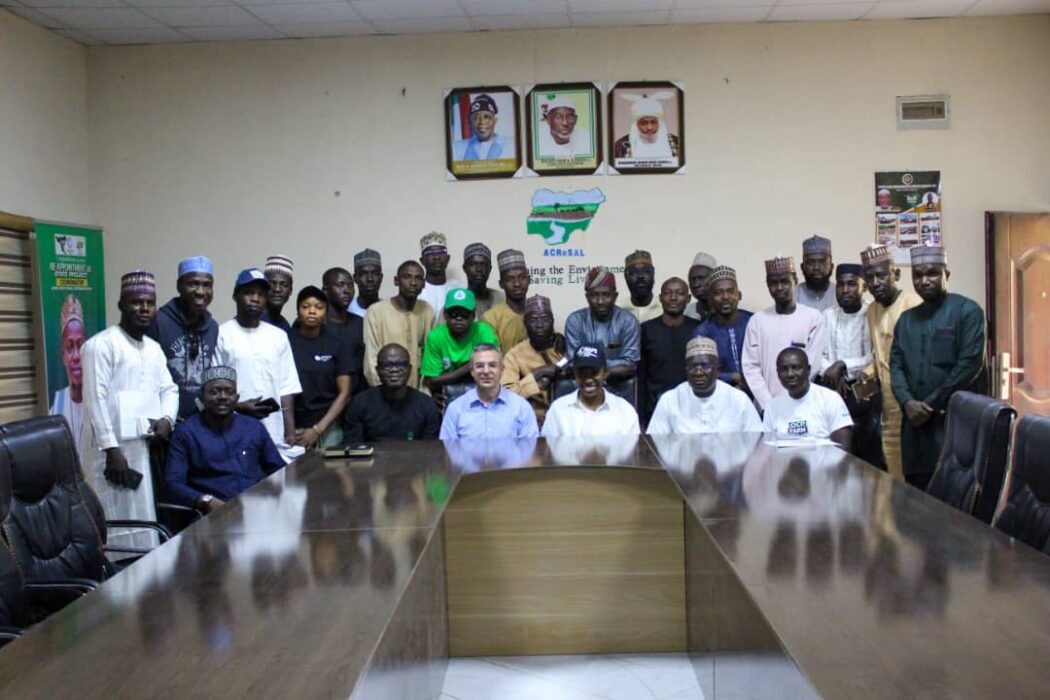
The Federal Government has commenced the pilot implementation of an artificial intelligence-powered agricultural monitoring system in Jigawa State, using satellite imagery and field observations to track farmland use and crop performance.
The National Agro-Productivity System (NAPS), coordinated by the Presidential Food Systems Coordinating Unit (PFSCU), is designed to provide timely information on cultivated and fallow land, crops planted and their growth across the country.
The initiative is being implemented with technical support from OCP Africa and Ground Truth Analytics under a Memorandum of Understanding signed in Ben Guerir, Morocco, on July 17, 2026.
According to a statement by the PFSCU, the system was commissioned by President Bola Tinubu in Dutse, while its national Steering Committee was inaugurated at the State House.
The first batch of trained extension agents has also commenced field operations in Jigawa, selected as the pilot state.
At its inaugural meeting on November 16, 2026, the Steering Committee adopted its terms of reference and Phase One implementation plan. It also selected two additional states for high-level land mapping and agreed to reconvene after key implementation milestones.
The next milestone is scheduled for January 31, 2027.
The first phase of the programme will run through the dry season until April 2027. During this period, extension agents trained in Dutse on November 18 will collect field data on rice, wheat and maize in 59 communities across 11 local government areas.
The agents will receive technical guidance from agronomists provided by OCP Africa.
The PFSCU explained that NAPS combines artificial intelligence, satellite imagery and field observations to generate updated information on agricultural activities.
It said satellite images of Jigawa would be analysed using artificial intelligence, while extension agents would verify the findings through physical observations.
The system is expected to provide plot-by-plot information on cultivated and fallow land, crops planted and their development, with data refreshed every five days.
According to the unit, the information will help state governments improve land-use planning, identify areas requiring irrigation and direct agricultural inputs to farmers who need them.
READ ALSO:
- ASUU Begins Indefinite Strike At Zamfara Varsity As Govt Inaugurates Salary Review Committee
- Chidi Okoroafor Emerges Assemblies Of God Nigeria New General Superintendent
- INEC Begins Distribution Of 86,931 PVCs To Kogi LGAs
At the federal level, the system is expected to strengthen food supply planning, provide early warnings of potential shortages and support trade and agricultural research policies.
It could also help farmers access financing and insurance by providing verified records of cultivated land and planted crops, which banks and insurers can use in assessing applications.
Executive Secretary of the PFSCU, Marion Moon, said the system would address the challenge of relying on delayed agricultural data when making policy decisions.
“For too long, decisions about Nigerian agriculture have been made after the season, on figures that arrive too late to act on. NAPS changes that. It gives every tier of government the same timely picture of our farmland, and it is built and owned by Nigerian institutions,” Moon said.
Also commenting on the initiative, Director-General of the Jigawa State Agricultural Transformation Agency, Dr Saifullahi Umar Basirka, said the system would help the state improve support for farmers, plan the use of land and water resources and attract investment into agriculture.
He said access to reliable information on farmland and crop performance would enable the state to identify farmers’ needs and demonstrate the potential of its agricultural sector to investors and lenders.
The PFSCU said NAPS was being developed through Nigeria’s partnership with Morocco but would be operated by Nigerian institutions, with the aim of establishing a locally owned agricultural intelligence capability.
The system’s Steering Committee is chaired by the PFSCU and reports to the unit’s Steering Committee, chaired by Vice President Kashim Shettima.
Its membership includes the Federal Ministries of Agriculture and Food Security, and Water Resources and Sanitation; the National Space Research and Development Agency; the Nigeria Governors’ Forum; and six states representing the country’s geopolitical zones.
The states are Jigawa, Borno, Ebonyi, Plateau, Cross River and Ekiti.
OCP Africa and Ground Truth Analytics, established by Mohammed VI Polytechnic University, are providing technical support for the programme.
The PFSCU was established in July 2024 in the Office of the Vice President to coordinate government action on Nigeria’s food systems.

