

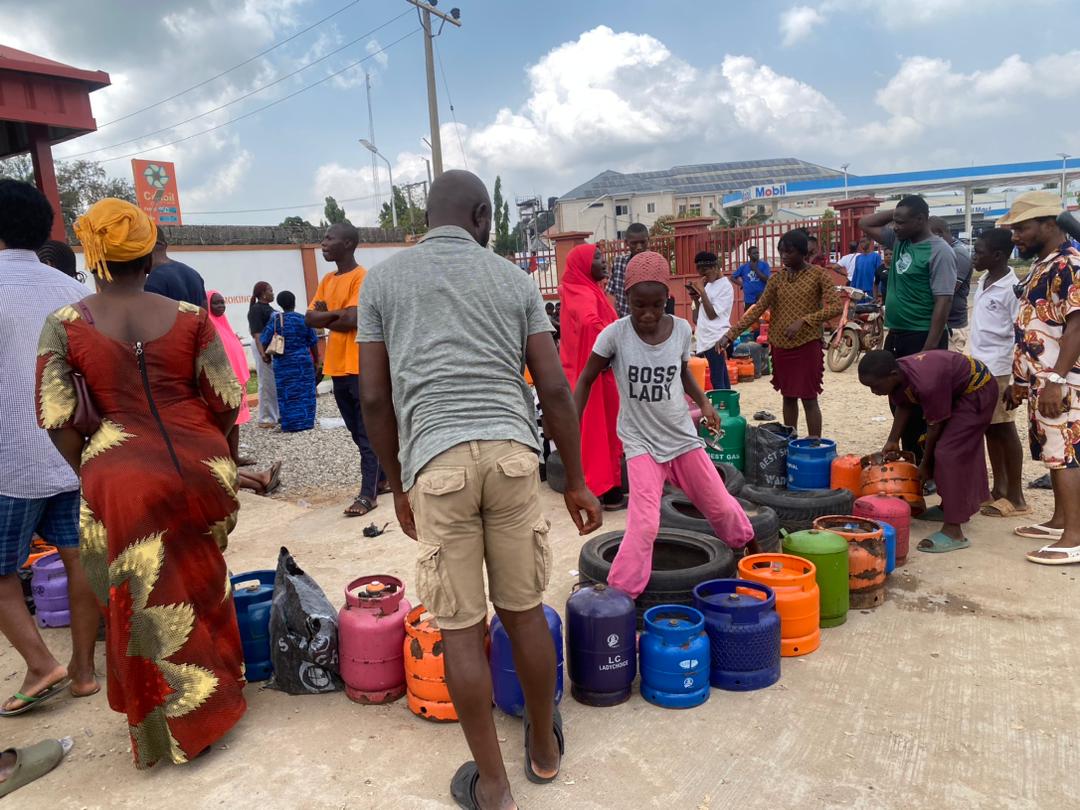
Nigeria, despite having the largest proven gas reserves in Africa and increased production, is facing a shortage of Liquefied Petroleum Gas (LPG), popularly known as cooking gas.
The shortage has continued to drive up retail prices and put additional pressure on households and businesses across the country.
Reports said data sourced from the Nigerian Upstream Petroleum Regulatory Commission, showed that 62 per cent of Nigeria’s gas output in the first two months of the year was exported, leaving only 38 per cent for domestic consumption.
Industry analysts warned that a supply structure built for a time of lower gas usage simply cannot meet the current demand.
National cooking gas consumption rose by 20 per cent to 1.8 million metric tonnes in 2026 from 1.5 million metric tonnes in 2023, an industry report titled Nigeria LPG Production & Supply Matrix (2023–2026) stated.
However, the estimated national supply was between 1.55 million and 1.65 million metric tonnes, creating a supply gap.
The report noted that domestic production has grown with contributions from facilities including the Dangote Refinery, Nigeria LNG and several gas processing plants.
Due to the supply-demand imbalance, retail cooking gas prices have soared.
LPG now sells for between ₦1,700 and ₦2,000 per kilogramme in many parts of the country, compared with an average of about ₦1,100 per kilogramme earlier in the year.
Industry operators warned prices could continue to rise if structural challenges are not addressed.
Reasons behind the shortage, experts said, included lack of enough gas infrastructure, priority given to exports, insecurity and pipeline vandalism, limited storage capacity and regulatory bottlenecks.
Nigeria does not have enough pipelines, storage and processing facilities to move gas efficiently from production fields to consumers, an industry stakeholder, who spoke on condition of anonymity, said.
Producers also prefer export markets because they generally offer higher returns and more stable foreign exchange earnings, he said.
The Nigerian Association of Liquefied Petroleum Gas Marketers stated that the situation had brought severe hardship to households and businesses.
The association’s National President, Edu Inyang and Executive Secretary, Bassey Essien said that the rising prices at the depots and the supply shortages were making cooking gas unaffordable.
“This unfortunate situation has brought untold hardship to millions of Nigerian households, small businesses, food vendors and low-income families who rely on LPG for daily cooking and livelihood,” they said.
The association warned that many families were going back to firewood and charcoal because of the rising cost of gas.
Industry stakeholders said the outlook was unclear in the short and medium term.
The National President of the Oil and Gas Service Providers Association of Nigeria, Colman Obasi, said that it will take years to solve infrastructure deficit, insecurity, foreign exchange volatility and regulatory challenges.
He warned that gas shortages could continue in the country even with its huge reserves without major investments in gas processing, storage and distribution infrastructure.
The increase in the price of cooking gas over the last decade is about 335 per cent as shown by data from the National Bureau of Statistics.
The average price increased from ₦400 per kilogramme in 2016 to about ₦1,741 per kilogramme in 2026, capturing the combined effect of supply constraints and broader economic pressures.

