

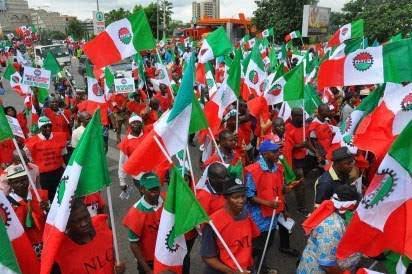
The Nigeria Labour Congress (NLC) has demanded that the federal government honour its October 27, 2026 agreement with organised labour, warning that any delay in implementing the N70,000 transportation allowance could undermine trust in industrial relations.
NLC president, Comrade Joe Ajaero, said workers expected the government to ensure that the transportation allowance was paid in November as agreed, alongside the establishment of the Tripartite National Minimum Wage Negotiation Council and the convening of a monitoring meeting.
Ajaero made the demand on Monday, 23 November, 2026 in Abuja while delivering the keynote address at the opening ceremony of the 2026 NLC Harmattan School.
He stressed that agreements reached through negotiations must be implemented faithfully, regardless of prevailing political or economic considerations.
According to him, government must demonstrate commitment to negotiated agreements to sustain confidence between labour and the authorities.
He said, “Trust is and has always been a key factor in building and maintaining a sustainable industrial relations, thus fidelity to agreements is crucial. Nigerian workers expect government to honour commitments made through negotiations. Agreements cannot become matters of convenience that are implemented only when politically expedient.
We use this opportunity to call on the federal government to ensure that all the tenets of the 27th October, 2026 agreement are faithfully implemented especially the N70,000 transportation allowance and the setting up of the Tripartite National Minimum Wage Negotiation Council.
We expect workers to receive them this month as agreed including the convening of the monitoring meeting. State governments and private sector employees are urged to also implement same”.
The N70,000 transportation allowance was part of the outcome of negotiations between the federal government and organised labour on October 27, 2026, following disagreements over workers’ welfare and the rising cost of living.
The parties also agreed on a monitoring mechanism to track the implementation of the commitments.
Speaking further, Ajaero said the cost-of-living crisis continued to place enormous pressure on Nigerian workers, who were struggling to meet basic expenses, including food, transportation, housing, healthcare and education.
He argued that economic reforms should be assessed not only through macroeconomic indicators but also by their impact on ordinary workers, pensioners, unemployed young people and vulnerable households.
READ ALSO:
- NELFUND Considers Increasing Students’ ₦20,000 Monthly Upkeep Allowance
- Kano Govt Warns Against Vandalism As Water Supply Returns
- Ex-APC Aspirant Condemns Attack On Rarara, Warns Against Political Intimidation
The NLC president also called on workers to remain united ahead of the forthcoming national minimum wage negotiations, warning that attempts could be made to divide the labour movement and weaken its bargaining position.
He urged unions to resist internal divisions and maintain a common position to secure meaningful improvements in workers’ wages and living conditions.
“At this point as we prepare to negotiate a new national minimum wage, we want to draw your attention to the fact that; the enemies of the labour movement are already at work. Their strategy is as old as it is dangerous; divide us, weaken our resolve, and sabotage the forthcoming national minimum wage negotiations before they even begin.
They will peddle rumours, exploit our differences, and seek to set one union against another, one worker against another. However, we must see these tactics for what they are; attempts to rob Nigerian workers of the decent wage they deserve.
We urge every worker to remain alert and vigilant. We must resist every attempt to divide us. Our strength lies in our unity, and our unity is our weapon. Let us continue to speak with one voice, present a common front, and insist that the minimum wage negotiations deliver real and meaningful improvement in the lives of workers”, he added.
Ajaero said the 2026 Harmattan School, themed, “Organising in the Context of Socio-economic Transformation”, was designed to strengthen workers’ education and equip trade unionists to respond to economic, technological and political changes affecting the world of work.
He noted that the labour movement needed to expand its engagement beyond workplace issues to include economic policies, social protection, democratic governance and the future of employment.
The NLC president further urged political parties and candidates ahead of the 2027 general elections to make employment, wages, social protection, education, healthcare, security and workers’ welfare central to their campaigns.
He maintained that Nigerian workers should not be treated merely as electoral numbers but as citizens entitled to demand accountability from political leaders.

