

By BUKOLA ARO-LAMBO, and FAVOUR OLOKUNGBOYE, Lagos
Many young Nigerians are increasingly abandoning age-old superstitions surrounding cats, embracing the animals as household pets, with some developing a preference for the feline over dogs, a shift that is also driving demand for exotic cat breeds selling for millions of naira.
Once associated in popular folklore with witchcraft, bad omens and supernatural activities, cats are gradually finding acceptance among young Nigerians who consider them affectionate, clean, quiet and relatively easy to maintain.
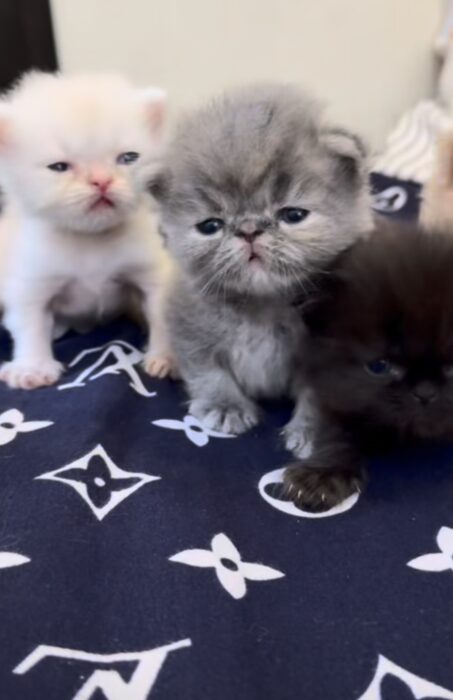
The changing attitude is not only reflected in the growing number of young people adopting cats as companions but also in the emergence of a market for exotic breeds, including Persian, British Shorthair, Ragdoll and Bengal cats.
Vincent, Chief Executive Officer of Vkenneland Farms, a business involved in the sale, marketing and breeding of cats and dogs, said the Nigerian market now has several exotic cat breeds, with some commanding prices of up to N3.5 million.
According to him, Persian cats sell for between N700,000 and N800,000, although his farm sells some for as much as N1 million, while British Shorthair and Ragdoll kittens go for about N1.5 million each.
He disclosed that Bengal kittens were among the more expensive breeds, recalling that he recently sold some for N3.5 million.
“I recently sold some Bengal kittens for N3.5 million. They are all available, and we breed most of them,” he said.
Vincent attributed the growing interest in cats, particularly among young people, to their quiet disposition, ability to adapt to small living spaces and relatively low-maintenance requirements.
“I would say young people love pets that do not make too much noise. Cats are a good example. You can live with a cat without having to do too much. They are not stressful. They use little space, and they are well potty-trained,” he said.
He explained that cats were naturally inclined to maintain cleanliness within the home, adding that while owners could further train them, some of these behaviours were instinctive.
“They know how to stay properly in the house without making much noise, unlike dogs, which make noise,” he said, while acknowledging that his business also breeds and sells dogs.
Beyond the commercial appeal, the attraction for many young cat owners lies in the companionship and emotional connection they develop with the animals.
Speaking about his cat, Perry, he said, “She is just so cute and she seems to understand my moods. She knows to make herself scarce when I am really busy and she knows the right time to come cheer me up. I just love her.”
He described cats as naturally clean animals that groom themselves, unlike dogs, adding that they do not have the unpleasant smell often associated with other pets.
“Cats are very clean animals who clean up after themselves unlike dogs, and they don’t smell,” he added.
READ ALSO:
- Nigerians Can’t Wait Five Years For Security, CISLAC, Others Tell Tinubu
- Hardship Pushing More Nigerians To Have Fewer Children
- FG Trains 280 Nigerians In Early Childhood Care To Boost Employment
His commitment to caring for Perry is reflected in the effort he makes to source supplies, travelling from Shomolu to Agege to purchase cat litter, sand and food.
For Joseph Faluyi, another young cat owner, his relationship with his pet, Fred, began with an encounter with a stray cat in his compound.
Faluyi said the male cat, which he estimated to be about nine months old, initially wandered around the compound during the day and returned at night before he gradually adopted it by providing food.
“I did not like the fact that it was always running because nobody’s chasing it. So, I started feeding it and it became more comfortable,” he said.
Although he does not know the cat’s breed, Faluyi said its self-grooming habits and disciplined nature were among the reasons he developed an affection for cats.
Beyond its independence, he said Fred had gradually developed ways of expressing affection, including rubbing itself against his body whenever he returned home, wagging its tail and attempting to play with him.
“Whenever I’m home or I return or I’m buying something, you know, it comes and it’s always rubbing itself on my body. Yeah, I like that. It has developed certain habits that it uses to show its fondness of me, including wagging its tail and trying to play catch with me,” he said.
He, however, recalled a funny experience when the cat accidentally scratched him during play after extending its claws, prompting an unexpected reflex reaction from him.
On the responsibilities of owning a cat, Faluyi said he was working towards training Fred to become more disciplined, including potty training and teaching it to eat from a plate rather than directly from the ground.
Although the cat still spends time in the compound, he said he wants to establish better habits as part of his efforts to nurture it.
He also advised young Nigerians considering keeping cats as pets to be prepared to invest time and attention in their animals, including regular play and companionship.
“Be ready to spend time with it. Be ready to give it attention and play with it every once in a while. And don’t get mad too much when it scratches you. Sometimes it’s very sticky,” he said.
Faluyi disclosed that he spends between N10,000 and N20,000 on food and other care for the cat on average.
Meanwhile, Vincent said the negative beliefs surrounding cats, particularly the association with witchcraft, were misconceptions that should not discourage people from keeping them as pets.
“Another thing I would like to say is that cats are not witches. I know there are stories that go around about cats being witches and all that, but they are not witches,” he said.

