

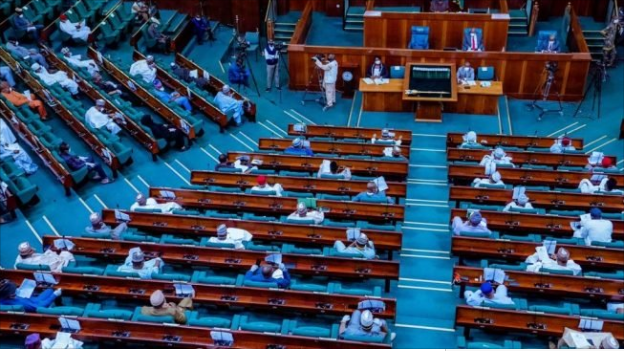
The Senate and the House of Representatives would begin the harmonisation of the various versions of the Constitution Alteration Bill seeking the establishment of state police before sending the legislation to the 36 state Houses of Assembly for approval.
The bill had on June 10 been passed by the House of Representatives, while the Senate had on June 24 approved the Executive Bill transmitted by President Bola Tinubu.
Before being referred to the President for assent, the amendment to the constitution will have to be passed by not less than two-thirds of the Houses of Assembly of the states.
The Senate bill has 26 clauses while the House bill has 18. There are significant differences in several constitutional amendments proposed by both chambers.
A comparison of the two versions indicated that the House made limited amendments to Sections 34, 35, 39, 42, 89, 129, 153 and 197 of the Constitution, whereas the Senate amended Sections 84, 89, 121, 124, 129, 157, 158, 160, 197, 201 and 202.
Both chambers introduced a new Section 214 to replace the existing constitutional provision for the establishment of the Nigeria Police Force. But the Senate added 15 new sub-clauses to the section, compared with seven in the House version.
The two chambers also differed in their views on the structure of Section 215, which deals with the appointment and control of the police.
The Senate named the provision “Appointment, Command, Direction and Tenure” and referred to the head of a state police command as “Commander” while the House retained the title “Appointment of Inspector-General of Police and Commissioner of Police of a State” and described the head of the state police as “Commissioner of Police.”
Likewise, both chambers replaced Section 216 with brand new provisions but gave different duties.
The Senate referred the section as “National Police Standards, Oversight and Accountability” while the House called it “Removal of Inspector-General of Police and Commissioner of Police of a State.
The Senate version has also got seven transitional provisions for the establishment of state police and substantial amendments to the Second, Third and Fourth Schedules of the Constitution while the House amended only the Second and Third Schedules.
Deputy Speaker of the House of Representatives and Chairman of the House Committee on Constitution Review, Benjamin Kalu, said a conference committee would be constituted after the House resumes from recess on July 7 to harmonise the differences
Akin Rotimi, the House spokesman, also confirmed that the committee would harmonise the two versions before the final document is sent to the states.
Kalu said the bill was the outcome of extensive consultations between the Executive and other stakeholders.
“Actually, it is an Executive Bill at the moment. We have taken care of it in the House of Representatives, and the Senate has done the same. “Where we are now is that we’re going to have what we call the conference committee because we practise bicameral legislation,” he said.
He said the Senate and House versions are basically the same, with some drafting differences.
“There’s nothing fundamental. “But we need to be in tandem for it to be a unified piece of legislation from the National Assembly,” he added.
“I am sure that the harmonisation process will be finalised shortly after the lawmakers return,” Kalu said.
“When we come back from recess on July 7, the House will set up the conference committee. “If there is a need to convene an emergency meeting before that, the leadership of the National Assembly would consider it.”
When we’re done, we’re going to turn it back over to the states that same day. This will be a ceremonial handing over where we invite the Speakers of the state Houses of Assembly and formally hand to them the bill.
“I think the governors have done the groundwork already and it should be back within a week when it gets to them for Mr President’s assent,” he said.
The deputy speaker said the proposal had received wide support across the country, including from state governors and the Conference of Speakers, which has promised to ensure speedy consideration by state legislatures.
The proposed legislation, according to Kalu, has built-in safeguards to prevent governors from abusing the state police and to ensure compliance with national policing standards.
The minimum standards will be determined by the National Police Council. A State desiring to establish a police service shall meet such requirements prior to certification.
“States are free to go above those standards, but the minimum benchmark is necessary to ensure professionalism and accountability,” he said.
Meanwhile, Lagos State Governor Babajide Sanwo-Olu said the state was ready to establish its own police service once the bill becomes law. He noted that Lagos would draw from the experience of retired security chiefs to strengthen its security architecture.

