

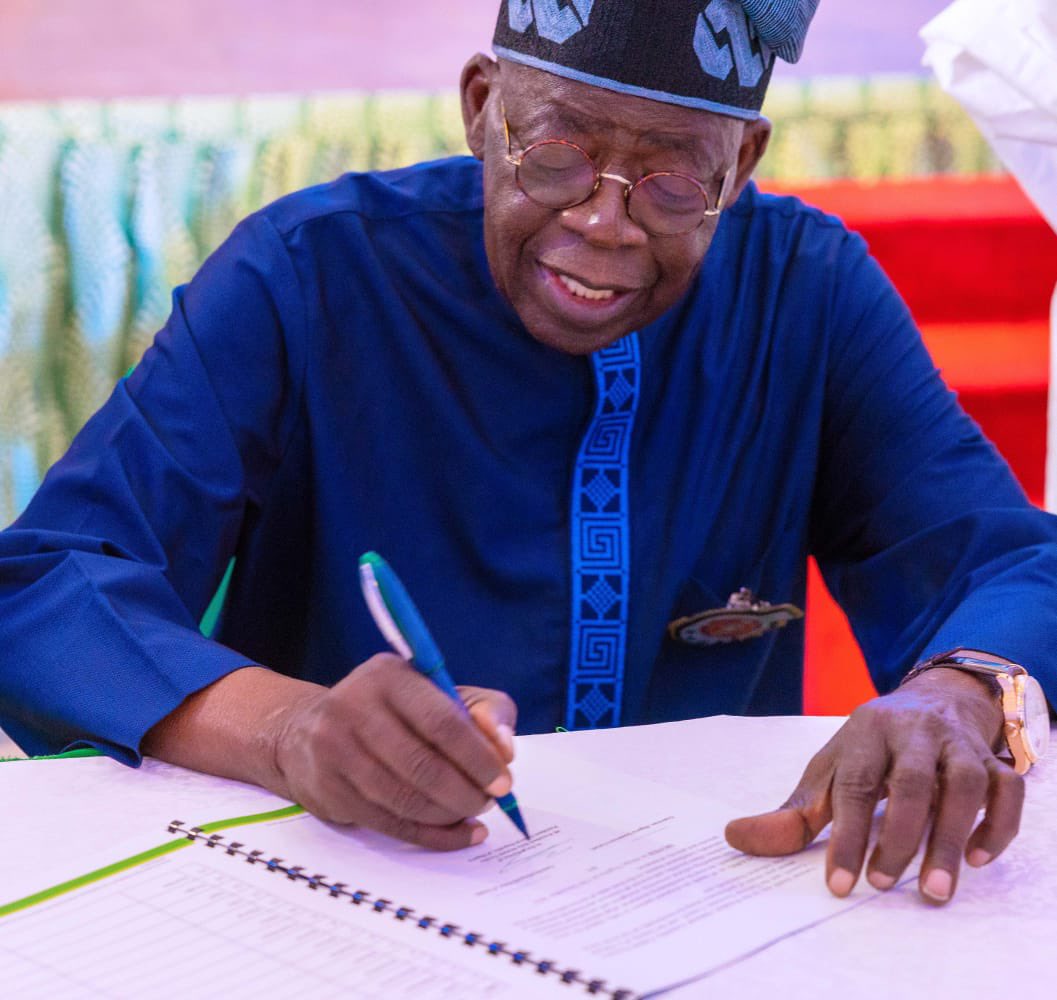
The Bola Ahmed Tinubu led Federal Government has dismissed claims that it released over ₦8 trillion, estimated to be about two per cent of the Gross Domestic Product (GDP) of Nigeria outside the approved national budget.
The government, in a statement issued on Sunday by the Federal Ministry of Finance, said the claims were false and capable of misleading Nigerians on the management of public finances.
The statement was signed by the Minister of Finance and Coordinating Minister of the Economy, Taiwo Oyedele, following public comments linked to observations attributed to the International Monetary Fund’s representative in Nigeria and the Fund’s 2026 Article IV Consultation Report.
The government insisted that it does not run a “shadow budget” or spend public money outside the constitutional and statutory financial procedures.
“To avoid any doubt, the Federal Government does not run a ‘shadow budget’ nor do we spend public money outside the constitutional and statutory framework laid down for public finance,” the statement said.
The government relied on Sections 80 to 83 and 162 of the 1999 Constitution, as amended, which are the sections that deal with the withdrawal and spending of public funds.
It said that Federal Government spending was undertaken through Appropriation Acts, Supplementary Appropriation Acts and other statutory authorities approved by the National Assembly.
The ministry also noted that multi-year capital projects, which may extend across multiple budget cycles, were undertaken in accordance with existing laws and approved capital rollover provisions where applicable.
“These are recognised features of public financial management and should not be seen as off-budget spending,” the government said.
It challenged those who alleged that trillions of naira were secretly spent to name specific projects allegedly executed without appropriation or legal authority.
It is wrong to say that trillions of naira have been secretly spent without legislative approval.
“Allegations of this nature must specify the projects allegedly executed without appropriation or legal authority and furnish credible evidence in support of the claim.
“Such monumental assertions must be backed up by facts that can be verified and not by speculation if they are to have meaning,” the ministry said.
When analysing Nigeria’s public finances, the government said it was important to disaggregate appropriation, expenditure authorisation, financing and fiscal reporting.
The ministry said the country’s public finance framework comprises statutory transfers, first-line charges and intervention mechanisms as provided for by Acts of the National Assembly.
These are statutory allocations and contributions to development commissions and other agencies established by law and retained by designated revenue generating agencies as cost of collection and administration.
The government also listed capital expenditure approved in separate budgets for some agencies and the Federal Capital Territory, special interventions for security, infrastructure and disaster response, debt service obligations and other statutory transfers.
“These expenditures are not secret nor illegal. “They are established by law, reported in various fiscal documents and are subject to relevant oversight, audit and accountability mechanisms,” the ministry said.
It stated that some expenditures could be categorized differently in the reporting than presented in the annual Appropriation Act, especially under international statistical and reporting standards adopted by the government.
“The variations in classification should not be misinterpreted as a sign of illegal expenditure,” it said.
The Federal Government also dismissed suggestions that the disputed amount constituted an increase in the country’s budget deficit.
According to the ministry, fiscal deficit is the relationship between total government revenue and total expenditure.
It argued that the mechanism of financing a capital project did not automatically add to the fiscal deficit.
“The mere fact that a capital project is financed through annual appropriations, supplementary appropriations, statutory transfers, approved intervention mechanisms or other lawful financing arrangements does not by itself increase the fiscal deficit,” the government said.
The IMF’s observation was on the comprehensiveness, timing and presentation of fiscal reports and not illegal government expenditure, the ministry said.
It added that, like several other countries, Nigeria was working to strengthen the alignment of its budget presentation with international fiscal reporting standards.
The government recalled that President Bola Tinubu had formally requested the National Assembly to stop the practice of running multiple and overlapping budgets.
The ministry said Tinubu made the request during the presentation of the 2026 Appropriation Bill to a joint session of the National Assembly on Dec. 19, 2025.
It said the President pushed for one cohesive budget framework.
The Federal Government re-iterated its commitment to prudent fiscal management, transparency and accountability.
It said recent reforms had improved public financial management through better budget assumptions, revenue administration, digitalisation of financial processes and treasury management.
The ministry said the reforms had been recognised by the IMF, other multilateral institutions, international credit rating agencies, media organisations and investors.
“Public debate is welcome and essential in a democratic society. But it must be predicated on facts and an accurate understanding of Nigeria’s constitutional and fiscal framework,” the statement added.
“It does not assist public debate or improve democratic accountability to misrepresent technical observations as evidence of unlawful expenditure.

