

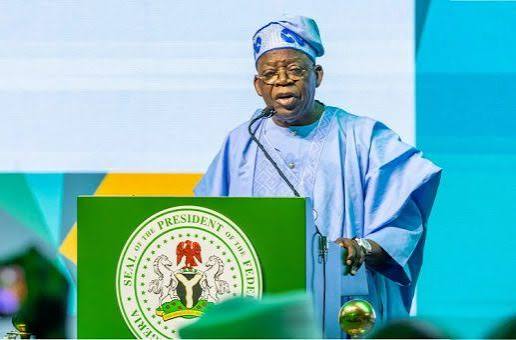
President Bola Tinubu has proposed a N2.2 trillion reduction in the 2026 national budget.
If the request is granted by the Senate, it will bring the total expenditure from N68.3 trillion down to N66.1 trillion and retain N31.4 trillion as fiscal deficit and plans to borrow about N29.2 trillion.
The President transmitted the 2026 Appropriation Repeal and Re-enactment Bill, alongside the revised 2026 Fiscal Framework to the Senate for consideration and approval.
The proposed reduction is aimed at aligning government spending with available resources, existing financial obligations and outstanding commitments of the federal government.
Under the revised fiscal framework, aggregate revenue is projected at N33.7 trillion, including receipts from Government-Owned Enterprises (GOEs), while capital expenditure is estimated at N26.2 trillion.
Despite the reduction in overall expenditure, the fiscal deficit remains unchanged at N31.4 trillion, representing 5.6 per cent of the country’s Gross Domestic Product (GDP).
The government also projected new borrowing of approximately N29.2 trillion, comprising N18.4 trillion in domestic borrowing and N10.7 trillion in foreign borrowing.
The revised framework seeks to regularise certain expenditures incurred by the Nigerian National Petroleum Company Limited (NNPCL) on behalf of the Federation.
It also provides for under-provided debt service obligations, capital warrants already issued and supplementation commitments made by the Federal Government.
READ ALSO:
- Tinubu Seeks Senate Approval Of Revised 2025 Laws Of Federation
- 2027: Tinubu Lobbies Ndigbo, Seeks Support For Second Term
- Benue Assembly Passes N695bn 2026 Supplementary Budget
In addition, provisions have been made for refunds to Ministries, Departments and Agencies (MDAs) and special accounts to reconcile outstanding financial obligations and ensure that government expenditure is adequately captured in the national budget.
The adjustments are intended to provide a clearer picture of the government’s financial commitments and align budgetary provisions with obligations already undertaken.
The planned borrowing includes domestic and external components, while the revised framework also provides for external borrowing denominated in US dollars to meet existing foreign borrowing commitments.
According to the proposal, the dollar-denominated provision will not increase the overall borrowing envelope but is intended to meet financing requirements already captured in the government’s fiscal arrangements.
In transmitting the revised appropriation bill, Tinubu urged the Senate to give it expeditious consideration and approval to facilitate the smooth implementation of the 2026 budget.
Following the presentation of the President’s communication, the bill was referred to the Senate Committee on Rules and Business for further legislative action.
The committee is expected to take the necessary steps to facilitate its consideration in line with the Senate’s legislative procedures.
The proposed revision comes after the National Assembly approved the 2026 Appropriation Bill of approximately N68.32 trillion, which Tinubu signed into law on April 17, 2026.
The revised expenditure estimates and associated fiscal adjustments will require legislative approval before they can take effect.

