

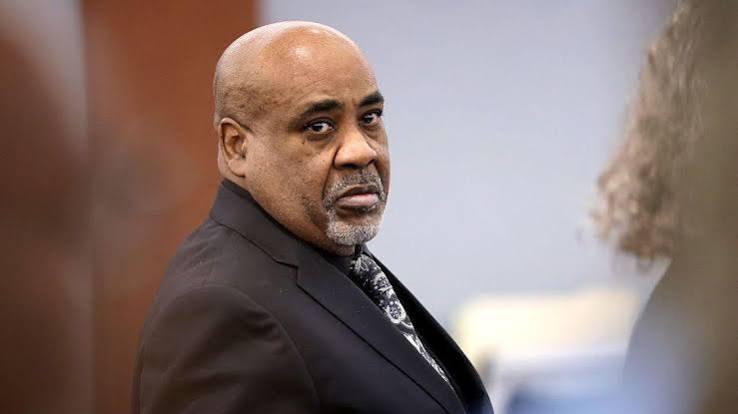
Duane “Keffe D” Davis, a former head of the Compton gang South Side Crips, has been convicted in the 1996 murder of Tupac Shakur, one of hip-hop’s most notorious killings, finally putting an end to nearly three decades of mystery.
A 12-member jury in Las Vegas convicted the 63-year-old Davis of first-degree murder with a deadly weapon after deliberating for less than three hours.
The conviction is the first guilty verdict in the decades-old case and exposes Davis to a potential life sentence without parole.
After the verdict, Davis told the judge he “intends to appeal this matter,” despite his not guilty plea.
The courtroom was filled with an emotional reaction to the verdict. Tupac’s sister Sekyiwa “Set” Shakur cried as the decision was read, and Davis’ son covered his face with one hand. Several people in the gallery wiped away tears and hugged members of the prosecution team.
Much of the case against Davis stemmed from statements he made over the years, including stories in his 2019 memoir and recordings of conversations with investigators.
In those accounts, Davis admitted being inside the white Cadillac that fired the shots and said he supplied the weapon used in the attack.
Read Also: Federal Government Tightens Rules On Civil Servants’ Deployment
The prosecution said Davis’ accounts had changed over the years, but one thing remained constant — his presence in the vehicle involved in the shooting.
Chief Deputy District Attorney Binu Palal told jurors that if they believed Davis’ statements, they did not need any other independent evidence to prove his participation.
However, the defense said Davis’ claims were “bravado” to sell his memoir and raise his public profile. “His words were not supported enough by other evidence,” the defense also said.
In the end, the jury shot down that claim.
Prosecutors said the killing was payback for a confrontation that nite between Tupac’s entourage and Davis’ nephew, Orlando “Baby Lane” Anderson.
Evidence presented during the trial showed Tupac and members of his entourage had beaten Anderson at a Las Vegas casino.
Davis later said he was angry over the confrontation and joined three other men in a white Cadillac to look for Tupac and Death Row Records executive Marion “Suge” Knight.
Investigators said he handed a firearm off to the back seat of the vehicle before they found Tupac and Knight.
One of the men in the back seat then opened fire, the prosecution said.
On September 7, 1996, Tupac was stopped at a red light when a white Cadillac pulled alongside his vehicle and gunfire erupted.
The rapper was shot multiple times and died from his injuries six days later at the age of 25.
Prosecutors said Davis was the mastermind of the attack, but did not say who did the shooting. The other three men in the Cadillac have since died.
Nevada law didn’t require prosecutors to prove Davis pulled the trigger to convict him of murder.
Tupac’s stepbrother Mopreme Shakur had expressed cautious optimism before the trial but also acknowledged the pain of decades of unanswered questions.
Mopreme remembers the nite Tupac was shot: rushing to Las Vegas, sitting in the hospital bed with his brother as the family waited in hope for Tupac to pull through.
But he said no court ruling could ever bring the justice his family sought.
I’ll never get the justice I want. “I want my little brother back,” Mopreme said.
That sentiment demonstrated the emotional significance of the verdict for Tupac’s family, almost 30 years after his death.
Tupac Shakur’s killing was one of the defining moments of 1990s hip-hop, coming at the height of tensions between rival factions associated with the West Coast and East Coast rap scenes.
Shakur was one of the most commercially successful and influential rappers of his generation, and was closely associated with Death Row Records and the Mob Piru street gang. Davis was a leader of the rival South Side Compton Crips gang.
His killing led to years of speculation, conspiracy theories and competing narratives over what happened that nite.
No one was charged for decades.
That changed in 2023 when Davis was arrested and charged with murder after years of making public statements about his alleged involvement. The prosecution then used those statements, his memoir and recordings of his conversations with investigators as key parts of its case.
The trial, which began on August 17, heard from dozens of witnesses and included hours of recorded conversations.
Following the jury’s verdict, the nearly 30-year-old mystery surrounding Tupac’s death entered a new chapter.
But with Davis vowing to appeal, and the identity of the actual gunman still officially unresolved, the legal story surrounding one of music history’s most famous murders is not necessarily over.

