

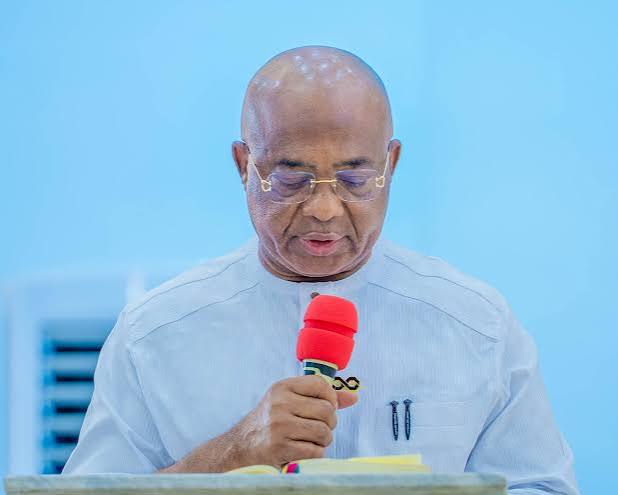
Imo State governor, Hope Uzodimma, on Friday declared that his administration has made local economies in the state to be working.
He said that unlike before when only the economies in the city centres were working, he changed the narrative by laying the foundations and by embarking on enterprise and investing in the people, thus stimulating the local economies.
Uzodimma spoke in Lagos as the guest lecturer at the inaugural National Policy Dialogue of the Lagos Country Club with Government Leaders.
He said his administration long realised that a local economy that gives young people a stake in peace is among the best security investments a government can make, hence the foundation it has laid in the state.
The governor noted that to attract private capital, the government must provide the basics, including infrastructure, human capital and power.
READ ALSO:
- ASUU Reports Progress In Agreement Implementation, Names Imo, Taraba As Defaulters
- 2027: Court Sacks Onyeagucha, Orders NDC To Submit Nwole As Imo East Senatorial Candidate
- Kaduna Assembly Moves To Restore Local Govt Service Commission
He disclosed that his administration has built more than 130 roads, provided energy sustainability, digitalised the land administration in the state, and through ‘Skill-up Imo Project’, trained more than 65,000 young people in software development, cybersecurity, artificial intelligence and related fields with digital skills in all the 27 local government areas of the state.
According to him, through the project and the state’s wider digital economy programmes, the administration has created more than 80,000 jobs and income earning opportunities
The governor also said that with the state paying the highest minimum wage of N104,000, the economies of the local governments and rural communities have been boosted.
“A well-paid public workforce is one of the quickest ways to put money into circulation at the grassroots,” he argued.
He attributed the economic success recorded by the state to the reforms by President Bola Tinubu, saying that resources reaching the states have substantially increased since the president removed fuel subsidy.

