

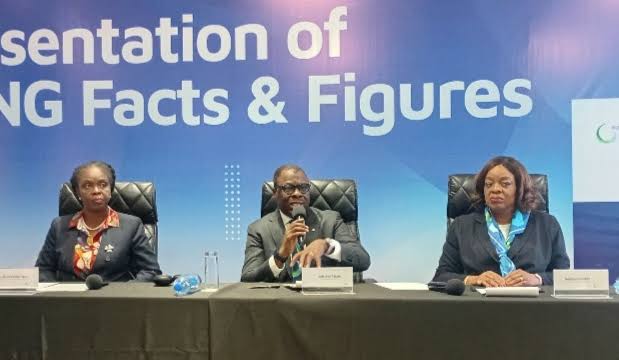
NLNG has announced that it has commenced preliminary work on Trains 8, 9 and 10 as it seeks to expand its liquefied natural gas (LNG) production beyond its ongoing Train 7 project.
The gas firm also called on Nigeria to accelerate the commercialisation of its abundant natural gas resources before the global energy transition closes the window of opportunity.
Mr. Adeleye Falade, the Managing Director and Chief Executive Officer (CEO) of NLNG made this known at the presentation of NLNG Facts and Figures in Lagos on Tuesday, an engagement designed to provide insights into the company’s business performance, strategic priorities and contributions to Nigeria’s energy sector and sustainable development.
“While Train 7 is the company’s immediate focus, it has already commenced strategic discussions and technical evaluations to underpin the next phase of expansion,” he said.
The projects, he said, were designed to enhance Nigeria’s position in the global LNG market and maximize the value that could be derived from the country’s gas resources.
“We’re looking at Train 7 right now, but we have begun discussions on what it would take to go to Trains 8, 9 and 10. We have to continue to grow. We have people in the company who are already working on what that future looks like,” he said.
The NLNG boss also noted the company’s contribution to the Nigerian economy since it began operations.
The company has paid out close to $50 billion in dividends, including to the federal government, over the years, he said, and generated more than $149.6 billion in revenue.
Since the expiration of its pioneer tax status, NLNG has emerged as one of the highest corporate taxpayers in Nigeria, having paid about $10 billion in taxes and consistently being recognized by the Federal Inland Revenue Service as one of the most tax-compliant companies in the country, he said.
Falade stressed that Nigeria remains more of a gas nation than an oil nation but warned that huge reserves would not be a guarantee for future prosperity.
“We have gas resources in abundance, but the critical thing is what we do with them. The energy transition is not yet far enough progressed for there to be a window of opportunity to monetise these resources. “If we don’t act now we risk losing a lot of value,” he said.
While natural gas is widely recognised as the transition fuel in the global quest for cleaner energy, countries with substantial gas reserves must act quickly to develop infrastructure, attract investment and commercialise their resources, he noted.

