

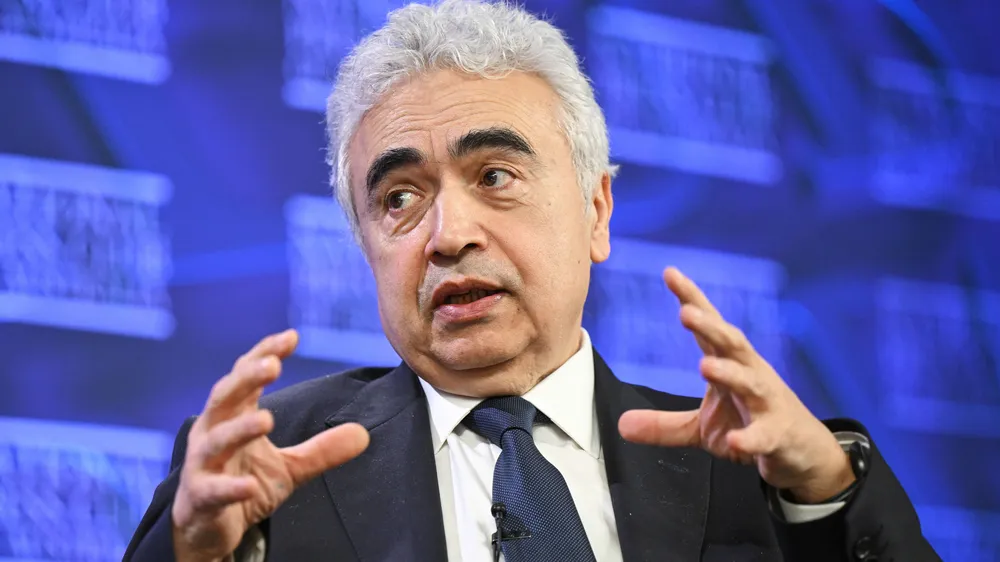
Fatih Birol, the head of the International Energy Agency (IEA), has said that the conflict in the Middle East and the closure of the Strait of Hormuz will hurt countries if they don’t stop.
Birol also told countries to get ready for “difficult times in the energy market,” saying that no country is safe from the effects of the war.
During a meeting on Monday with the International Monetary Fund (IMF) and World Bank Group (WBG) in Washington, DC, on the sidelines of the ongoing IMF-WBG spring meetings, the IEA executive spoke.
The meeting was about how the war would affect the global economy. It is said to be part of the coordination group they set up in early April to make sure their institutions could respond to the war’s effects on energy and the economy as best as possible.
Birol’s warning comes after the US and Iran’s peace talks in Pakistan ended without a deal.
President Donald Trump had said that the US Navy would block ships from entering or leaving the Strait of Hormuz because the peace talks had failed.
“The world is facing the biggest threat to energy security in history. Birol said, “It is oil, it is natural gas, but it is also other important goods like fertilizers, petrochemicals, helium, and more.”
“The problem is very big, and some countries will be worse off than others, but I can tell you that no country is safe from it.”
Birol said that March was a very hard month for the world in terms of energy and the economy, and he warned that April might be even worse.
“…because in March we already got shipments that were loaded long before the crisis started, and in April nothing was loaded,” he said.
“The longer the problem lasts, the worse it gets.”
He said that the IEA is keeping an eye on more than 80 energy facilities in the area, such as oil fields, gas fields, refineries, and terminals. This is because production plants are still being attacked.
The expert said that one-third of the damage to the buildings is “severe or severely damaged.” He also said that it would take a long time to get back to the level of damage before the conflict started, even after the problem is over.
He said, “We should be ready for hard times in the energy markets, the economy, and especially for developing countries that import oil and gas and whose muscles are much weaker than the others.”
He said that member countries of the IEA had released 400 million barrels of oil, which is the most ever, “and it is hitting the markets.”
Birol said that prices dropped by “almost $20” when he announced the release in March.
“It’s good, but this isn’t the answer. He said, “This is only making the pain worse.”
The head of the IEA said that the answer is still to fully open the Straits of Hormuz to trade.

