

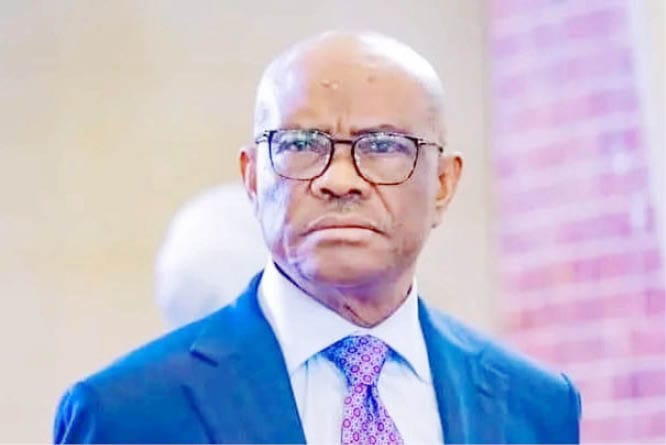
Indigenous youths in the Federal Capital Territory (FCT), under the aegis of the Abuja Original Inhabitants Youths Empowerment Organisation (AOIYEO), have commended the FCT minister, Nyesom Wike, for what they described as significant interventions in the education sector, particularly the rehabilitation of public schools and efforts to address challenges affecting teachers’ welfare.
The executive director of AOIYEO and supreme leader of FCT youths, Ambassador Isaac David, said the minister’s interventions between 2024 and 2026 had contributed to improving educational infrastructure and addressing longstanding challenges in the territory’s public school system.
David, who spoke on Friday in a press briefing, on the controversy surrounding the administration’s performance in the education sector, challenged critics to provide verifiable evidence to support claims that the Wike-led administration had failed to improve public education in the FCT.
He said he had documented records of projects executed and ongoing interventions by the FCT Administration, including the renovation of 23 public schools between 2024 and 2026.
According to him, the records also include 111 projects implemented by the Education Secretariat and 79 ongoing construction and renovation projects involving educational facilities across the territory.
“I challenge anyone who claims that the FCT Minister has not revived or significantly improved the education sector in the Federal Capital Territory to present their facts and evidence.
“For the sake of transparency and accountability, I have documented evidence to support my position, including a list of 23 public schools renovated between 2024 and 2026, 111 Education Secretariat projects implemented within the period and 79 ongoing construction and renovation projects in public schools across the FCT,” he said.
David maintained that the figures should form part of any objective assessment of the administration’s performance in the education sector, rather than relying on political arguments and unsubstantiated claims.
He also defended Wike’s intervention in the prolonged strike by primary school teachers in the territory, which kept pupils out of classrooms for nearly four months in 2025.
He attributed the industrial dispute to accumulated financial obligations owed to Local Education Authority (LEA) teachers by the six area councils, arguing that the responsibility for their salaries, allowances and outstanding entitlements rested primarily with the councils.
According to him, the strike, which commenced on March 24, 2025, disrupted academic activities until July 9, 2025, when the intervention of the FCT Administration facilitated the resumption of schools.
He explained that the FCT Administration and the area councils had distinct responsibilities in the management and funding of public education, a situation he said was often misunderstood in public discussions.
David noted that while the six area councils were primarily responsible for funding LEA primary schools and meeting the financial obligations of their teachers, the FCT Administration, through its Education Secretariat and relevant agencies, handled education policy, supervision, quality assurance and infrastructure development.
He said the minister intervened in the teachers’ dispute despite the fact that the direct responsibility for settling the outstanding entitlements of LEA teachers rested largely with the area councils.
David disclosed that Wike brokered a financial arrangement involving N16 billion, representing six months of 10 per cent Internally Generated Revenue (IGR) from the area councils, to address the outstanding payments.
READ ALSO:
- Wike To Upgrade More FCT Chiefdoms, Build Palaces For First-Class Chiefs In 2027
- North West Children Demand Free Education, School Feeding
- Jonathan To Politicians: Don’t Push Youths to Kill, Bomb Homes To Stay in Power
Under the arrangement, he said, the FCT Administration was expected to provide 40 per cent of the outstanding payments, while the area councils would contribute the remaining 60 per cent.
He further claimed that the FCT Administration releases N2 billion monthly as an intervention fund to support the settlement of outstanding arrears owed to area council teachers.
According to him, the minister considered the prolonged closure of schools unacceptable because of its impact on pupils and the education system.
“How can the minister fold his hands and watch teachers remain at home while children are denied access to education? His intervention was necessary to ensure that academic activities resumed,” David said.
He, however, insisted that the area councils must also be held accountable for their financial obligations, warning that the accumulation of teachers’ arrears could undermine efforts to improve the quality of primary education.
“How can our area council chairmen renovate primary schools or build more schools when they are owing teachers billions of naira?” he queried.
On the structure of the FCT education system, David explained that the FCT Universal Basic Education Board (FCT-UBEB) oversees basic education programmes, including early childhood care, primary, nomadic and junior secondary education.
He added that the FCT Secondary Education Board supervises senior secondary schools, while the Education Secretariat coordinates policy and administration across the territory.
The Quality Assurance Department, he said, is responsible for inspecting schools and monitoring compliance with established educational standards.
David acknowledged that the peculiar administrative arrangement in the FCT, where the Administration performs functions similar to those of a state government alongside six area councils, had contributed to confusion over the responsibilities of the different authorities.
He therefore urged residents, political actors and social media commentators to distinguish between the supervisory and infrastructure responsibilities of the FCT Administration and the financial obligations of the area councils to primary school teachers.
He maintained that the rehabilitation of schools, ongoing construction projects and intervention in the teachers’ strike should be considered in evaluating the administration’s contribution to education in the territory.
The AOIYEO director called for greater accountability from both the FCT Administration and the area councils, stressing that sustained investment in school infrastructure and prompt payment of teachers’ entitlements were essential to improving educational standards.
He said discussions about the education sector should be based on verifiable records and measurable outcomes, rather than political disagreements.
David added that the ultimate concern of stakeholders should be ensuring that teachers receive their entitlements, schools have adequate facilities and children in the FCT enjoy uninterrupted access to quality education.

