

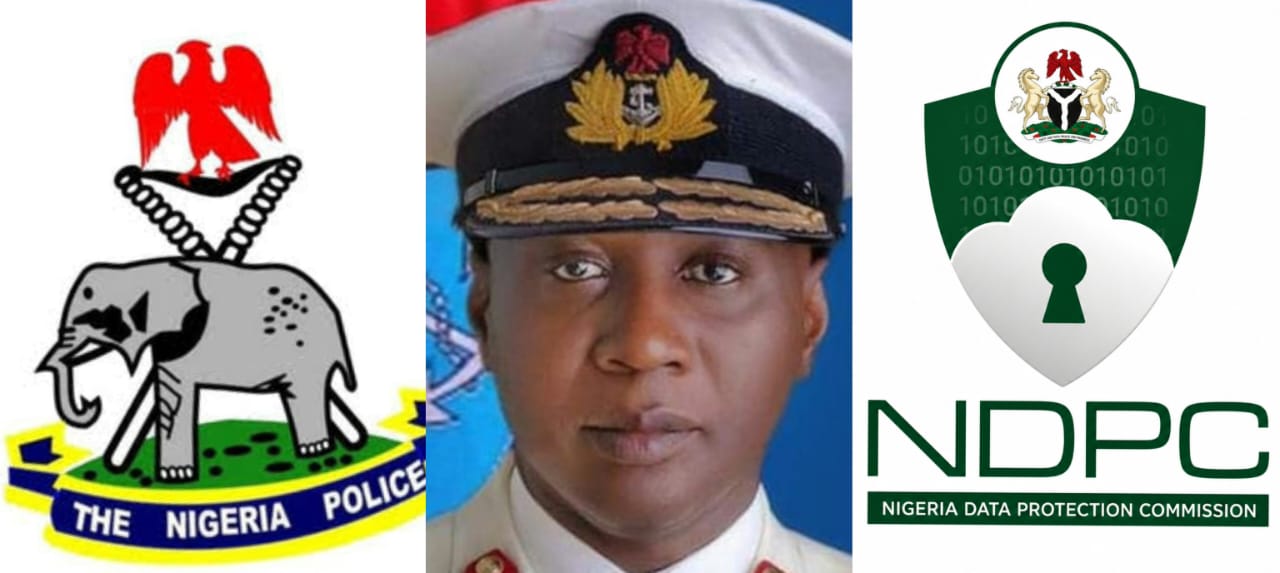
The Human Rights Writers Association of Nigeria (HURIWA) has criticised Inspector-General of Police Tunji Disu and the National Data Protection Commission (NDPC) over what it called prolonged inaction on petitions alleging cybercrime, unlawful interception of private communications and data protection breaches involving a senior naval officer and other officials of the National Institute for Policy and Strategic Studies (NIPSS).
In a statement issued on Sunday, HURIWA’s National Coordinator, Comrade Emmanuel Onwubiko, said that more than a year after the petitions were submitted, neither the police nor the NDPC had publicly disclosed the status of their investigations or taken visible steps to address the allegations.
The group described the delay as inconsistent with both institutions’ statutory responsibilities, warning that it could undermine public confidence in Nigeria’s enforcement of cybercrime and data protection laws.
The petitions were submitted on July 1, 2025, by PRNigeria publisher Alhaji Yushau A. Shuaib, alleging unauthorised access to and interception of private digital correspondence belonging to him and his organisation during disciplinary proceedings at NIPSS, without a court order or lawful authorisation.
They named Nima Salman Mann, Rear Admiral Abubakar Abdullahi Mustapha and Professor Elias Wahab as individuals allegedly linked to the incident.
HURIWA said the allegations raise serious questions under the Nigeria Data Protection Act (NDPA) 2023 and other cybersecurity laws and, if established, could carry implications for privacy rights, institutional data governance, media source confidentiality and public trust in government institutions.
The group called on NDPC National Commissioner and CEO, Dr Vincent Olatunji, to clarify the status of the petition, disclose any interim findings and outline measures to prevent similar breaches in public institutions, describing the matter as a test of Nigeria’s commitment to enforcing its data protection regime within government agencies.
It also urged the IGP to direct the Force Criminal Investigation Department (FCID) to expedite its investigation.
HURIWA noted that a similar statement was issued on April 6, 2026, raising the same concerns despite what it termed credible evidence submitted to investigators.
It alleged that police had yet to invite or question those named, particularly Rear Admiral Mustapha, described as central to allegations of intimidation, institutional bullying and unlawful interception of correspondence.
The group also raised concerns over a possible conflict of interest, alleging that Mann and Rear Admiral Mustapha are members of the National Institute (mni), alongside former Deputy Inspector-General of Police Sadiq Idris Abubakar, who previously supervised the FCID.
HURIWA argued that any perception of preferential treatment based on institutional affiliation could erode public confidence in law enforcement and the principle of equality before the law.
The association pointed to Shuaib’s recently published memoir, MNI Versus MNIPR in NIPSS: Tackling Institutional Bullying, which recounts his experience during the 2025 Senior Executive Course at NIPSS and alleges a pattern of institutional intimidation, with Rear Admiral Mustapha identified as central to the events leading to his withdrawal from the programme.
HURIWA said that while the memoir has renewed public interest, the cybercrime and data-breach allegations remain separate matters requiring independent criminal investigation, stressing that pending civil litigation over Shuaib’s withdrawal does not preclude a criminal probe. “An elementary principle of law is that the existence of a civil suit does not bar criminal investigation or prosecution where criminal offences are alleged,” the group said.
HURIWA called on police to invite all named individuals for questioning in line with due process and urged the NDPC to fulfil its statutory mandate promptly and transparently, warning that continued delay could reinforce perceptions of selective justice and weaken public trust in Nigeria’s law enforcement and data protection institutions.

