

Nigeria and the United States have renewed efforts to strengthen maritime security cooperation, with a focus on intelligence-led enforcement, improved cargo examination and preventing the illegal movement of strategic and dual-use goods through Nigerian ports.
The commitment was reinforced at a Proliferation Prevention Programme and Joint Maritime Port Visit organised through a collaboration between the Office of the National Security Adviser (ONSA), the United States Defence Threat Reduction Agency (DTRA), the Nigerian Ports Authority (NPA), the Nigeria Customs Service (NCS) and other security stakeholders.
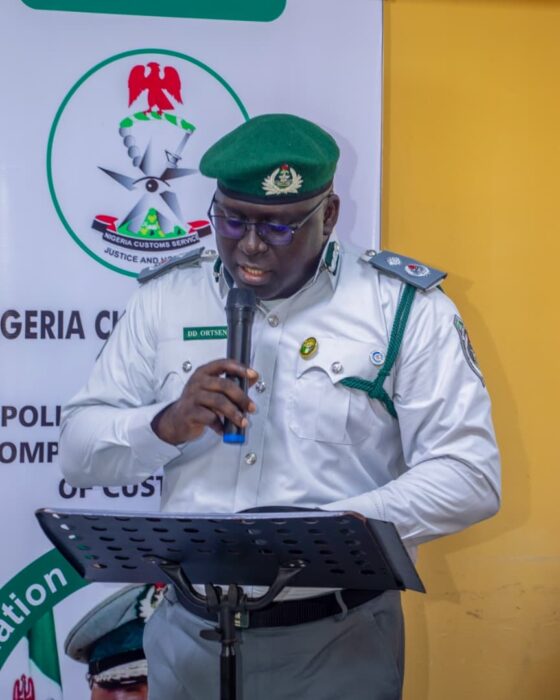
Speaking at the engagement, the Customs Area Controller, Edo/Delta Area Command, Deputy Comptroller Dominic Dooyum Ortsen, described the initiative as timely, given the strategic responsibility of the Service in safeguarding Nigeria’s borders and ensuring compliance with national laws and international security obligations.
Ortsen said the responsibilities of the Customs Service went beyond revenue collection, trade facilitation and suppression of smuggling, noting that growing security challenges in the maritime sector required stronger intelligence gathering, risk profiling and identification of strategic and dual-use goods.
He stressed the need for specialised training and sustained capacity development for officers involved in maritime security, cargo examination and enforcement operations.
READ ALSO:
- Nigeria Seeks Singapore Partnership To Boost Maritime Sector
- NUC Declares University Of America, Curaçao, Illegal In Nigeria
- Nigeria, Ghana, Others Oppose ECOWAS $500,000 Merger Fee Cap
The Customs chief also highlighted the introduction of Customs Mutual Assistance Agreements (CMA) as a framework for improving cooperation, information exchange and operational collaboration between customs administrations.
He called for stronger inter-agency collaboration, improved technical capabilities and continuous professional development to address emerging maritime security threats.
Ortsen said the engagement provided an opportunity for Nigerian and US representatives, alongside other relevant agencies, to exchange views on maritime security challenges and strengthen institutional cooperation.
He reaffirmed the commitment of the Comptroller-General of Customs, Bashir Adewale Adeniyi, to equipping officers with the knowledge, technical skills and operational intelligence required to identify goods that could pose security risks.
As part of the programme, participants toured relevant maritime and port facilities to gain practical insights into port operations, existing security arrangements and the responsibilities of different stakeholders in the maritime environment.

