

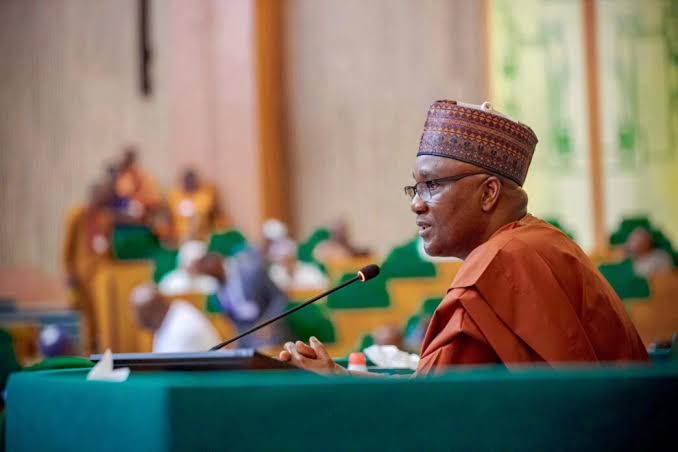
Speaker of the House of Representatives Rt. Hon. Tajudeen Abbas has reaffirmed the commitment of the 10th National Assembly to advancing constitutional reforms to improve women’s political representation, particularly through the proposed Reserved Seats for Women Bill.
Abbas, who was represented by Hon. Kafilat Adetola Ogbara, made this known at the First Nigerian Women Peace Summit organised by the National Council of Women Societies (NCWS) with the theme: “Women as Catalysts for Peace, Democracy and Inclusive Governance.”
The speaker said the proposed legislation seeks to create additional seats for women in the National Assembly and State Houses of Assembly without displacing existing constituencies or taking away seats currently occupied by other lawmakers.
He described the underrepresentation of women in legislative institutions in the country as a democratic deficit, arguing that Nigeria’s democracy could not fully reflect the diversity of its population while women remained inadequately represented in political decision-making.
“Building an inclusive democracy requires more than acknowledging the contributions of women. It requires deliberate institutional reforms that enable them to participate meaningfully in governance and exercise influence over decisions that affect their lives and the future of our country,” he said.
Abbas said the House had continued to engage the executive, political leaders and other stakeholders to build the consensus required to advance the proposed reform.
He added that President Bola Tinubu had expressed support for the initiative, reinforcing the need for a broad-based institutional commitment to improving women’s political representation.
The speaker, however, stressed that representation should go beyond occupying political positions to include the ability to influence policies, shape legislation, participate in oversight and contribute meaningfully to decisions affecting the country.
He called for stronger protection of women’s rights and dignity, noting that empowerment could not be meaningful while women and girls remained exposed to violence, abuse and discrimination.
Abbas recalled leading members of the House of Representatives on an advocacy march against gender-based violence in Abuja on November 25, 2024 as part of the global 16 Days of Activism campaign.
He said the fight against gender-based violence must translate into effective legislation, improved access to justice, adequate support for survivors and accountability for perpetrators.
On peace building, the speaker said women played important roles in conflict prevention, community reconciliation, humanitarian assistance and the restoration of social cohesion, particularly in communities affected by insecurity.
READ ALSO:
- Tinubu Orders Security Agencies To Confront Political Thugs With Full Force
- 2027: ADC Accuses APC Of Sponsoring Political Violence, Attacks On Opposition
- Political Bombshell From Jigawa APC Presidential Campaign Rally
He urged stakeholders to recognise women as active participants in preventing conflicts, negotiating peace agreements and shaping institutions that sustain stability.
“Peace is more durable and meaningful when those most affected by conflict have a genuine voice in determining its resolution,” he said.
He urged the NCWS to sustain its partnership with the National Assembly and other institutions, noting that the organisation’s nationwide reach and advocacy experience could help translate policy discussions into practical outcomes.
Earlier, the national president of NCWS, Princess Edna Azura, said the summit provided an opportunity to reflect on the relationship between women’s participation and the quality of Nigeria’s democracy.
She questioned whether a democracy could be truly representative when a significant proportion of the population remained inadequately represented in institutions where decisions were made.
Azura said women were not merely beneficiaries of development but contributors, innovators, peacebuilders and leaders whose experiences and capabilities were essential to national progress.
She called for a society in which women had fair opportunities to contribute to national development and participate in shaping the country’s future.
Also speaking, Senator Philips Tanimu Aduda expressed support for initiatives aimed at improving the welfare of vulnerable groups, particularly older persons, children and persons with disabilities.
Aduda said he was interested in supporting a new book initiative of the first lady focused on the welfare of these groups.
He also disclosed plans for programmes in the Federal Capital Territory to address the needs of persons with disabilities, as well as another initiative for older persons in December.
According to him, the programmes were intended to improve their welfare and create opportunities for more meaningful participation in society.
The summit brought together women leaders and other stakeholders to discuss women’s contributions to peace, democracy and inclusive governance, as well as the need to translate advocacy into institutional reforms and practical action.

