

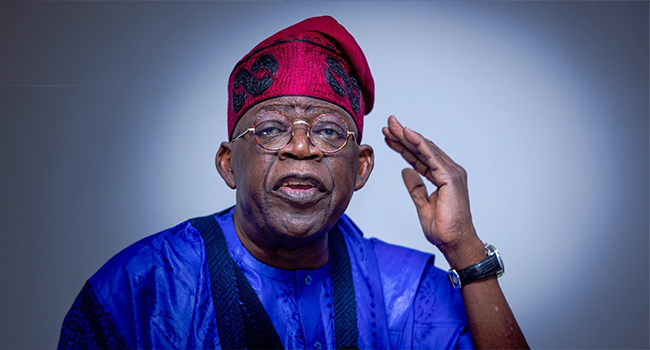
When President Bola Ahmed Tinubu completes his three years in office on June 12, 2026, investors may have reasons to celebrate while many households continue to struggle.
The administration’s audacious reforms, from the abolition of fuel subsidies to the liberalisation of the foreign-exchange market, have transformed Nigeria’s economic landscape, revived investor interest and bolstered government finances.
Yet the same measures have stoked inflation, eroded incomes and added to a cost-of-living crisis that continues to try public patience.
The result is an economy stuck between improving market fundamentals and persistent social strain.
But the government says it inherited an economy distorted by subsidies, multiple exchange rates, dwindling fiscal revenues and declining investor confidence.
But the question facing businesses and investors is whether the economic pain endured so far is laying the groundwork for sustainable growth or just deferring deeper structural challenges.
The gamble of reform
Few presidents have moved to introduce reforms as swiftly as Tinubu did in his first weeks of office.
His statement that “fuel subsidy is gone” ended a policy that had been in place for decades and had become one of the biggest drains on public finances. This was followed by foreign exchange reforms that effectively dismantled the country’s multiple exchange-rate system, enabling the naira to trade more freely.
The administration argued that both policies were necessary to fix long-standing distortions that discouraged investment and encouraged arbitrage.
The government had been spending trillions of naira every year in subsidizing petrol consumption for many years. The subsidy regime sucked resources that could have been used for infrastructure, healthcare and education. Similarly, the multiple exchange rate system created opportunities for rent seeking while discouraging foreign investors who faced difficulties in accessing foreign currencies.
By eliminating these distortions, the administration sought to rebuild market confidence and facilitate better resource allocation throughout the economy.
The reforms quickly won support from multilateral institutions and international investors. Nigeria started to come back on the radar of portfolio investors who had largely stayed away from the country during years of foreign exchange restrictions and capital controls.
But the reforms also unleashed powerful inflationary pressures that rippled through the economy.
Cost of living crisis and inflation
If there is any one index that best captures the public mood after three years of Tinubu’s presidency, it is inflation.
The removal of fuel subsidies led to a sharp increase in the cost of transportation while the depreciation of the naira has significantly increased the cost of imported goods and industrial inputs. All of these developments have combined to push consumer prices higher, eroding household purchasing power.
Food inflation has been particularly severe, reflecting insecurity in agricultural regions, logistical challenges and weakness in the currency. The soaring prices of staple foods have become for many Nigerians the most visible outcome of economic reforms.
The result has been a substantial reduction in real incomes. Salaries in the public and private sector have struggled to keep pace with rising prices, forcing households to cut discretionary spending and adjusting consumption patterns.
Demand has slowed for retail businesses, consumer goods manufacturers and service providers with consumers prioritising their expenditure on essentials.
In response, the government has introduced targeted interventions such as cash-transfer programmes, wage adjustments and support measures for vulnerable groups. But the size of inflation has frequently outpaced these efforts.
Growth is back, but unevenly
Nigeria’s economy has continued to grow despite inflationary headwinds.
The National Bureau of Statistics (NBS) has released its Gross Domestic Product (GDP) report which showed that the country’s real Gross Domestic Product (GDP) expanded by 3.89 per cent year-on-year (y/y) in the first quarter (Q1) of 2026 compared to 4.07 per cent y/y in the fourth quarter (Q4) of 2025.
Growth has been underpinned by improvements in services, telecommunications, financial services and parts of the oil sector. Banking, fintech, digital services and technology-related industries have proven resilient even in the face of broader economic challenges.
The services sector has progressively assumed the role of the engine of growth, mirroring structural changes in the Nigerian economy. The growing need for digital services has benefited financial technology firms, digital payment platforms and telecommunications operators.
At the same time, increased oil production and efforts to reduce crude theft have provided some support to government revenues and foreign exchange earnings.
But the expansion remains uneven. Last week, Daily Sun reported that MoneyAfrica said the growth rate in Nigeria is still not enough for the development needs of the country. The firm said that growth of about 4 per cent is not enough to create the level of employment and income gains needed to improve household welfare after years of inflation, naira depreciation and economic adjustment.
The firm said Nigeria would need sustained double-digit economic growth to meaningfully restore consumer purchasing power and deliver broad-based improvements in living standards.
Manufacturing companies continue to face significant pressures from high energy costs, currency fluctuations and high borrowing costs. Large shares of employment are in small and medium-sized enterprises, which have found it difficult to absorb increasing operating costs.
Agriculture, historically one of Nigeria’s largest employers, remains constrained by insecurity, climate-related disruptions and inadequate infrastructure.
Therefore, economic growth has not resulted in broad-based gains in living standards. Population growth continues to outpace economic expansion, limiting gains in per capita income. For many analysts, this is still one of the biggest challenges for the administration: turning macroeconomic stabilisation into inclusive growth.
The challenge for policymakers remains to balance short-term pain with long-term gains. Price pressures remain one of the biggest risks to the economic recovery, although inflation has eased somewhat from its peaks.
Public finances and fiscal consolidation
One of the most visible accomplishments of the Tinubu administration has been the improvement in fiscal revenues.
The removal of fuel subsidies substantially eased fiscal pressures and released resources which were hitherto used for recurring expenses. Higher naira-denominated oil revenues from the currency depreciation have also boosted government receipts.
Reforms in the tax administration have been directed towards the expansion of the revenue base and reduction of leakages. Fiscal discipline has been a hallmark of the administration’s economic platform, with its officials claiming that healthy public finances are a prerequisite for sustained growth.
These efforts have enhanced fiscal flexibility and taken some of the immediate pressures off government borrowing.
Nigeria still has considerable debt service commitments. The debt stock of Nigeria increased to N159.28 trillion as at the fourth quarter (Q4) of 2025, the Debt Management Office (DMO) reports, noting that the rising debt load was due to a consistent accumulation of debt amid persistent fiscal deficits and weak revenue performance.
A large part of government revenues still goes to service existing debt, which limits the fiscal space for capital investments.
Moreover, state governments continue to rely heavily on federally distributed revenues, underlining the need for broad structural reforms aimed at boosting subnational fiscal sustainability.
Revenue mobilisation could be strengthened further if the administration’s proposed tax reforms are fully implemented.
But they also encounter political pushback from stakeholders concerned about the effects on businesses and consumers.
The liberalization of Nigeria’s foreign currency market is arguably the reform that investors have monitored the most.
Prior to the revisions, there was a significant discrepancy between the official and parallel market currency rates, and firms sometimes had trouble obtaining dollars. Exchange rate restrictions are often identified by foreign investors as a significant barrier to investment.
Some of these distortions have decreased as the exchange-rate system has shifted toward being more market-driven. Due to increased returns and more foreign exchange price clarity, foreign portfolio investors have progressively returned to Nigeria’s debt markets. With the help of capital inflows and confidence-boosting governmental initiatives, external reserves have occasionally improved.
The reforms have allayed some worries for multinational companies doing business in Nigeria about access to foreign cash and profit repatriation.
The volatility of exchange rates is still a problem, though. Since the start of the reforms, the naira has significantly depreciated, raising the cost of imports and posing challenges for companies with foreign-currency obligations.
Over the past three years, exchange-rate losses have emerged as a key component of financial performance for many businesses.
Short-term volatility, according to the administration, is an inevitable byproduct of moving toward a more sustainable market-based system. Investors typically agree with this viewpoint, but their trust is still dependent on the implementation of consistent policies.
The banking industry is experiencing extraordinary profitability.
If any industry has benefited from Tinubu’s reforms early on, it is the banking industry.
Over the last three years, Nigeria’s top banks have reported record profits, primarily due to increased transaction volumes, higher interest rates, and benefits from foreign exchange revaluation.
Institutions with foreign-currency holdings benefited greatly from the rapid decline in the value of the naira. Concurrently, the aggressive cycle of monetary tightening by the Central Bank of Nigeria increased interest revenue throughout the sector.
As consumers and businesses depend more on electronic payments, banks have also profited from rising quantities of digital transactions.
The industry’s tenacity has boosted investor confidence and improved big lenders’ standing in the market. Despite difficult macroeconomic circumstances, organizations including Zenith Bank Plc, Guaranty Trust Holding Company Plc, Access Holdings Plc, and United Bank for Africa Plc have recorded strong earnings growth.
International investors now see Nigerian banks as one of the most appealing sectors of the nation’s capital market, and shareholders have largely applauded the sector’s increased profitability.
However, there are still concerns hidden beneath the headline figures.
Getting ready for a larger economy through recapitalization
The apex bank’s decision to start a fresh banking recapitalization program has been a significant move under Tinubu’s leadership.
The strategy acknowledges that, in spite of present difficulties, Nigeria’s economy needs bigger, more robust financial institutions that can sustain future expansion.
Timelines for raising additional capital through public offers, private placements, and rights issues have been provided to banks.
The sector’s ability to fund significant business transactions, industrial expansion, and infrastructure projects is anticipated to be strengthened by the recapitalization process.
The initiative offers investors a chance as well as a test. Increased competitiveness and better capital buffers could lead to stronger banks. However, institutions that are unable to obtain enough money may be under pressure to consolidate through mergers and acquisitions.
Over the ensuing years, the process is probably going to change Nigeria’s banking environment, possibly resulting in fewer but bigger institutions.
Economic constraints and hazards to asset quality
Nigerian banks are nevertheless vulnerable to macroeconomic risks in spite of their high profitability.
Foreign exchange volatility, high inflation, and high interest rates have put more strain on borrowers in a number of industries.
Smaller businesses, manufacturers, and companies that rely heavily on imports still struggle with liquidity. Concerns regarding the ability to repay loans have grown as financing expenses have increased.
Even while non-performing loan levels are still generally controllable at the industry level, analysts keep an eye on industries that are more susceptible to financial strain.
Despite increases in production levels, the oil and gas industry, which has historically been a major source of risk for the banking sector, is nonetheless tightly monitored.
As household earnings continue to be under pressure from inflation, consumer financing also confronts difficulties. In the upcoming years, banks will need to preserve asset quality while increasing lending.
The CBN’s evolving function
Under Tinubu, the relationship between monetary and fiscal policy has also changed as the apex bank has adopted a more conventional framework of policies centered on market confidence, exchange-rate stability, and inflation management.
In an effort to control inflation and stabilize expectations, interest rates have skyrocketed. Although the approach has boosted monetary credibility and drawn in foreign investment, it has also raised borrowing costs for households and businesses. However, the MPC decided at its most recent meeting to maintain rates and other settings.
The central bank has worked to bolster regulation, increase transparency, and boost financial market trust all at the same time.
These steps mark a significant change in the direction of predictable policy for investors. However, increased lending rates have put further operating pressure on enterprises.
Whether inflation moderates enough to permit progressive easing without jeopardizing financial stability will ultimately determine how effective monetary policy is.
The journey ahead
Nigeria’s economy is in a precarious position three years into Tinubu’s presidency.
In correcting structural distortions that have built up over many years, the government can demonstrate significant progress. The banking industry is still lucrative and well-capitalized, fiscal revenues have increased, investor confidence has grown, and foreign exchange market reforms have progressed.
However, these benefits have come at a high social cost. Poverty rates are still high, households are still struggling with inflation, and businesses are functioning in one of the most difficult circumstances in recent memory. Large portions of the population have not yet fully benefited from reform.
The future is still cautiously optimistic for the banking industry. Improved regulatory monitoring, digital innovation, and recapitalization could set up Nigerian banks for long-term success. However, care is still necessary due to asset-quality risks, economic instability, and global uncertainties.
Finally,
The final assessment of Tinubu’s economic plan may depend more on whether the reforms can actually raise living standards before the public loses patience than on whether the reforms were essential.
After three years, the administration’s efforts to shift the course of economic policy have been generally successful. The next task is to demonstrate that stability can lead to prosperity.
More and more, the narrative is one of opportunity for investors. But for many Nigerians, the question of whether the sacrifices required by reform will ultimately result in a more accessible, efficient, and inclusive economy is still easier to answer.

