

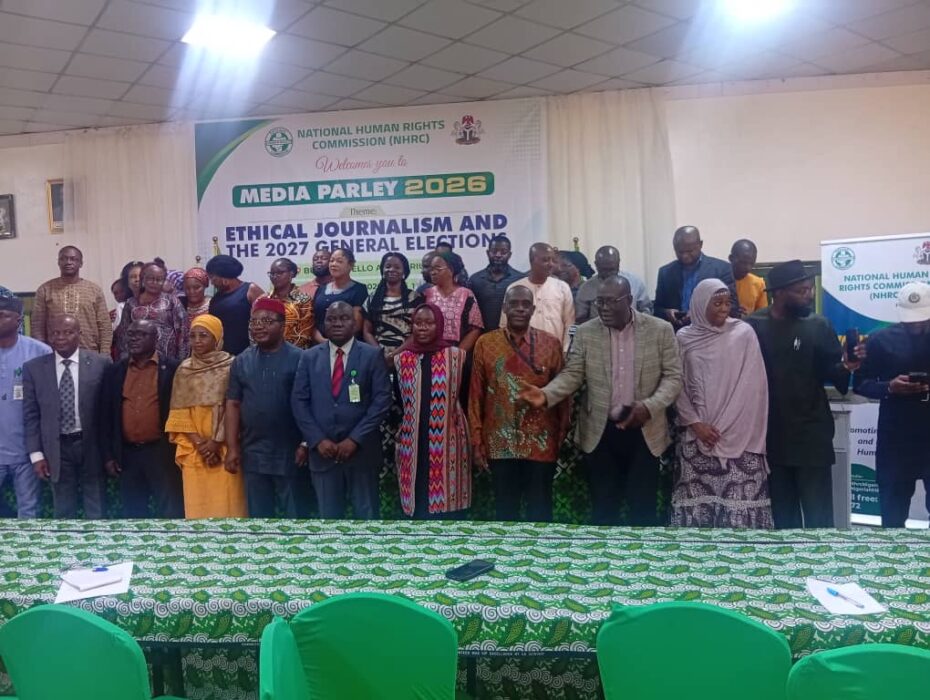
The United Nations and the National Human Rights Commission (NHRC) have warned that the growing spread of fake news, hate speech and artificial intelligence-generated content could threaten Nigeria’s democratic stability ahead of the 2027 general elections.
The organisations called for stronger collaboration between media practitioners, professional journalism bodies and other stakeholders to tackle electoral misinformation, protect citizens’ rights and prevent the manipulation of public opinion during the electioneering period.
The Director of the United Nations Information Centre (UNIC), Nigeria, Mr Kayanja, proposed the establishment of a National Information Integrity Situation Room to coordinate media efforts in identifying, verifying and countering misleading information.
He said the proposed platform would enable participating media organisations to monitor emerging false narratives, investigate suspicious electoral content and circulate verified information before fabricated reports gain widespread acceptance.
Kayanja made the proposal at the 2026 Annual Media Parley of the NHRC in Abuja, where he also advocated a voluntary Code of Conduct on Information Integrity to guide media coverage of the 2027 elections.
Speaking on the theme, “Ethical Journalism and the 2027 General Elections: Promoting Professionalism, Peace and Accountability,” the UN official identified misinformation, disinformation and manipulated digital content as growing threats to democratic participation and national security.
He observed that technological advancement and the widespread use of social media had transformed information dissemination, making it easier for individuals to generate and circulate content without adequate verification.
Of particular concern, he said, was the increasing sophistication of artificial intelligence tools capable of producing fabricated videos, photographs and documents that could easily be mistaken for authentic information.
According to him, such materials could be deployed to misrepresent political candidates, distort electoral procedures and create confusion over election outcomes.
To address the challenge, Kayanja urged media organisations to strengthen their fact-checking and digital verification capacities, insisting that professional journalists must not sacrifice accuracy in the pursuit of breaking news.
He specifically called on media owners, editors and journalism training institutions to invest in specialised training covering reverse image searches, video authentication, identification of manipulated materials and detection of AI-generated content.
The UN official also recommended that Nigerian media practitioners adopt an election-year reporting framework similar to an initiative previously introduced in Kenya.
He said the proposed voluntary code should establish professional standards for verifying electoral information, separating facts from opinions, identifying Branded Content, avoiding inflammatory reports and correcting published inaccuracies.
READ ALSO:
- IG Disu Directs Police To Protect Female Journalists, Women During 2027 Elections
- NLC Alleges Plot To Weaken Labour Ahead Of 2027 Wage Talks
- APC Campaign Council Courts Media Ahead Of 2027
However, he cautioned that the initiative must be driven by media professionals through self-regulation rather than government control, stressing that the pursuit of information integrity must not undermine freedom of expression or become a justification for censorship.
Kayanja further emphasised the need to protect editorial independence, promote media pluralism and strengthen public accountability, noting that credible journalism would be essential to sustaining public confidence throughout the electoral process.
Earlier, the Executive Secretary of the NHRC, Chief Tony Ojukwu, SAN, said the 2027 elections would test the media’s commitment to democratic accountability, peaceful political participation and the protection of fundamental human rights.
Ojukwu warned that politically motivated misinformation, hate speech and divisive narratives could aggravate existing tensions, weaken public trust in democratic institutions and threaten national peace.
He urged journalists to pay greater attention to electoral human rights concerns, including voter intimidation, political violence, discrimination, attacks on media practitioners and restrictions on citizens’ participation in the democratic process.
The NHRC chief also highlighted the need for increased reporting on violations affecting women, children, persons with disabilities and other vulnerable groups, whose rights could be particularly threatened during election periods.
He maintained that journalists must be able to carry out their professional responsibilities without intimidation, harassment or unlawful interference, describing media freedom as an important requirement for democratic accountability.
Ojukwu disclosed that the Commission, in partnership with the Konrad Adenauer Stiftung, would launch a Safety Handbook for Journalists and Media Practitioners on November 26, 2026.
He explained that the handbook would provide practical guidance on identifying and managing professional and personal risks associated with journalism, particularly field reporting during elections.
According to him, ensuring the safety of journalists goes beyond protecting media practitioners, as it also safeguards citizens’ right to information and preserves the democratic space.
He reaffirmed the Commission’s commitment to promoting an environment where independent, free and responsible journalism could thrive.
The NHRC boss urged journalists to uphold accuracy, fairness, balance, verification and respect for human dignity, warning against the use of media platforms to promote electoral divisions.
He said the annual media parley was designed to strengthen the partnership between the Commission and the media, particularly in ensuring that victims of human rights violations receive attention and that critical human rights issues are brought to the forefront of national discourse.

