

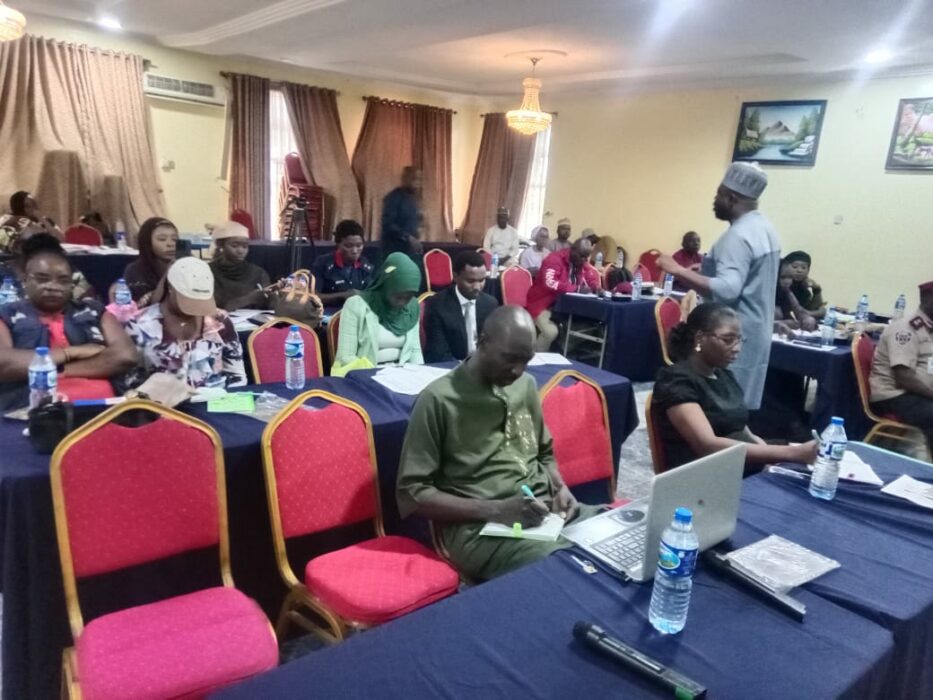
Stakeholders from across the 13 local government areas of Nasarawa State have called for the speedy domestication of the National Mental Health Act, 2021, to provide legal backing and rights-based care for persons with mental health conditions in the state.
The call was made on Thursday in Lafia at the close of a three-day stakeholders’ workshop on the domestication of the Act, themed “From National Mental Health Reform to Nasarawa State Action.”
The workshop was organised by The Leprosy Mission Nigeria, with funding support from The Leprosy Mission Australia and Australian Aid.
It brought together representatives of the Ministries of Health and Justice, the National Drug Law Enforcement Agency (NDLEA), development partners, civil society organisations, persons with lived experience, caregivers and the media.
Draft Bill Ready For Validation
Speaking at the close of the workshop, the Mental Health Programme Officer at The Leprosy Mission Nigeria, Judith Temidayo-Lawal, said participants had produced a draft bill for the domestication of the Act in Nasarawa State.
She said the draft would undergo further validation by key stakeholders before transmission to the Nasarawa State House of Assembly.
“Mental health is currently a very important topic in Nigeria following several cases of depression and psychological disorders recorded in the country,” Temidayo-Lawal said.
“As a way to tackle these challenges, it became important to work towards the domestication and implementation of the Act at state level.”
She explained that The Leprosy Mission works with vulnerable persons affected by leprosy, skin Neglected Tropical Diseases and Buruli ulcer, many of whom experience psychological distress.
“Today is day three of the workshop on domestication of the Mental Health Act in Nasarawa State, where stakeholders from very important agencies have come together to work on a draft bill,” she said.
“It has been a very interesting journey because at the end of this, we are looking forward to having a solid document that can be validated by other key stakeholders before being pushed to the State House of Assembly.”
Temidayo-Lawal said the organisation was encouraged by the recent passage of a similar bill in Benue State, where it was a major supporter.
“It is great news for us, and we are looking forward to the same thing happening here in Nasarawa State,” she said.
“Except the Mental Health Act is domesticated in states where we find these people, we cannot care for their mental health adequately. Implementation cannot be done adequately, and that is why The Leprosy Mission is pushing and supporting this state to see that this comes to life.”
She appealed to the House of Assembly and the State Government to prioritise domestication of the Act, saying it would make a huge difference in tackling mental health issues in the state and Nigeria at large.
She also thanked the Ministry of Health for mapping out stakeholders and bringing them together for the workshop.
“We are also grateful to the Commissioner for Health and Director of Public Health. They have all been of huge support to the work that we do in this state. Providing an enabling environment is something that we do not take for granted,” she added.
‘Get It Across The Finish Line’
READ ALSO:
- Nasarawa Moves to Domesticate National Mental Health Act
- Experts Probe Health Workers’ Unemployment Amid Staff Shortages
- Women Health Workers Seek Stronger Protection Against Workplace Harassment
Corroborating her, the Head of Programmes and Operations at The Leprosy Mission Nigeria, Pius Sunday Ogbu, said the organisation partnered critical stakeholders to guarantee the success and speedy passage of the bill.
He urged the State Government and the House of Assembly to treat the matter with great importance.
“We are excited to partner with these stakeholders and especially with the Nasarawa State Government through the Ministry of Health to get this first leg started,” Ogbu said.
“We are more encouraged by what has happened in Benue State, knowing that as we tow the same line, we will eventually also get it done in Nasarawa State, and we will move on to the other states that we support as well.”
“So, our call on the executive and legislative arms of the state is to encourage them to support the domestication of the National Mental Health Act.
“They should ensure that every relevant stakeholder, either at the executive level or at the legislative arm, is encouraged to support this effort and get this across the finish line as soon as possible,” he said.
On his part, the Director-General of the Nasarawa State Social Investment Programme, Hon. Imran Usman Jibrin, reiterated the state government’s commitment to support initiatives that would improve the general well-being of residents.
He commended The Leprosy Mission Nigeria and partners for organising the workshop, while assuring that stakeholders would do their best to ensure domestication of the Act.
Also speaking, the Lead Facilitator, Ameh Zion Abba, said the workshop was aimed at ensuring Nasarawa State domesticates the National Mental Health Act, 2021 and develops its own Mental Health Policy.
“Mental health is no longer a sidelined subject in the health sector. It has become paramount. It is a governance issue. It is a human rights issue, and everyone living with a mental health condition, illness, or disorder must have their care prioritised,” Abba said.
Mental Health No Longer An Afterthought
Earlier, while declaring the workshop open on Tuesday, the Director of Public Health, Nasarawa State Ministry of Health, Dr Peter Attah, said mental health could no longer be treated as an afterthought in the health system.
“We are here because mental health can no longer be treated as an afterthought in our health system. In Nasarawa State, too many of our people suffer in silence. Too many families carry the burden alone. Too many health workers do their best without a clear legal framework, without adequate policy backing, and without the tools to provide dignified, rights-based care,” Attah said.
He described the workshop as an opportunity to change the narrative, noting that it came at a very significant moment for the state.
According to him, just last week, the 67th National Council on Health concluded its meeting in Lafia under the theme “From Commitments to Results”, where the Council approved the integration of essential mental health services — for depression, anxiety, alcohol use disorder, epilepsy and psychosis — into Primary Health Care across the 36 states and the FCT.
“That is a clear national directive. Mental health is central to Primary Health Care, to Universal Health Coverage, and to the health of all Nigerians,” he said.
Attah explained that the three-day engagement was structured to move from understanding to action.
He charged participants to be guided by three principles throughout the deliberations: Rights and Dignity, Practicality, and State Ownership.

