

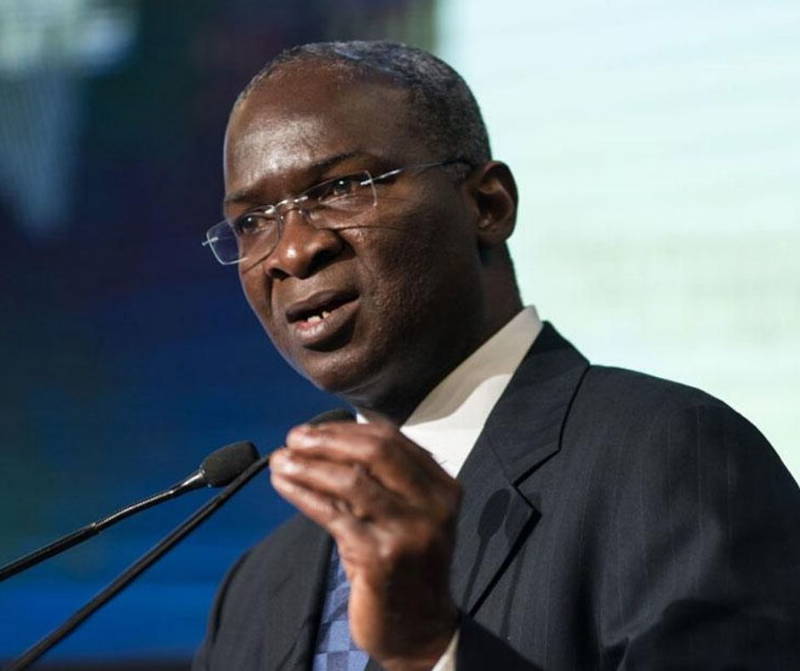
Former Minister of Power, Babatunde Fashola, has said the World Bank warned Nigeria that it would stop financing the country unless the Federal Government removed the petrol subsidy.
Fashola disclosed this on Tuesday during an interview on Channels Television’s Politics Today, explaining that the decision to end the subsidy was influenced by international financing concerns, legal provisions and Nigeria’s worsening financial position.
According to him, the World Bank gave the warning during the administration of former President Muhammadu Buhari, when he was a member of the Federal Executive Council (FEC).
“The World Bank simply said, ‘We won’t finance your country again unless you remove subsidy.’ It was that simple,” he said.
The former Lagos State governor said Nigeria was spending close to 90 per cent of its revenue on debt servicing at the time, arguing that the country could no longer sustain the cost of subsidising petrol.
He also urged Nigerians to revisit President Bola Tinubu’s inaugural address, saying public attention had largely focused on his declaration that “subsidy is gone” without considering other parts of the speech.
Fashola further cited the Petroleum Industry Act (PIA), which he said provides for petroleum products to be sold at competitive market rates, arguing that the provision has implications for any attempt to restore the subsidy.
He challenged politicians advocating a return to the subsidy regime to explain how they intended to finance it, particularly amid Nigeria’s fiscal challenges.
The former minister also criticised politicians who previously supported subsidy removal but had changed their positions because the policy had become unpopular.
READ ALSO:
- World Cup-winning Busari Leads Nigeria’s Charge For CAF Women’s Coach award
- $650m World Bank Project Upgrades 2,500 PHCs, Boosts Child Immunisation – FG
- Nigeria Secures UNESCO Centre To Combat Fake News
He said the Tinubu administration deserved commendation for maintaining its position despite the economic hardship associated with the decision.
“What this government deserves commendation for is not falling over on its word and saying, ‘Because the people like it, let’s bring it back.’ It was a road to perdition,” he said.
However, Fashola acknowledged that subsidy removal had worsened household challenges and increased the cost of living, noting that the government was introducing other measures to cushion its effects.
He listed tax reforms, the Nigerian Education Loan Fund (NELFUND), salary adjustments and compressed natural gas (CNG) initiatives among the interventions aimed at addressing the economic difficulties.
Fashola also cited a decline in inflation from above 30 per cent to about 14 per cent, arguing that reversing the policy midway could disrupt the progress recorded.
Recalling the Subsidy Reinvestment and Empowerment Programme (SURE-P) introduced under former President Goodluck Jonathan, he said the initiative was designed to manage funds saved from subsidy removal.
He, however, claimed that the programme’s chairman eventually resigned after becoming concerned about the management of its funds.
Meanwhile, former Vice-President Atiku Abubakar, the African Democratic Congress (ADC) presidential candidate, said in August that he would restore petrol subsidy if elected president in 2027.
The conflicting positions have continued to feature in the debate over the economic implications of petrol subsidy removal and whether Nigeria should consider reinstating the policy.

